

Bespoke fly-rail tour to three majestic art cities of northern Italy: Bologna, Ravenna and Padua
The three northern Italian cities of Bologna, Ravenna and Padua are a treasure trove of history, art and architecture, each one bursting with marvellous religious and civic buildings, works of art, sculpture, Etruscan and Roman artefacts. Moreover, these cities are associated intrinsically with seats of great learning and men of letters. Bologna has the oldest university in Italy, if not the world, with teaching beginning about 1088; Padua has the second oldest and in particular is celebrated for its teaching of medicine. Each city, however, has its own attractive character and charm with an array of very different places to visit and each city is noteworthy in having designated UNESCO World Heritage sites. Interestingly, in the ‘pink’ brick-built city of Bologna, it is the kilometres of porticoes that are designated UNESCO sites and these include the Portico of San Luca, the longest in the world. Ravenna has eight UNESCO World Heritage Sites, all early Christian monuments that house the finest and best-preserved Byzantine mosaics in Western Europe, dating from the 5th and 6th centuries. In Padua the spectacular Scrovegni Chapel, home to intricate and vibrant frescoes by Giotto and his school, and the Botanical Garden, founded in 1545, are both designated World Heritage sites. Your days in Bologna, Ravenna and Padua will be filled with an unrivalled intake of civilisation. All three cities are compact enough to explore on foot and all have plenty of amenable diversions from the cultural impact in the way of excellent restaurants, food markets, shopping areas and places to sit and watch the world go by. We include entrance tickets for the places that are an absolute requirement to prebook; many other churches, museums, galleries can be visited without booking. We supply you with suggestions of restaurants in each place and recommend that you do book your preferences in advance. On arrival in Bologna we include a private transfer from the airport to the hotel and again at the end of the holiday, we include a private car transfer from the hotel to Venice airport. In between places, the train works very well, and we include train tickets but suggest you take a taxi to the hotel from the station in Ravenna (unless you have a light suitcase) and in Padua (definitely take a taxi).
Highlights
Bologna • Piazza Maggiore • San Petronio • Piazza Nettuno • Museo Civico Archeologico • Due Torri • Pinacoteca Nazionale • Museo medievale • Food markets • Ravenna • Mausoleum Galla Placida • Basilica San Vitale • Church of Sant’Apollinare Nuovo • Neonian Baptistery • Arian Baptistery • St Andrew’s Chapel • Piazza del Popolo • Dante’s tomb •Padua • Scrovegni chapel • Eremitani museum • Citadella Antoniana • Palazzo della Ragione • Piazza delle Erbe • Prato delle Valle
Day by day
We include flights from London Heathrow to Bologna with British Airways but can offer you flights with other airlines, such as Easyjet, if more suitable for you. Upon arrival in Bologna, you are met by the driver and private car for the transfer to the hotel. The drive from the airport to the city centre takes about 15 minutes usually. Check in to the hotel and start to explore the city.
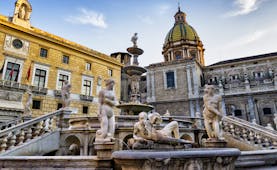
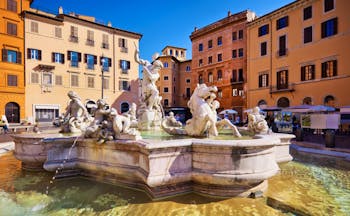
There are two full days in Bologna. It’s worth starting at the Piazza Maggiore and exploring outwards from here. Bologna rewards the traveller who looks beyond the obvious to discover one of Italy's most beguiling and authentically Italian cities. Often overlooked in favour of its more celebrated neighbours, Bologna is a city of formidable substance — intellectually, architecturally and gastronomically — and those who make the journey are rarely anything other than captivated. Bologna's historic centre is one of the best-preserved medieval townscapes in all of Italy. Its famous portici — the forty kilometres of arcaded walkways that thread through the city — are listed as a UNESCO World Heritage Site, and it is beneath these elegant colonnades that the true rhythm of Bolognese life is lived. The two leaning towers, the Asinelli and the Garisenda, soar above the terracotta rooflines of the centro storico, and the climb to the top of the taller Asinelli is rewarded with a panoramic view across the city and out towards the Apennine foothills that frame it to the south. The Piazza Maggiore is among the grandest civic squares in Italy, flanked by the vast unfinished façade of the Basilica di San Petronio — which would, had its ambitious original plans been realised, have surpassed St Peter's in Rome — and the magnificent Neptune fountain by Giambologna. The National Art Gallery of Bologna houses an outstanding collection of works by Giotto, Raphael, Titian and Guercino, while the university quarter, home to the oldest university in the Western world, lends the city a wonderfully lively intellectual energy quite unlike anything found in more touristy Italian destinations. Highlights must include the Basilica di San Petronio, the two towers (Due Torri), the National Picture Gallery (Pinacoteca Nazionale), the Archiginnasio and its remarkable anatomical theatre, the Sanctuary of San Luca and its extraordinary connecting portico, the Museo Civico Medievale, the Basilica di Santo Stefano with its evocative complex of seven interconnected churches. Bologna's culinary reputation is the finest in Italy — no small claim in a country where food is taken as seriously as it is here. Known simply as La Grassa (the fat one), Bologna gave the world ragù alla bolognese, mortadella, tortellini and tagliatelle, and the city's covered market, the Quadrilatero, is an unrivalled theatre of exceptional produce: aged Parmigiano-Reggiano, prosciutto di Parma, handmade pasta, truffle oils and some of the finest Sangiovese-based wines of the region.
There are several direct regional trains a day from Bologna to Ravenna. The journey time is about one hour and twelve minutes. The regional train is only one class and does stop at several places in between. We suggest you ask the hotel to call a taxi for you for the short ride to Bologna central station and upon arrival in Ravenna, it is a walk of only about 10 minutes from the station to the hotel but you may want to take a taxi, depending on how much luggage you have. Check-in to the hotel and start to explore the locality.
You have two full days in Ravenna. It could be done in one full day (two nights) but without visiting the Mausoleum of Theodorico and Sant’Apollinare in Classe.
Ravenna offers one of the most profoundly rewarding cultural experiences in all of Italy — and, indeed, in the whole of Europe. This is a city that wears its extraordinary history with a quiet confidence, its modest streets and intimate piazzas concealing an artistic inheritance of almost incomprehensible richness. Ravenna was, successively, the capital of the Western Roman Empire, the seat of the Ostrogothic Kingdom and the western stronghold of the Byzantine Empire, and the legacy of those remarkable centuries of power is preserved in a collection of early Christian and Byzantine mosaics that are, quite simply, without parallel anywhere in the world.
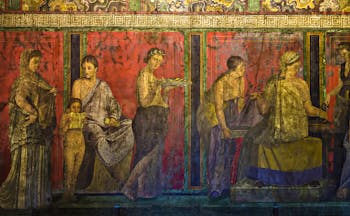
Eight of Ravenna's monuments are listed collectively as a UNESCO World Heritage Site, and it requires several days to do them justice properly. The mosaics of the Basilica di San Vitale, the Mausoleum of Galla Placidia, the Basilica di Sant'Apollinare Nuovo and the Battistero degli Ariani are not merely works of religious art — they are among the supreme achievements of human civilisation. To stand before the shimmering gold and lapis of the Mausoleum of Galla Placidia, the oldest of the UNESCO monuments, is an experience that remains with the visitor long after they have returned home. The quality of light within these buildings is unlike anything produced by any other art form, and the expert traveller who has visited Florence, Rome and Venice will find Ravenna a revelation of an entirely different order. We include a ticket that is valid for five main sites, some to be visited at a strict time, others over the duration of the stay in Ravenna.
The city itself is delightfully manageable and almost entirely free from the over-tourism that can diminish the experience of Italy's more celebrated destinations. The centro storico invites leisurely exploration on foot or by bicycle — Ravenna is a city of cyclists — and the streets between the principal monuments are lined with excellent restaurants, independent wine bars and food shops stocked with the outstanding produce of Emilia-Romagna. Cultural highlights are the Basilica di San Vitale and the Mausoleum of Galla Placidia (the most celebrated of the UNESCO sites), the Basilica di Sant'Apollinare Nuovo, the Battistero Neoniano, the Battistero degli Ariani, the Archbishop's Chapel and Museum (Museo Arcivescovile), the Mausoleum of Theodoric, the Basilica di Sant'Apollinare in Classe (set among the pineta outside the city and well worth the short journey, reached by train or taxi), and the Dante Museum — for Ravenna is also the final resting place of the great poet, who died here in 1321 and whose tomb is tended with great civic pride. Ravenna is in Emilia-Romagna, Italy's most celebrated culinary region, and benefits handsomely from that provenance. The city's restaurants draw on an outstanding larder: handmade pasta in all its regional variations, aged Parmigiano-Reggiano, locally cured meats, fresh fish and shellfish from the nearby Adriatic, and the robust, characterful wines of the Romagna hills — Sangiovese di Romagna chief among them. The covered market in the centre of the city is an excellent place to begin any gastronomic exploration, and the surrounding trattorias offer the kind of honest, ingredient-led cooking that is becoming increasingly rare elsewhere in Italy. The Ravenna Festival, held each summer from towards the end of May to mid-July, is among the most distinguished music festivals in Italy, attracting internationally celebrated conductors, orchestras and opera companies to perform in venues of extraordinary beauty — including the basilicas themselves. For the music-lover, timing a visit to coincide with the festival adds an incomparable dimension to the experience. Advance planning is essential, as both performances and hotel accommodation fill rapidly during the festival period.
Make your own way back to the railway station. There is a train at about 11.40 which arrives in Padua about 14.00 hrs with a change in Ferrara of about 30 minutes.
You have two full days to explore Padua. It’s worth dividing into central and northern areas and then visiting the southern sites on a different occasion.
Padua brings the discerning traveller to one of the most intellectually and artistically significant cities in Italy — and yet one that remains, quite remarkably, largely undiscovered by the mainstream tourist circuit. Padua is a city of genuine depth: ancient, learned, fiercely independent in character and possessed of a cultural inheritance that, at its pinnacle, represents one of the most important single moments in the history of Western art. That it sits in the shadow of Venice, less than forty minutes away by train, has long worked to its advantage — for Padua has been left largely to itself, and the experience of visiting it is correspondingly more authentic and more rewarding than many better-known Italian destinations.
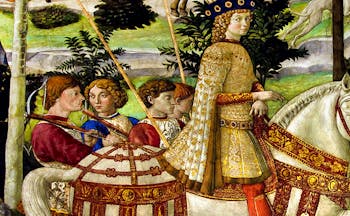
The Cappella degli Scrovegni is the reason alone that the journey to Padua is not merely worthwhile but essential for any serious lover of art. Giotto's cycle of frescoes, completed around 1305 and covering every surface of this small, luminous chapel, is among the supreme masterpieces of European civilisation — the moment at which Western painting turned irrevocably towards naturalism, emotion and the human figure. Viewing the frescoes is a carefully managed and deeply moving experience: numbers are strictly limited, visits are timed and brief, and the chapel is kept at a controlled temperature and humidity that heightens the sense of entering somewhere truly precious. No reproduction does justice to the quality of the original, and those who have seen the Scrovegni will understand immediately why it ranks among the great artistic pilgrimages. We recommend that we book a visit here for you for early in the morning of your first full day in the city.
Yet Padua offers considerably more than the Scrovegni alone. The Basilica di Sant'Antonio — known simply to Italians as Il Santo — is one of the great pilgrimage churches of Christendom and one of the most architecturally extraordinary buildings in northern Italy, its domed silhouette a landmark visible from across the city. The Palazzo della Ragione, with its magnificent medieval great hall, the vast and lovely Prato della Valle — one of the largest squares in Europe — the Oratorio di San Giorgio and the Scuola del Santo with their Titian frescoes, and the remarkable Baptistery of the Cathedral with its own outstanding fresco cycle by Giusto de' Menabuoi all demand and reward careful attention.
Padua's university, founded in 1222 and the second oldest in Italy after Bologna, gave the world Galileo among its faculty and retains a palpable sense of scholarly tradition in its ancient lecture halls and the extraordinary anatomical theatre — the oldest surviving example in the world — where the study of human anatomy was conducted with a rigour and openness that was revolutionary for its time. The Orto Botanico, established in 1545 and also a UNESCO World Heritage Site, is the oldest university botanical garden in the world and remains a place of great beauty and scientific interest.
Cultural highlights include the Cappella degli Scrovegni (advance booking is essential and we include this for you – suggesting that you do this visit early in the morning of your first full day), the Basilica di Sant'Antonio and its Treasury, the Palazzo della Ragione, the Baptistery of the Cathedral, the Oratorio di San Giorgio and Scuola del Santo, the Orto Botanico (UNESCO listed), the Palazzo Zuckermann, the Museo Civico agli Eremitani, and the university's anatomical theatre (Teatro Anatomico).
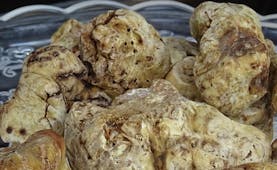
Padua sits within the Veneto and draws on one of Italy's most varied and accomplished culinary traditions. The city's markets — particularly the wonderful daily market beneath the Palazzo della Ragione — are among the finest in the region, stacked with white asparagus from Bassano del Grappa, radicchio from Treviso, fresh truffles in season, superb cheeses and the outstanding fish and shellfish of the Adriatic. The wines of the Colli Euganei, the gentle volcanic hills immediately to the south and west of the city, are produced in relative obscurity but offer excellent quality and are well worth exploring with the guidance of a knowledgeable local. The restaurants of central Padua, away from the immediate vicinity of the Scrovegni, are largely frequented by locals and university staff and offer the kind of confident, unfussy regional cooking that reflects the city's character admirably. The city also hosts a well-regarded antiques market on the third Sunday of each month in the Prato della Valle — one of the largest antiques markets in Italy — which is well worth timing a visit to coincide with.
A private car and driver will take you from the hotel in Padua to Venice Marco Polo airport in good time for your flight home.
I just wanted to get in touch to say thank you! We have now returned from our Orient Express, Venice trip, and it could not have been better. The memories made will last a life time. Obviously, the train experience is beyond words and Venice is such a fantastic place, but we wanted to specifically thank you for the organisation and assistance. Your attention to detail is superb and it made everything smooth and easy. Thank you again for a job extremely well done.Mrs C, May, 2024
Holiday price guide Price from £3,880 per person based on two people sharing a double room.
Holiday Code ITFR06
Call us on 01392 441245
Bespoke fly-rail tour to three majestic art cities of northern Italy: Bologna, Ravenna and Padua
We include flights from London Heathrow to Bologna with British Airways but can offer you flights with other airlines, such as Easyjet, if more suitable for you. Upon arrival in Bologna, you are met by the driver and private car for the transfer to the hotel. The drive from the airport to the city centre takes about 15 minutes usually. Check in to the hotel and start to explore the city.
There are two full days in Bologna. It’s worth starting at the Piazza Maggiore and exploring outwards from here. Bologna rewards the traveller who looks beyond the obvious to discover one of Italy's most beguiling and authentically Italian cities. Often overlooked in favour of its more celebrated neighbours, Bologna is a city of formidable substance — intellectually, architecturally and gastronomically — and those who make the journey are rarely anything other than captivated. Bologna's historic centre is one of the best-preserved medieval townscapes in all of Italy. Its famous portici — the forty kilometres of arcaded walkways that thread through the city — are listed as a UNESCO World Heritage Site, and it is beneath these elegant colonnades that the true rhythm of Bolognese life is lived. The two leaning towers, the Asinelli and the Garisenda, soar above the terracotta rooflines of the centro storico, and the climb to the top of the taller Asinelli is rewarded with a panoramic view across the city and out towards the Apennine foothills that frame it to the south. The Piazza Maggiore is among the grandest civic squares in Italy, flanked by the vast unfinished façade of the Basilica di San Petronio — which would, had its ambitious original plans been realised, have surpassed St Peter's in Rome — and the magnificent Neptune fountain by Giambologna. The National Art Gallery of Bologna houses an outstanding collection of works by Giotto, Raphael, Titian and Guercino, while the university quarter, home to the oldest university in the Western world, lends the city a wonderfully lively intellectual energy quite unlike anything found in more touristy Italian destinations. Highlights must include the Basilica di San Petronio, the two towers (Due Torri), the National Picture Gallery (Pinacoteca Nazionale), the Archiginnasio and its remarkable anatomical theatre, the Sanctuary of San Luca and its extraordinary connecting portico, the Museo Civico Medievale, the Basilica di Santo Stefano with its evocative complex of seven interconnected churches. Bologna's culinary reputation is the finest in Italy — no small claim in a country where food is taken as seriously as it is here. Known simply as La Grassa (the fat one), Bologna gave the world ragù alla bolognese, mortadella, tortellini and tagliatelle, and the city's covered market, the Quadrilatero, is an unrivalled theatre of exceptional produce: aged Parmigiano-Reggiano, prosciutto di Parma, handmade pasta, truffle oils and some of the finest Sangiovese-based wines of the region.
There are several direct regional trains a day from Bologna to Ravenna. The journey time is about one hour and twelve minutes. The regional train is only one class and does stop at several places in between. We suggest you ask the hotel to call a taxi for you for the short ride to Bologna central station and upon arrival in Ravenna, it is a walk of only about 10 minutes from the station to the hotel but you may want to take a taxi, depending on how much luggage you have. Check-in to the hotel and start to explore the locality.
You have two full days in Ravenna. It could be done in one full day (two nights) but without visiting the Mausoleum of Theodorico and Sant’Apollinare in Classe.
Ravenna offers one of the most profoundly rewarding cultural experiences in all of Italy — and, indeed, in the whole of Europe. This is a city that wears its extraordinary history with a quiet confidence, its modest streets and intimate piazzas concealing an artistic inheritance of almost incomprehensible richness. Ravenna was, successively, the capital of the Western Roman Empire, the seat of the Ostrogothic Kingdom and the western stronghold of the Byzantine Empire, and the legacy of those remarkable centuries of power is preserved in a collection of early Christian and Byzantine mosaics that are, quite simply, without parallel anywhere in the world.
Eight of Ravenna's monuments are listed collectively as a UNESCO World Heritage Site, and it requires several days to do them justice properly. The mosaics of the Basilica di San Vitale, the Mausoleum of Galla Placidia, the Basilica di Sant'Apollinare Nuovo and the Battistero degli Ariani are not merely works of religious art — they are among the supreme achievements of human civilisation. To stand before the shimmering gold and lapis of the Mausoleum of Galla Placidia, the oldest of the UNESCO monuments, is an experience that remains with the visitor long after they have returned home. The quality of light within these buildings is unlike anything produced by any other art form, and the expert traveller who has visited Florence, Rome and Venice will find Ravenna a revelation of an entirely different order. We include a ticket that is valid for five main sites, some to be visited at a strict time, others over the duration of the stay in Ravenna.
The city itself is delightfully manageable and almost entirely free from the over-tourism that can diminish the experience of Italy's more celebrated destinations. The centro storico invites leisurely exploration on foot or by bicycle — Ravenna is a city of cyclists — and the streets between the principal monuments are lined with excellent restaurants, independent wine bars and food shops stocked with the outstanding produce of Emilia-Romagna. Cultural highlights are the Basilica di San Vitale and the Mausoleum of Galla Placidia (the most celebrated of the UNESCO sites), the Basilica di Sant'Apollinare Nuovo, the Battistero Neoniano, the Battistero degli Ariani, the Archbishop's Chapel and Museum (Museo Arcivescovile), the Mausoleum of Theodoric, the Basilica di Sant'Apollinare in Classe (set among the pineta outside the city and well worth the short journey, reached by train or taxi), and the Dante Museum — for Ravenna is also the final resting place of the great poet, who died here in 1321 and whose tomb is tended with great civic pride. Ravenna is in Emilia-Romagna, Italy's most celebrated culinary region, and benefits handsomely from that provenance. The city's restaurants draw on an outstanding larder: handmade pasta in all its regional variations, aged Parmigiano-Reggiano, locally cured meats, fresh fish and shellfish from the nearby Adriatic, and the robust, characterful wines of the Romagna hills — Sangiovese di Romagna chief among them. The covered market in the centre of the city is an excellent place to begin any gastronomic exploration, and the surrounding trattorias offer the kind of honest, ingredient-led cooking that is becoming increasingly rare elsewhere in Italy. The Ravenna Festival, held each summer from towards the end of May to mid-July, is among the most distinguished music festivals in Italy, attracting internationally celebrated conductors, orchestras and opera companies to perform in venues of extraordinary beauty — including the basilicas themselves. For the music-lover, timing a visit to coincide with the festival adds an incomparable dimension to the experience. Advance planning is essential, as both performances and hotel accommodation fill rapidly during the festival period.
Make your own way back to the railway station. There is a train at about 11.40 which arrives in Padua about 14.00 hrs with a change in Ferrara of about 30 minutes.
You have two full days to explore Padua. It’s worth dividing into central and northern areas and then visiting the southern sites on a different occasion.
Padua brings the discerning traveller to one of the most intellectually and artistically significant cities in Italy — and yet one that remains, quite remarkably, largely undiscovered by the mainstream tourist circuit. Padua is a city of genuine depth: ancient, learned, fiercely independent in character and possessed of a cultural inheritance that, at its pinnacle, represents one of the most important single moments in the history of Western art. That it sits in the shadow of Venice, less than forty minutes away by train, has long worked to its advantage — for Padua has been left largely to itself, and the experience of visiting it is correspondingly more authentic and more rewarding than many better-known Italian destinations.
The Cappella degli Scrovegni is the reason alone that the journey to Padua is not merely worthwhile but essential for any serious lover of art. Giotto's cycle of frescoes, completed around 1305 and covering every surface of this small, luminous chapel, is among the supreme masterpieces of European civilisation — the moment at which Western painting turned irrevocably towards naturalism, emotion and the human figure. Viewing the frescoes is a carefully managed and deeply moving experience: numbers are strictly limited, visits are timed and brief, and the chapel is kept at a controlled temperature and humidity that heightens the sense of entering somewhere truly precious. No reproduction does justice to the quality of the original, and those who have seen the Scrovegni will understand immediately why it ranks among the great artistic pilgrimages. We recommend that we book a visit here for you for early in the morning of your first full day in the city.
Yet Padua offers considerably more than the Scrovegni alone. The Basilica di Sant'Antonio — known simply to Italians as Il Santo — is one of the great pilgrimage churches of Christendom and one of the most architecturally extraordinary buildings in northern Italy, its domed silhouette a landmark visible from across the city. The Palazzo della Ragione, with its magnificent medieval great hall, the vast and lovely Prato della Valle — one of the largest squares in Europe — the Oratorio di San Giorgio and the Scuola del Santo with their Titian frescoes, and the remarkable Baptistery of the Cathedral with its own outstanding fresco cycle by Giusto de' Menabuoi all demand and reward careful attention.
Padua's university, founded in 1222 and the second oldest in Italy after Bologna, gave the world Galileo among its faculty and retains a palpable sense of scholarly tradition in its ancient lecture halls and the extraordinary anatomical theatre — the oldest surviving example in the world — where the study of human anatomy was conducted with a rigour and openness that was revolutionary for its time. The Orto Botanico, established in 1545 and also a UNESCO World Heritage Site, is the oldest university botanical garden in the world and remains a place of great beauty and scientific interest.
Cultural highlights include the Cappella degli Scrovegni (advance booking is essential and we include this for you – suggesting that you do this visit early in the morning of your first full day), the Basilica di Sant'Antonio and its Treasury, the Palazzo della Ragione, the Baptistery of the Cathedral, the Oratorio di San Giorgio and Scuola del Santo, the Orto Botanico (UNESCO listed), the Palazzo Zuckermann, the Museo Civico agli Eremitani, and the university's anatomical theatre (Teatro Anatomico).
Padua sits within the Veneto and draws on one of Italy's most varied and accomplished culinary traditions. The city's markets — particularly the wonderful daily market beneath the Palazzo della Ragione — are among the finest in the region, stacked with white asparagus from Bassano del Grappa, radicchio from Treviso, fresh truffles in season, superb cheeses and the outstanding fish and shellfish of the Adriatic. The wines of the Colli Euganei, the gentle volcanic hills immediately to the south and west of the city, are produced in relative obscurity but offer excellent quality and are well worth exploring with the guidance of a knowledgeable local. The restaurants of central Padua, away from the immediate vicinity of the Scrovegni, are largely frequented by locals and university staff and offer the kind of confident, unfussy regional cooking that reflects the city's character admirably. The city also hosts a well-regarded antiques market on the third Sunday of each month in the Prato della Valle — one of the largest antiques markets in Italy — which is well worth timing a visit to coincide with.
A private car and driver will take you from the hotel in Padua to Venice Marco Polo airport in good time for your flight home.
I just wanted to get in touch to say thank you! We have now returned from our Orient Express, Venice trip, and it could not have been better. The memories made will last a life time. Obviously, the train experience is beyond words and Venice is such a fantastic place, but we wanted to specifically thank you for the organisation and assistance. Your attention to detail is superb and it made everything smooth and easy. Thank you again for a job extremely well done.Mrs C, May, 2024
Holiday price guide Price from £3,880 per person based on two people sharing a double room.
Holiday Code ITFR06
Our prices include
● Flight with British Airways from London to Bologna, returning from Venice to London, Euro traveller
● 3 nights’ bed and breakfast in a Classic room at the Grand Hotel Majestic gia Baglioni, Bologna
● 3 nights’ bed and breakfast in a Classic room at the Palazzo Bezzi, Ravenna
● 3 nights’ bed and breakfast in a Standard room at the Hotel Majestic Toscanelli, Padua
● Second class train tickets Bologna to Ravenna, Ravenna to Padua
● Private car transfer Bologna airport to Bologna hotel and Padua hotel to Venice airport
● Entrance ticket in Ravenna to Mausoleum Galla Placida, Basilica di San Vitale, Basilica di Sant’Apollinare Nuovo, Battistero Neoniano, Museo e Cappella Archivescovile and in Padua to the Scrovegni Chapel and the Eremitani museum
● Concierge service and Expressions Holidays regional helpful hints
Our prices do not include
● Early check-in or late check-out at any hotels (although we can arrange this on request at additional cost)
● Any other services not mentioned above, such as transfers and meals except breakfast at hotels
● Personal holiday insurance. This is essential and cover should be in place from when you book the holiday.
● Local tourist tax, usually between Euros 1 and 5 per person per night, and payable locally to the hotel
Additional information This holiday can be arranged throughout the year. Timings can vary depending on the month and day of the week.
Call us on 01392 441245
Bespoke fly-rail tour to three majestic art cities of northern Italy: Bologna, Ravenna and Padua

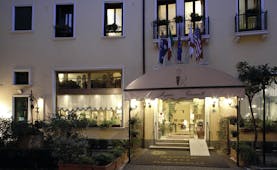
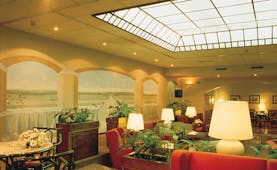
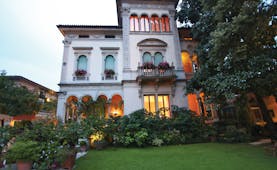
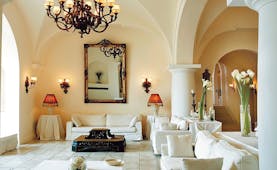
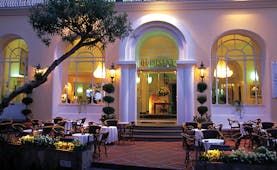
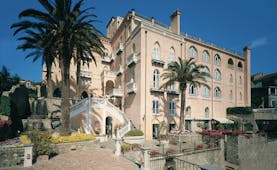
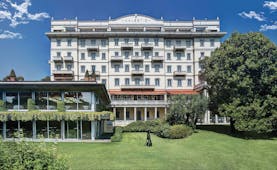
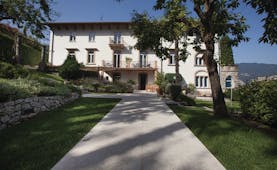
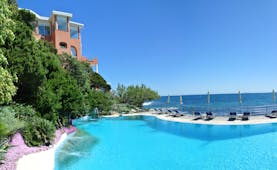
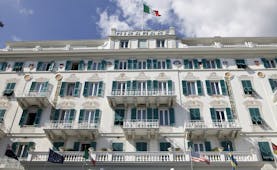
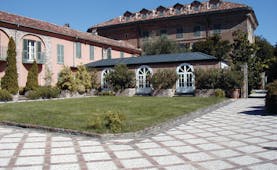
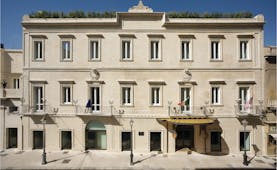
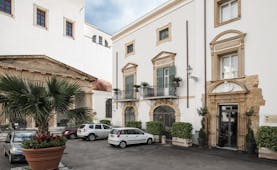
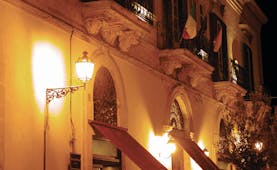
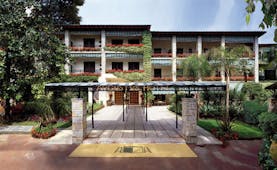
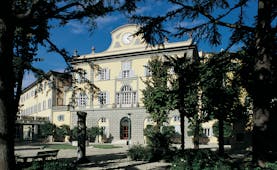
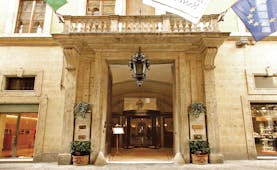
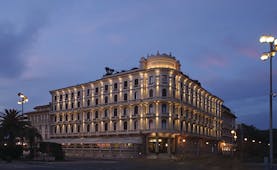
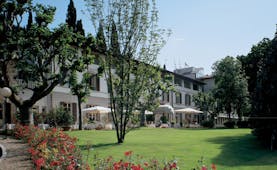
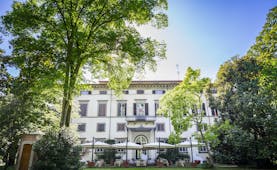
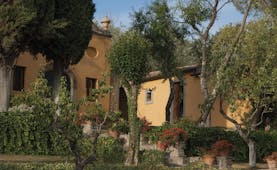
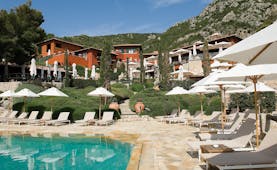
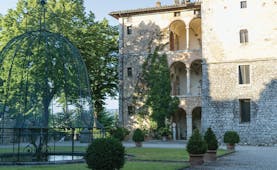
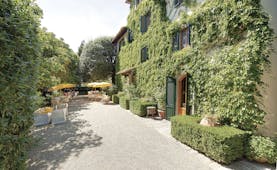
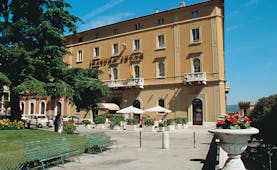
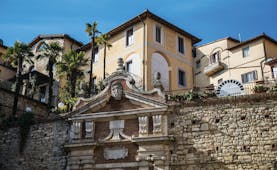
The Grand Hotel Majestic già Baglioni is a 5-star, sophisticated and historic hotel in the heart of the city, exuding classic elegance and comfort. The hotel's I Carracci restaurant with magnficent frescoes is one of the best in the city.
Classic room

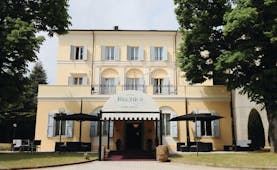
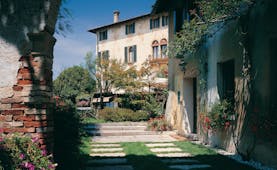
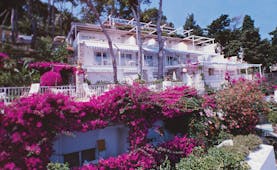
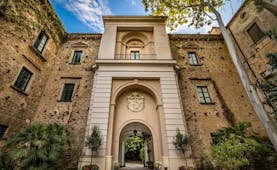
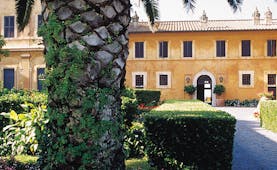
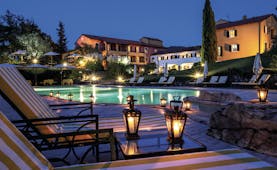
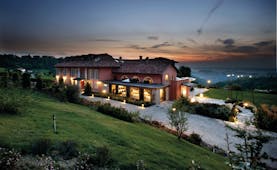
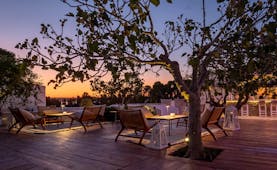
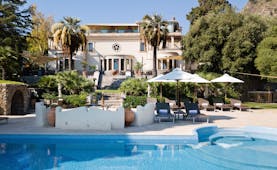
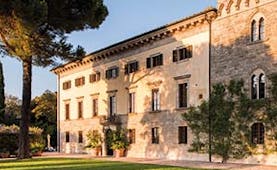
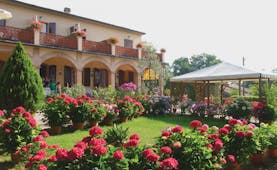
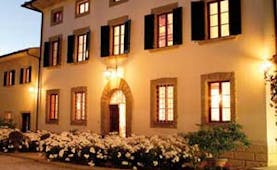
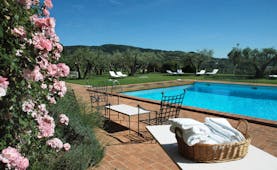
Palazzo Bezzi is a four-star superior hotel in the heart of Ravenna's historic centre, steps from the city's extraordinary UNESCO mosaic sites. A calm, design-led base with a rooftop terrace, spa, and private garden, ideal for couples and cultural travellers.
Classic room
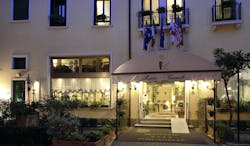
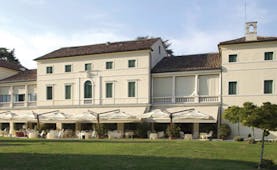
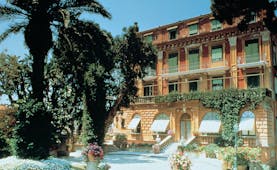
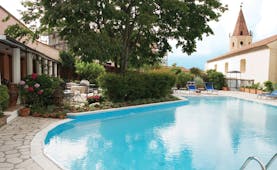
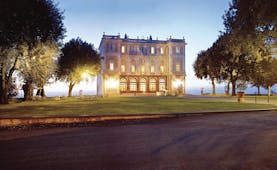
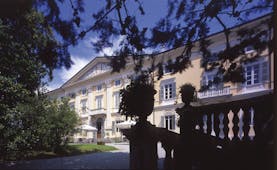
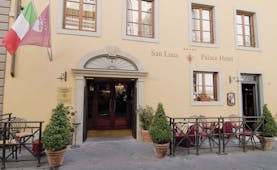
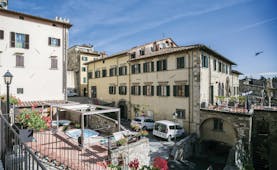
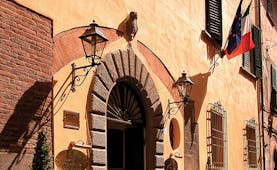
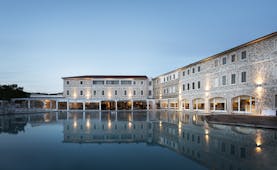
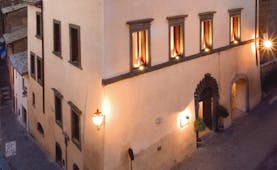
Hotel Majestic Toscanelli is a 4-star hotel in a privilged location in the old town. Comfortable accommodation just two minutes' walk from the Palazzo della Ragione and the Piazza delle Erbe.
Standard room
I just wanted to get in touch to say thank you! We have now returned from our Orient Express, Venice trip, and it could not have been better. The memories made will last a life time. Obviously, the train experience is beyond words and Venice is such a fantastic place, but we wanted to specifically thank you for the organisation and assistance. Your attention to detail is superb and it made everything smooth and easy. Thank you again for a job extremely well done.Mrs C, May, 2024
Holiday price guide Price from £3,880 per person based on two people sharing a double room.
Holiday Code ITFR06
Call us on 01392 441245
Bespoke fly-rail tour to three majestic art cities of northern Italy: Bologna, Ravenna and Padua
About Italian Cities
The cities of Italy are enticing and rewarding holiday destinations, lending themselves to short breaks, special occasions, discovering art and architecture, attending concerts and opera, and, of course, shopping. Italian cities are also ideal combinations with other regions in Italy; combine Milan with the Italian Lakes, Venice with the Veneto, Florence with the Tuscan countryside, Rome with the Amalfi Coast. Or, combine the cities with each other. Venice, Florence and Rome are a popular combination, travelling by train in between. Expressions Holidays offers you the choice of holidays to well-known Italian cities that you never tire of, such as Florence, Rome and Venice, and also lesser-known but fascinating ones such as Milan, Padua, Verona, Bologna, Modena, Parma, Turin and Naples.