Luxury hotel holidays to Galle and Sri Lanka's south coast

Luxury holidays to Galle and Sri Lanka's south coast: luxury hotel holidays, touring holidays and special interest holidays

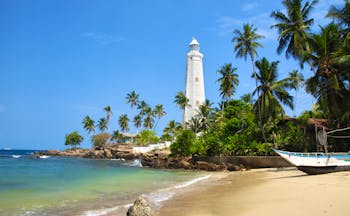
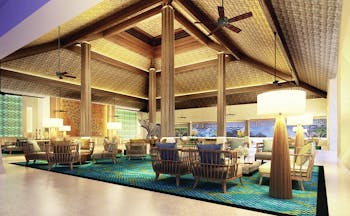
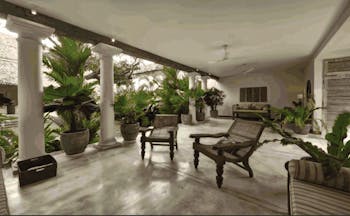
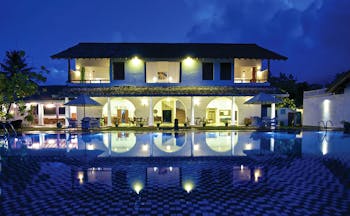
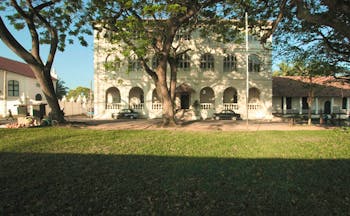
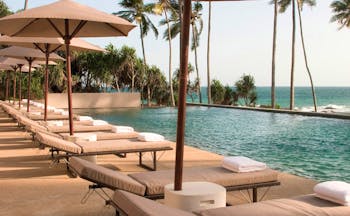
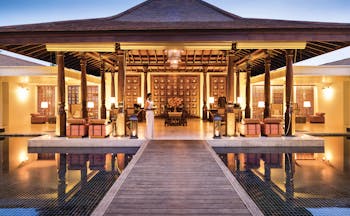
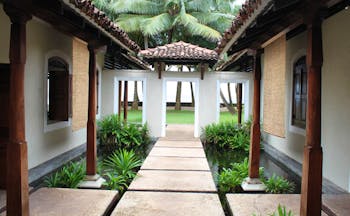
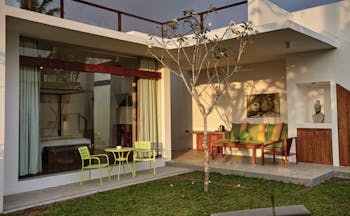
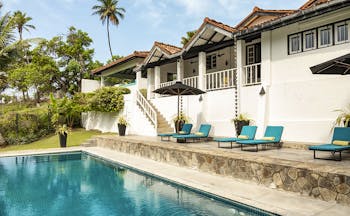
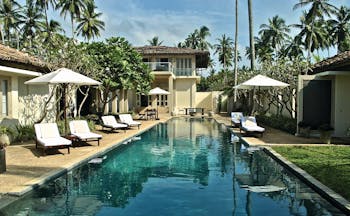
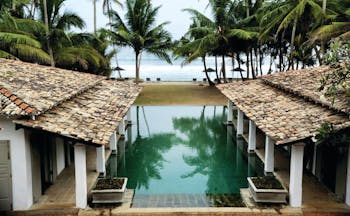
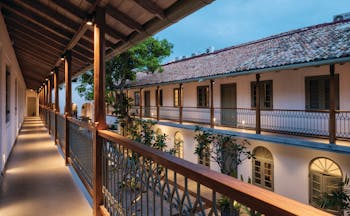
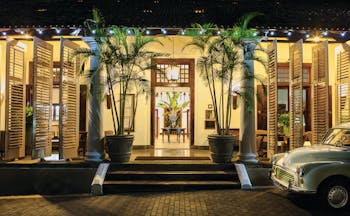
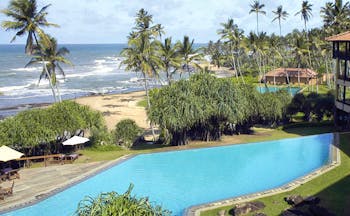
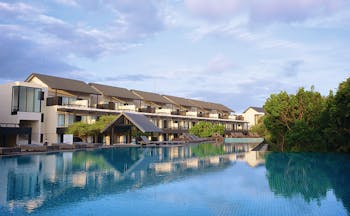
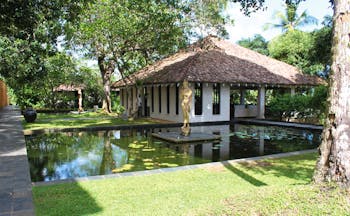
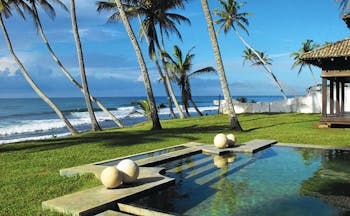
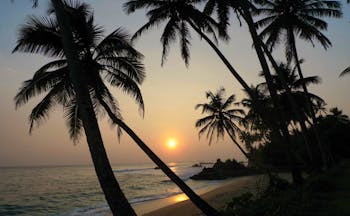
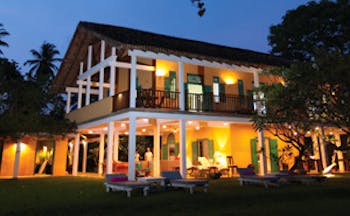
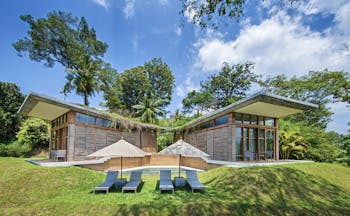
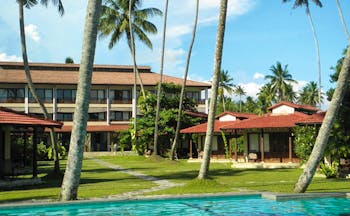
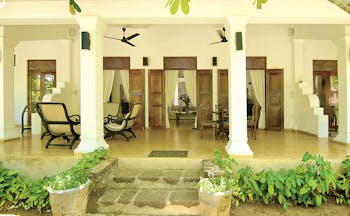
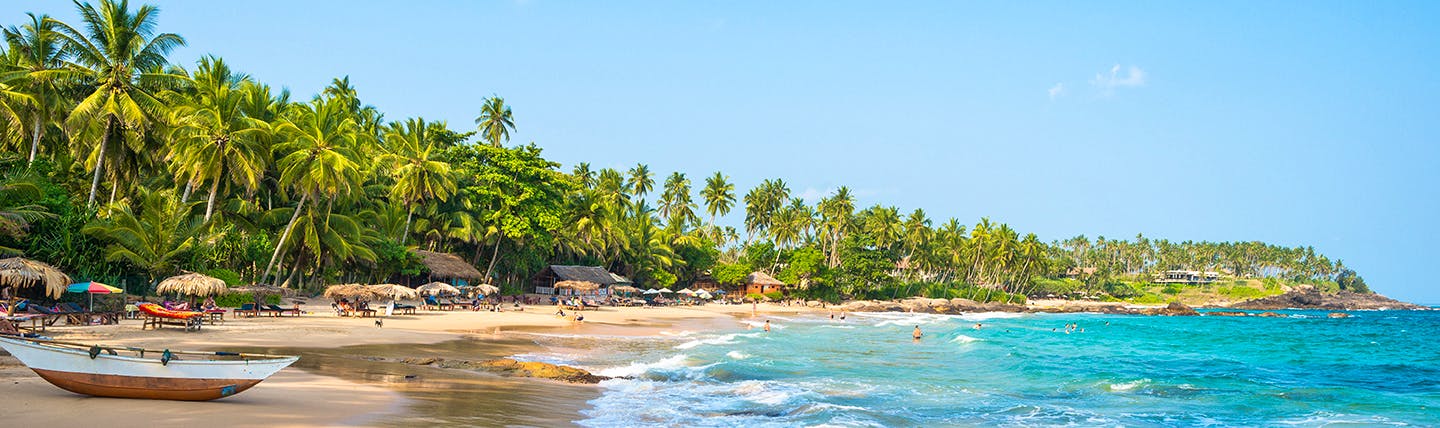
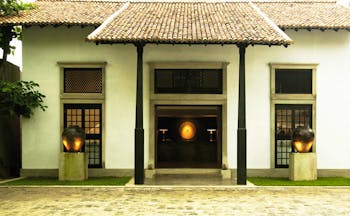
A stay in Galle and southern Sri Lanka uncovers a world of historic Dutch forts, beautiful beaches and fishermen fishing on stilts, where sleepy villages lie hidden in palms behind the wide sandy bays and sheltered coves. The further east you go, the less populated and the more naturally wild and remote the landscapes become. The lush inland forest reserves in the south-west contrast sharply with the arid south-eastern national parks of Yala, Uda Walave and Bundala, where wild elephants and migratory birds flock around the water ‘tanks’ and where leopards and sloth bear have been known to roam. Between December and April, the south coast is popular for whale and dolphin watching, in the waters off Weligama Bay. Galle, on the south-west tip of Sri Lanka, is a reminder of the Dutch presence on the island. The new town may have the usual urban bustle, but the Dutch Fort, built in 1663, retains a timeless air. Constructed by the Dutch East Indian Company as a fortified town, Galle Fort is a UNESCO world heritage site which is still intact with a thriving community living and working within its walls. You can walk along part of the ramparts with views out to sea on one side and the famous Galle cricket ground on the other. The region around Galle is fascinating and incredibly beautiful with its rainforest reserves and indigenous wildlife, as well as fishing villages and palm-fringed, sandy coves. We have selected hotels in Galle and along the South Coast which are ideally located to visit the many places of interest in the area. These hotels include Jetwing Lighthouse, a classy hotel designed by Geoffrey Bawa; The Fortress, an outstanding deluxe resort hotel; Amangalla, a splendid colonial-style hotel; Kahanda Kanda, a small and elegant countryside hotel; and Taprobane Island, a private island retreat.

Frequently Asked Questions

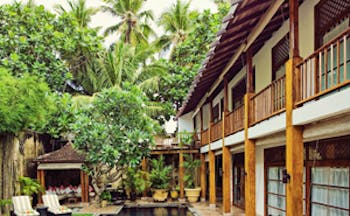
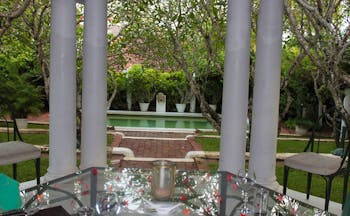
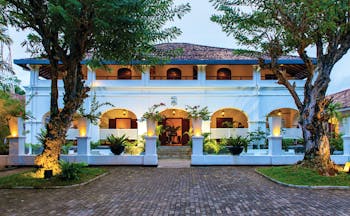
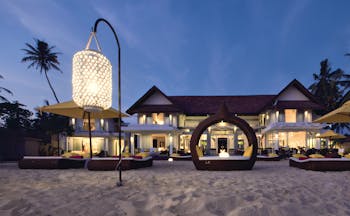
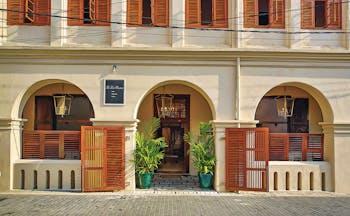
Both have their merits, and many of our clients combine the two: two or three nights within the Fort, followed by a longer stay on the coast. Staying inside the Fort means you can walk the ramparts at dawn and dusk, when the day visitors have gone, and wander its streets of Dutch-period houses, churches and small shops at your own pace. Amangalla occupies the former New Oriental Hotel, a building with origins in the Dutch period, and has a grandeur of its own. The Galle Fort Hotel, The Fort Printers, Fort Bazaar and 20 Middle Street are smaller, characterful houses with courtyards and pools, while 41 Lighthouse Street can be taken for exclusive use by families or friends travelling together. Just outside the walls, The Sun House and Tamarind Hill offer gardens and calm within a short drive of the Fort, and Jetwing Lighthouse, designed by Geoffrey Bawa, stands on the rocks by the sea. Along the coast to the east, Thalpe and Koggala have hotels and villas directly on the beach, among them The Fortress, Era Beach and The Frangipani Tree, and inland, Kahanda Kanda and Why House are set among tea, paddy fields and lakes. We know these properties individually and will suggest the combination that suits you.
A full day gives a good understanding of the Fort, and two allow you to enjoy it at the slower pace it rewards. Galle was first fortified by the Portuguese, and the Dutch East India Company built the ramparts largely as they survive today in the seventeenth century; the Fort is now a UNESCO World Heritage Site and, unusually, a living town where families have lived for generations. Begin with a walk along the ramparts, past the bastions, Flag Rock and the lighthouse, with the sea on one side and the town, and the cricket ground, on the other. Within the walls, the Dutch Reformed Church, completed in the mid-eighteenth century, has a floor of old gravestones; the Maritime Museum occupies the great Dutch warehouses by the Old Gate, which still bears the company's monogram; and the National Museum displays Dutch and Sinhalese material. The grid of streets, among them Church Street, Leyn Baan Street and Pedlar Street, is lined with town houses, mosques, galleries and shops selling lace, jewellery, antiques and design. A guided walk with someone who knows the Fort's history and its residents adds a great deal, and we can arrange this. In the late afternoon, the ramparts fill with families, cricketers and couples for the sunset.
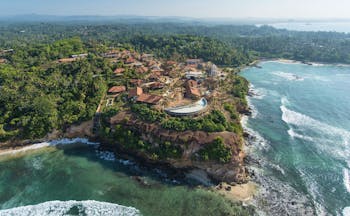
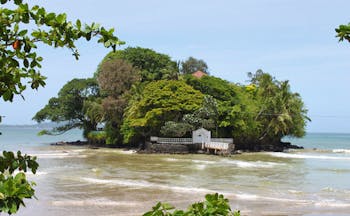
It depends on whether you prefer convenience, activity or seclusion, as the coast changes markedly from west to east. Closest to Galle, Thalpe, Unawatuna and Koggala are within half an hour of the Fort, which makes them easy to combine with visits to the town; the beaches here are attractive but more developed. Around Weligama and Mirissa, roughly forty minutes from Galle, the coast is livelier, known for surfing and the departure point for whale watching, and it is home to Cape Weligama, set high on a headland, and Malabar Hill, whose villas each have their own pool. Just offshore in Weligama Bay lies Taprobane Island, a private island villa reached by wading across from the beach and taken on an exclusive basis. Further east, around Tangalle, some two hours from Galle, the beaches become wider, emptier and wilder, and the hotels more secluded: Amanwella, Anantara Peace Haven and The Last House, the final building designed by Geoffrey Bawa. Wherever you stay, it is worth knowing that even in the calm season the sea along this coast can have strong currents, so swimming is best in sheltered bays or in hotel pools, and lifeguarded beaches are few. We will advise frankly on each stretch of coast.
Whale watching from Mirissa is best between December and April, when the sea is calm and blue whales and sperm whales are regularly seen, often within a few hours' sailing of the coast, along with spinner dolphins. Boats leave early, usually soon after dawn, and trips last around three to five hours; even in the calm season the swell can be considerable, so those prone to seasickness should take precautions. Sightings are never guaranteed, and the quality of operators varies, so we use those who keep a responsible distance from the animals and limit the number of passengers. Sea turtles come ashore to nest on the beaches of the south coast, and at Rekawa, near Tangalle, a community project allows small groups to watch nesting at night, usually between February and July, with guides who ensure the turtles are not disturbed. We do not recommend the roadside turtle hatcheries found elsewhere along the coast. For birdwatchers, Kalametiya and Bundala, east of Tangalle, are wetland reserves rich in waders and migratory species, particularly from November to March. All of these can be built into a stay on the south coast, with your driver-guide or hotel making the arrangements.
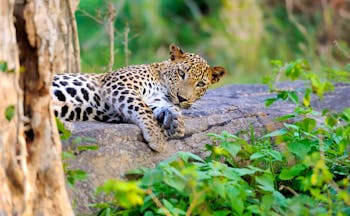
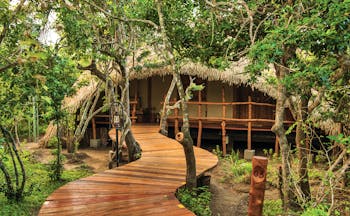
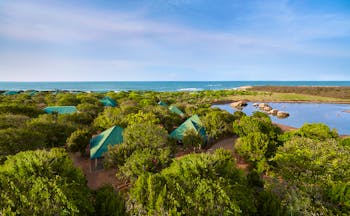
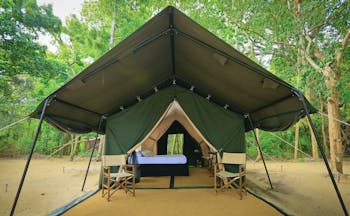
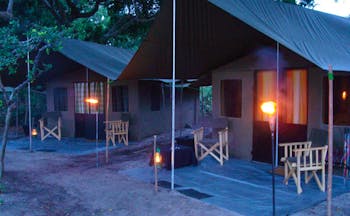
Yes, and a night or two at Yala is a natural extension of a south coast stay, about four hours' drive from Galle or two from Tangalle. Yala National Park is among the most rewarding places in Asia to see leopard, and is also home to elephants, sloth bear, crocodiles and a rich birdlife, in a landscape of scrub, lagoons and rocky outcrops running down to the sea. The most visited section can become busy with jeeps, and an experienced naturalist who knows the park and its quieter areas makes a considerable difference, so we include private safaris with a dedicated tracker wherever possible. Game drives take place in the early morning and late afternoon. The park usually closes for several weeks from around September, during the driest part of the year, so we will check dates for travel in late summer. The choice of accommodation ranges from luxury tented camps such as Wild Coast Tented Lodge, Leopard Trails, Mahoora and Noel Rodrigo's Leopard Safaris, to Chena Huts and Jetwing Yala, both by the ocean, and the eco-friendly Cinnamon Wild. For elephants in particular, Uda Walawe National Park, inland, is reliable throughout the year, and its Elephant Transit Home rehabilitates orphaned calves for release into the wild.
The countryside behind the coast is green, quiet and little visited, and it repays time away from the beach. Inland from Galle, the rainforest reserves of Kottawa, Kanneliya and Hiyare offer guided walks among endemic birds, butterflies and giant trees, and village bicycle rides follow lanes through paddy fields, cinnamon gardens and rubber plantations. Cinnamon is native to Sri Lanka and was the reason the Portuguese and Dutch came to this coast; a visit to a small cinnamon estate, to see the bark stripped and rolled by hand, makes that history tangible. At Koggala, the house of Martin Wickramasinghe, one of Sri Lanka's most celebrated writers, is now a museum of village life, and Koggala Lake can be explored by boat. Further east, the rock temple of Mulkirigala, with cave shrines and murals on terraces up a great outcrop, is well worth the climb, and Kataragama, near Yala, is a sacred site for Buddhists, Hindus and Muslims alike. The region's crafts, including bobbin lace, introduced by the Portuguese, woodcarving and rush and reed weaving, can be seen in villages around Galle and Weligama. As for the stilt fishermen, they are an image of the south coast, but the practice is now largely performed for visitors, so we suggest seeing them in passing rather than as a destination.
The best time is from December to April, the calm season on the south coast, when the sea is generally settled, rainfall is low and the days are sunny, with temperatures typically in the low thirties tempered by sea breezes. This is also the whale-watching season off Mirissa. The south-west monsoon brings rain and rougher seas between roughly May and August, though the rain usually comes in showers rather than all day, and Galle Fort remains enjoyable to visit; at this time of year, the drier east coast is the better choice for beaches. The climate also changes as you travel along the coast: the west, around Galle, is more humid, while east of Tangalle it becomes drier and hotter. For those interested in festivals, July brings the Kataragama Esala festival, an important Hindu and Buddhist pilgrimage, along with peraheras at Unawatuna and Devinuwara, near Dondra Head, while from July to September kite-flying fills the ramparts of Galle in the late afternoon. The Galle Literary Festival, traditionally held within the Fort in January or February, draws writers and readers from around the world; dates can change, so we will confirm them when planning your holiday.

Our bespoke, luxury hotel holidays can be

● Single centre or multi-centre
● Long or short stays
● Combine a number of different hotels in different regions
● Utilise a variety of transport arrangements to Sri Lanka and within Sri Lanka, combining flights, rail, and private transfers

Our special interest holidays to Sri Lanka

● Cultural tours for individuals
● Cookery
● Visits to local festivals
● Private guided sightseeing
● Safari and wildlife experiences
● Scenic train travel
● Family holidays
● Eco experiences
● Ayurveda and other spa holidays
● Walking and cycling
● Bird-watching
● Garden visits

Included in all our holidays

● Concierge service
● Handcrafted helpful hints and local information provided with all our holidays
● Personal service by your sales consultant who looks after all aspects of your holiday
Call us on 01392 441245

Highlights of Galle and the south coast

Fascinating Galle has plenty to offer the visitor: Galle Fort – UNESCO World Heritage Site, and one of the few living fort cities in the world; Walk around the ramparts of Galle at dawn or at sunset; Arts & crafts shopping – jewellery, lace, rush & reed, home décor, furniture, antiques, batik and boutiques; The Dutch Reformed Church; Galle Literary Festival in January; National Museum; Maritime Museum in the Dutch warehouses of Galle Fort, just re-opened; Galle Markets; Galle Cricket Stadium; Hot-air balloon ride (December to April); River boat trip. A little way inland from Galle/Koggala: Hiyare Nature Reserve (volunteering possible); Kottawe Nature Reserve; Kanneliya Forest; Samakanda (organic farm, visit, walks and lunches available upon request); Village life bike rides; Handicrafts in the villages e.g. lace-making, rush & reed, woodcarving; Yatagala Temple. On the way from Galle to Yala you can enjoy: Stilt Fishermen; Cinnamon plantations; Unuwatuna beach; Martin Wickramasinghe’s house – museum (literary and 20th century life); Koggala Lake; Hinduangoda White tea factory and estate; Lace-making – Weligama, Dickwella; Surfing – popular surfing beaches from Unuwatuna to Mirissa; Weligama Bay; Coastal villages and fishing harbours; Whale Watching and Dolphin Watching (from Mirissa); Diving (from Mirissa); Deep-sea fishing trips (from Mirissa); Provincial town of Matara (Dutch heritage – fort and church); Dondra Head and Dondra Lighthouse; Kudawala Blow Hole; Mulkirigala Buddhist temple (inland); Uda Walawe National Park and Elephant Transit Home (inland); Sea Turtles laying their eggs on the beach, usually February to July (Rekawa Turtle Project); Kalametiya bird sanctuary; Bundala Nature Reserve (bird-watching mainly); Yala National Park; Kataragama – centre for Buddhist, Hindu and Muslim pilgrimages; Tissamaharama - ancient ‘tank’ and dagobas.

Cultural highlights of Galle and the south coast

There are many places to visit in Galle and the area along the south coast of Sri Lanka. In Galle itself, Galle Fort is home to a national museum housing Dutch and Singhalese exhibits of historical interest as well as a newly-opened Maritime Museum, a lighthouse and a 17th century Dutch Reform Church. The narrow streets within the Fort are fascinating for their architecture, lined with official buildings, shops and old town houses, some of which have been converted to stylish villas and boutique hotels. Outside the ramparts, Galle functions busily as a provincial town and port - brightly painted fishing boats line the shore and there is a lively market area with a whole pavilion dedicated to fish. Galle and the surrounding villages are full of artisans – lace makers, jewellers, woodcarvers, painters and people making things out of coir, rush and reed. The National Crafts Council has a centre by the old entrance to Galle Fort and there are plenty of small shops selling crafts, jewellery and antiques, as well as a few designer boutiques. Slightly further afield, there are numerous beautiful beaches and fishing villages including Thalpe, Unuwatuna, Matara, Koggala, Weligama Bay and Tangalle, as well as a number of National Parks with plenty of wildlife.

Festivals in Galle and the south coast

January: The Galle Literary Festival - this 4-day festival brings together Sri Lankan and international authors from around the world for writing workshops, talks, exhibitions and more at various locations in Galle. Past guests have included Vickram Seth and Gore Vidal.
July: Unuwatuna Perahera - a 7-day festival commencing on full moon day. Matara/Dondra Perahera - with dedications to Lord Vishnu. Kataragama Esala Festival - a 10-day festival when pilgrims give penance to the Hindu war god, Skanda.
July to September: Kite flying on the ramparts of Galle

Climate in Galle and the south coast

The average temperature on the South coast is 32° C with 65% humidity, though it is cooler and more humid in the west, getting progressively hotter and less humid the further east you go, especially the east of Tangalle. The evenings are a little cooler and the coasts enjoy sea breezes. Rainfall is experienced mainly during the south-west monsoon from May to August. The ‘calm’ season is December to April, when the seas are general calm and there is little rainfall. Whilst the sea appears calm out of the monsoons, there are still undercurrents and riptides.

Galle and the south coast travel information

Sri Lankan Airways operates daily flights to Colombo from London Heathrow. Most flights leave London in the afternoon or evening. Flight time is about 11 hours. From Colombo you can also take the Sri Lankan air taxi to regional centres throughout the country.

Travel around the region

We include private transfers with all our holidays to Sri Lanka, and a personal chauffer with all our touring holidays. Driving distances: Colombo International Airport to Galle – 3 hours (150 km), Colombo International Airport to Koggala – 3.5 hours (165 km), Colombo International Airport to Tangalle - 5 hours (230 km), Galle to Weligama – 30-40 minutes (25 km), Galle to Tangalle – 2 hours (80 km), Galle to Yala – 4 hours (180 km), Nuwara Eliya to Tangalle – 5 hours (210 km). A new Sri Lankan Airlines air taxi service (sea plane) operates daily between Colombo International Airport, Bentota and Koggala. Private helicopter charter transfers can also be arranged.

Our bespoke, luxury hotel holidays can be

● Single centre or multi-centre
● Long or short stays
● Combine a number of different hotels in different regions
● Utilise a variety of transport arrangements to Sri Lanka and within Sri Lanka, combining flights, rail, and private transfers

Our special interest holidays to Sri Lanka

● Cultural tours for individuals
● Cookery
● Visits to local festivals
● Private guided sightseeing
● Safari and wildlife experiences
● Scenic train travel
● Family holidays
● Eco experiences
● Ayurveda and other spa holidays
● Walking and cycling
● Bird-watching
● Garden visits

Included in all our holidays

● Concierge service
● Handcrafted helpful hints and local information provided with all our holidays
● Personal service by your sales consultant who looks after all aspects of your holiday

Call us on 01392 441245

Here you will find a map of Galle and south coast showing the locations of the hotels that we offer

Our bespoke, luxury hotel holidays can be

● Single centre or multi-centre
● Long or short stays
● Combine a number of different hotels in different regions
● Utilise a variety of transport arrangements to Sri Lanka and within Sri Lanka, combining flights, rail, and private transfers

Our special interest holidays to Sri Lanka

● Cultural tours for individuals
● Cookery
● Visits to local festivals
● Private guided sightseeing
● Safari and wildlife experiences
● Scenic train travel
● Family holidays
● Eco experiences
● Ayurveda and other spa holidays
● Walking and cycling
● Bird-watching
● Garden visits

Included in all our holidays

● Concierge service
● Handcrafted helpful hints and local information provided with all our holidays
● Personal service by your sales consultant who looks after all aspects of your holiday
Call us on 01392 441245