Luxury hotel holidays to Champagne

Luxury holidays to Champagne: luxury hotel holidays, touring holidays and special interest holidays

An Expressions tailor-made holiday to Champagne offers the chance to explore one of the great historic provinces of France. Known in the 9th century under Charlemagne for its agricultural riches, it became famous for its produce and celebrated fairs. Today, though known of course for its eponymous sparkling wine, and despite lying en route from the UK to the south of France, Champagne is one of the least visited regions in France, an under sung gem waiting to be explored.
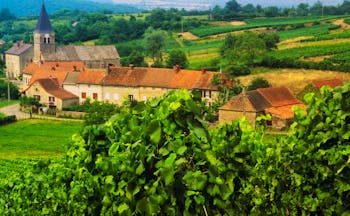
Naturally, bubbly looms large on the list of attractions for visitors to the region, with Epernay, a lovely town on the chalky hills southwest of Reims, the undisputed champagne capital of the world. Here, you can enjoy tastings at the home of several champagne producers, including Moet & Chandon and Perrier-Jouet. Smaller producers can also be visited between the pretty towns of Bar sur Aube and Les Riceys. Champagne can also be tasted at the celebrated Taittinger cellars in Reims, the largest town in the Champagne. A bustling university city, Reims has all the feel of a busy regional capital, with a fabulous old town and magnificent 13th century cathedral, one of the greatest gothic buildings of northern France. Largely made up of undulating hills and pretty farmland, Champagne's landscape rises in the north towards the densely wooded, river-riven walker's paradise of the Ardennes, with the Plateau de Langres in the south home to the fortified Roman hill town of Langres, sometimes known as the Carcassonne of the North - without the crowds. Due to its proximity to the north coast of France, the Champagne region can easily be incorporated into a self-drive touring holiday of the Northern Vineyards or can be used as a stopover en route to the French Alps and Lakes.

Frequently Asked Questions

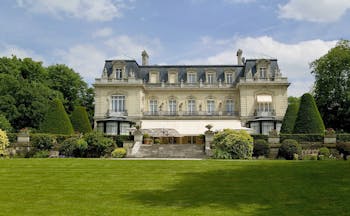
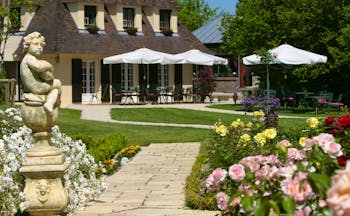
It is, and it makes a particularly rewarding short break, partly because so few British travellers stop for long. The Champagne vineyards, now part of the wider Grand Est region, are concentrated in a compact area between Reims and Épernay, extending south to the Côte des Bar in the Aube, and the hillsides, houses and cellars of the region were inscribed together by UNESCO in 2015. Reims is the principal city, with its cathedral, museums and many of the great champagne houses, and it suits clients who like to walk out to restaurants and cellars. Here we offer Domaine Les Crayères, an elegant château-hotel set in parkland on the edge of the city with a celebrated restaurant, and L’Assiette Champenoise, a Relais & Châteaux hotel on the outskirts of Reims whose restaurant holds three Michelin stars. Épernay, half an hour to the south, is smaller and lies at the meeting point of the three main vineyard areas, the Montagne de Reims, the Vallée de la Marne and the Côte des Blancs, with the Avenue de Champagne lined with the headquarters of the great houses. The Hostellerie La Briqueterie, set among the vines just south of Épernay, with a spa and a Michelin-starred restaurant, is an ideal base for exploring the vineyards and villages. Two or three nights allow time for a mix of house and grower visits, a day in Reims and a drive through the vineyards without hurrying, and a longer stay can take in Troyes and the Côte des Bar further south.
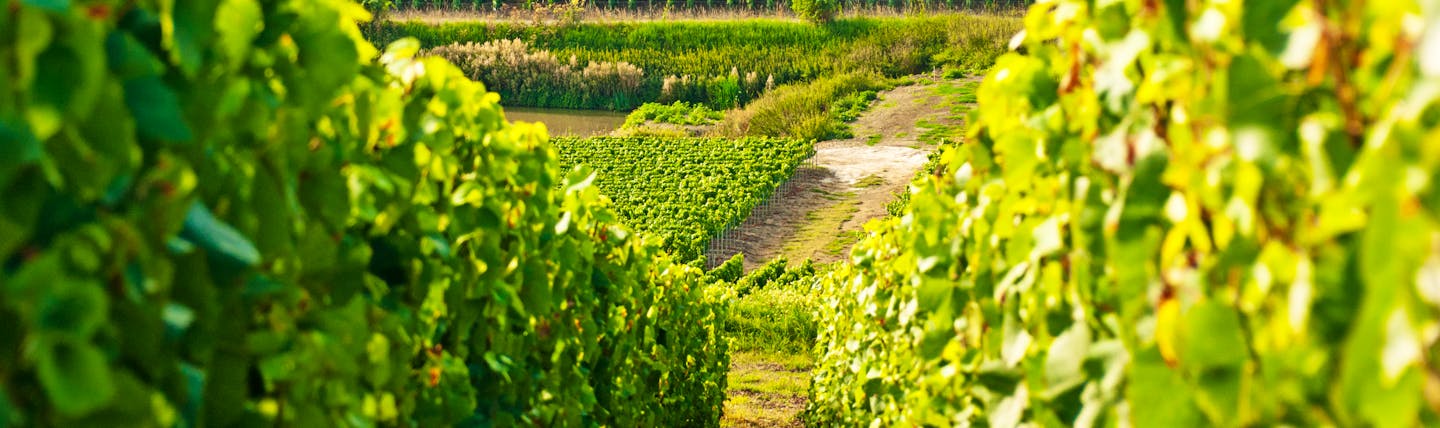
Yes, and a good champagne holiday usually combines both, because they show quite different sides of the wine. The great houses of Reims and Épernay, many of them founded in the eighteenth and nineteenth centuries, offer cellar tours and tastings by appointment, and some of the cellars are worth the visit in themselves: in Reims, several houses including Ruinart, the oldest established champagne house, founded in 1729, use the vast Gallo-Roman chalk quarries known as crayères, while beneath the Avenue de Champagne in Épernay lie many kilometres of galleries. We can arrange private or small-group visits, including more in-depth tastings of prestige cuvées and older vintages where available. Increasingly, though, discerning visitors are drawn to the grower champagnes made by independent families from their own vineyards, which express individual villages and plots in a way the blended house styles do not. Visiting these small estates requires appointments and often an introduction, and this is where our arrangements make a real difference. Each part of the region has its own character: the Montagne de Reims is Pinot Noir country, with grand cru villages such as Ambonnay, Bouzy and Verzenay; the Côte des Blancs, around Cramant, Avize and Le Mesnil-sur-Oger, is devoted to Chardonnay; the Vallée de la Marne is home to Pinot Meunier; and the Côte des Bar, in the Aube, produces Pinot Noir-led champagnes and, at Les Riceys, the rare Rosé des Riceys. A visit to Hautvillers, where Dom Pérignon was cellar master at the abbey and is buried, is a natural part of any tour. We recommend no more than two or three visits a day, with a driver if you prefer not to drive between tastings.
A great deal more than most visitors expect. Reims Cathedral, where the kings of France were crowned for some eight centuries, is a masterpiece of High Gothic architecture, with its sculpted façade, its famous smiling angel and windows by Marc Chagall; together with the former archbishop’s palace, the Palais du Tau, and the Basilica of Saint-Remi, it forms a UNESCO World Heritage Site. Reims also preserves a Roman triumphal arch, the Porte de Mars, and the modest schoolroom where the German surrender was signed on 7 May 1945, now a museum. In Épernay, the Musée du Vin de Champagne et d’Archéologie Régionale, opened in 2021 in the restored Château Perrier, gives a thorough grounding in the history of the wine. Further south, Troyes, the historic capital of the counts of Champagne, has a well-preserved half-timbered centre and a wealth of Renaissance stained glass in its cathedral and churches. Langres, on its plateau above the Marne, is enclosed by an almost complete circuit of ramparts and was the birthplace of Diderot, and at Colombey-les-Deux-Églises the home and memorial of Charles de Gaulle can be visited. The First World War left a deep mark on the region, and the battlefields of the Marne and the forts around Reims can be visited with a specialist guide. The landscapes are varied too, from the forest of the Montagne de Reims, with its curious twisted beech trees at Verzy, to the lakes of the Forêt d’Orient and the wooded valleys of the Ardennes to the north. The food of the region, from Chaource and Langres cheeses to the pink biscuits of Reims, completes the picture.
Champagne is unusually accessible from Britain, which makes it a natural choice for a short break as well as part of a longer tour. By rail, Eurostar connects in Paris with TGV services from the Gare de l’Est to Reims in around 45 minutes, so the whole journey from London can comfortably be made in a morning; Épernay is a short onward journey by train or transfer. For clients who prefer to drive, Reims is under three hours from Calais by motorway, making it reachable on the first day after an early crossing. Flying to Paris is also possible, with a drive or transfer of around an hour and a half to Reims, though for most clients the train is quicker and more comfortable. Once in the region, Reims and Épernay are easily explored on foot, but a car or private driver is needed for the vineyards and villages, and a driver is the obvious choice for days of tasting. Champagne combines naturally with its neighbours: Alsace and Burgundy for a tour of the vineyard regions of eastern France, Paris for a city-and-vineyard break by train, and the Loire Valley and Berry for a longer tour of gardens and vineyards. It also makes an ideal first or last stop on a journey by car to the south of France, the French Alps or Switzerland, and we often suggest two nights rather than one so that the region is enjoyed rather than simply crossed. We will advise on the combination and pace that suit the length of your holiday.
Champagne has a cool northern climate, and that is precisely what gives its wines their freshness, but it also means that the seasons are distinct and worth planning around. Late April to June is a particularly good time, with the vines coming into leaf, the countryside fresh and the cellars and houses open but not crowded; the cellars themselves remain at a constant cool temperature all year, so a light jacket is useful even in summer. July and August are warm and settled, with long evenings, and in summer Reims Cathedral is illuminated after dark by a light show on its façade. The harvest usually takes place between late August and late September, depending on the year; it is an atmospheric time to visit, with the vineyards full of pickers, though some smaller growers are too busy to receive visitors, so tastings with independent estates are best arranged just before or after it. October brings autumn colour to the slopes and quieter roads. In December, Épernay holds its festival of light along the Avenue de Champagne, and Reims has a Christmas market beside the cathedral, while January and February are the quietest months, when some hotels and restaurants close for a period and some houses reduce their visiting hours. Because Champagne is so close to Britain, it also suits a short break at almost any time of year, and a celebration, an anniversary or a significant birthday is a particularly good reason to go. We will always advise on timing in relation to your interests and the hotels you are considering.

Our bespoke, luxury hotel holidays can be

● Single centre or multi-centre
● Long or short stays
● Combine a number of different hotels in different regions
● Utilise a variety of transport arrangements to France and within France, combining flights, hire-car, rail, ferries and private transfers

Our special interest holidays to Champagne

● Wine and food holidays
● Wine-tasting for individuals
● Cultural tours for individuals
● Private guided sightseeing

Included in all our holidays

● Concierge service
● Handcrafted helpful hints and local information provided with all our holidays
● Personal service by your sales consultant who looks after all aspects of your holiday
Call us on 01392 441245

Highlights of Champagne

Champagne cellar visits in Reims, Epernay and in vineyards along the Aube; the old town of Charleville Mezieres, capital of the Ardennes department; Charles de Gaulle's country residence and burial site, Colombey les Deux Eglises; Reims, with one of the finest medieval cathedrals in France, once the coronation place of French kings, now with one of the best son-et-lumieres in France; Reims' magnificent Roman triumphal arch; Lac du Der, the biggest reservoir in Europe, one of the most important migration routes for Europe's waterfowl, sheltering vast flocks of cranes, passing through in their thousands in spring and autumn; the fortified hill town of Langres, ‘Carcassonne of the North’ - minus the crowds; la foret d'Orient near Troyes and Montagne de Reims, both Regional Natural Parks; river trips along the Seine, the Marne, and the Aube; the 13th century gothic cathedral of Troyes, with its spectacular stained glass windows; autumn wine festivals.

Travel around the Champagne region

The Champagne region is reached very easily from the UK by air and rail. With the most extensive rail network in Western Europe, France is a great country to explore by train. The nationally owned SNCF (Societe Nationale des Chemins de Fer) runs fast, efficient services between the main towns. Buses cover the rural areas, but services can be rather sporadic, with departures often at awkward times. To visit Champagne's cellars - the main reason for being here - by far the best option is to rent a car.

Champagne travel information

By air

Flight time from London is approximately one hour to Paris. Paris's airports is served by a variety of airlines from the UK, including British Airways, Air France, KLM. It's about an hour from Paris to Reims by car. To avoid traffic jams, don't travel around Paris at peak hour or return on a Sunday afternoon/evening.

By Eurostar

Eurostar runs an extensive daily timetable of departures between London's St Pancras International and Paris and Lille. Reims is located at a crossroads on the European motorway network between Paris and Strasbourg on the A4-E50 and between Calais, Troyes, Dijon and Lyon on the A26-E17.

Our bespoke, luxury hotel holidays can be

● Single centre or multi-centre
● Long or short stays
● Combine a number of different hotels in different regions
● Utilise a variety of transport arrangements to France and within France, combining flights, hire-car, rail, ferries and private transfers

Our special interest holidays to Champagne

● Wine and food holidays
● Wine-tasting for individuals
● Cultural tours for individuals
● Private guided sightseeing

Included in all our holidays

● Concierge service
● Handcrafted helpful hints and local information provided with all our holidays
● Personal service by your sales consultant who looks after all aspects of your holiday
Call us on 01392 441245

Here you will find a map of Champagne showing the locations of the hotels that we offer

Our bespoke, luxury hotel holidays can be

● Single centre or multi-centre
● Long or short stays
● Combine a number of different hotels in different regions
● Utilise a variety of transport arrangements to France and within France, combining flights, hire-car, rail, ferries and private transfers

Our special interest holidays to Champagne

● Wine and food holidays
● Wine-tasting for individuals
● Cultural tours for individuals
● Private guided sightseeing

Included in all our holidays

● Concierge service
● Handcrafted helpful hints and local information provided with all our holidays
● Personal service by your sales consultant who looks after all aspects of your holiday
Call us on 01392 441245