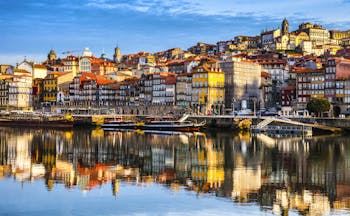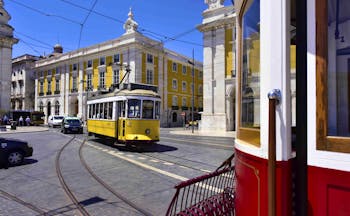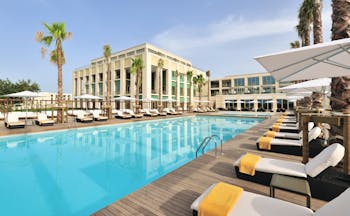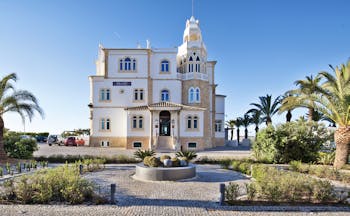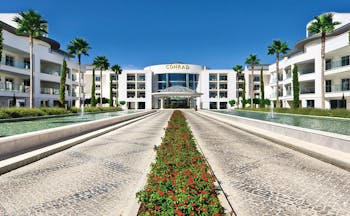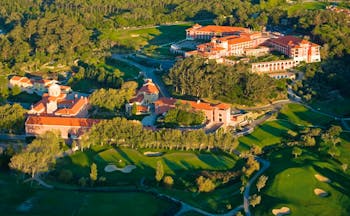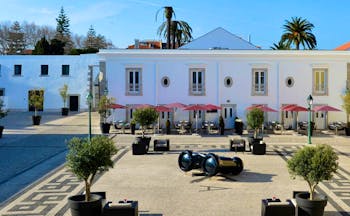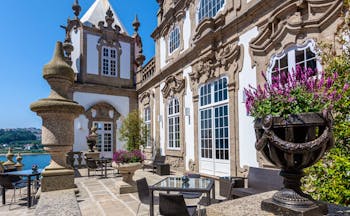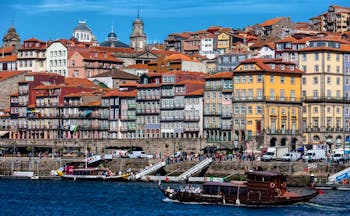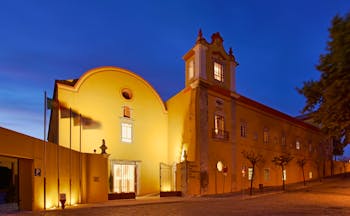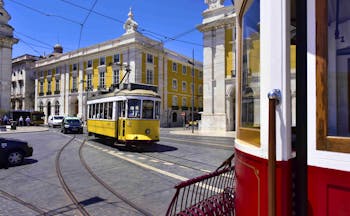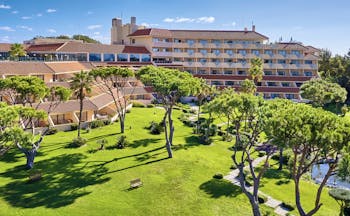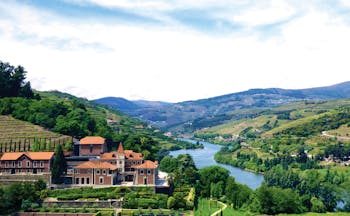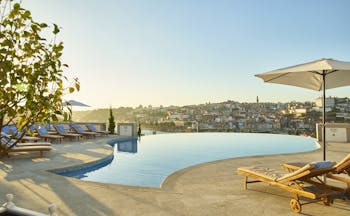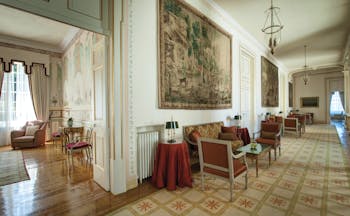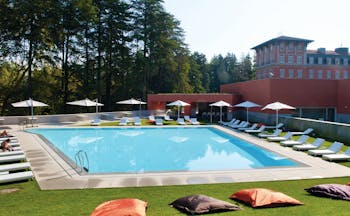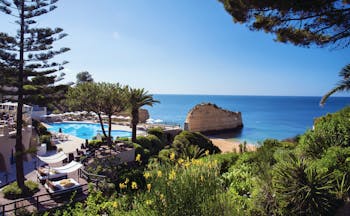

An Expressions tailor-made holiday to Portugal's countryside bursts with pretty villages, glitters with historical treasures and World Heritage sites, as well as converted mediaeval monasteries, and elegant manor houses now hosting some of the finest hotels in Europe. Though Portugal's spirit is undoubtedly rural, its big towns Porto and Lisbon are lively, magical places making full use of their waterside setting, offering rich picking for those that like to wander, with colourful waterside cafes and boutiques, leafy boulevards and old-fashioned trams still rattling through the streets. Smaller towns offer their own enchantment, with well-preserved medieval quarters that invite exploring in towns like Évora, Coimbra, Guimarães and Braga. Outside the cities, travellers can enjoy Portugal's warm sunny weather, exploring centuries-old vineyards, visiting stone villages in the mountains or soaking up rays on the magnificent southern shoreline. Dramatic scenery lies all along the coast from windswept cliffs with edge-of-the-world views to wild dune-covered beaches. More than just a static backdrop, the scenery sets the stage for outdoor adventure. Hiking, surfing, windsurfing, horse-riding, big game fishing, kayaking, diving, golfing, and mountain biking are a few ways to spend a sun-drenched afternoon. 600 miles southwest of Portugal lies the island of Madeira, home to Reid's Palace Hotel, an elegant and glamorous five star hotel in a superb location, ideal for holidays all year round, due to the mild winter climate, and on an island renowned for its beautiful vegetation.
Single-centre holidays
Choose from idyllic private resorts on Madeira, grand ocean-facing palaces, and majestic properties high in the mountains. This style of holiday enables in-depth and leisurely exploration of one particular region, be it the rolling countryside, the jagged mountains, or the sweeping coast.
Two-centre holidays
Combine two contrasting regions and spend a few nights in each; moving from a beach-side resort to a hotel hidden behind undulating hills. This style of holiday means you do not have to choose your favourite of Portugal's breath-taking landscapes. Why not combine a hotel on the Algarve with a hotel close to Lisbon? Or a hotel in the Douro Valley with Lisbon or Faro? Or perhaps even a hotel in Portugal with a resort in Madeira?
Multi-centre touring holidays
This is the style of holiday we most highly recommend at Expressions Holidays. Longer tours with multiple stops really allow you to explore and develop your knowledge of Portugal. Why not combine three or four of our hotels to make sure you see each of Portugal's main natural attractions in turn?
Frequently Asked Questions
Our bespoke, luxury hotel holidays can be
● Single centre or multi-centre● Long or short stays
● Combine a number of different hotels in different regions
● Utilise a variety of transport arrangements to Portugal and within Portugal, combining flights, hire-car and private transfers
Our special interest holidays to Portugal
● Cultural tours for individuals● Spa holidays
● Family holidays
● Watersports holidays
● Tennis and sports holidays
● Golf holidays
Included in all our holidays
● Concierge service● Handcrafted helpful hints and local information provided with all our holidays
● Personal service by your sales consultant who looks after all aspects of your holiday
Call us on 01392 441245
Highlights of Lisbon
The area close to the city of Lisbon is known for its variety of attractions. Moorish architecture left over from Arabic rule can be seen in the Castelo de Sao Jorge in the Alfama. Collections of Portuguese art are on display in the Museu Gulbenkian, the Museu de Arte Antiga, and the Berardo Collection. For a taste of Portugal's maritime history, visit the Monasteiro dos Jeronimos. Sintra, the favourite haunt of Lord Byron, is home to twin-peak-top castles and royal palaces. Beautiful, golden sandy beaches can be found in Cascais to the west of Lisbon, or on the Costa da Caparica to the south; particularly idyllic are the coves between Setubal and Sesimbra. Peniche is a picturesque seaside town renowned for being one of Europe's best surfing spots. You can explore all that the area around the city of Lisbon has to offer with our Tour of the City and Countryside of the Lisboa Region.
Highlights of the Algarve
Known for having some of Portugal's most scenic beaches, the Algarve is a popular destination for those looking for a beach or water sports holiday enjoying the Portuguese sunshine. Sagres and Tavira are recognised as the best places for this. In Albufeira, Armacao de Pera, and Lagos you will find an abundance of the light-catching rocky outcrops and peaceful coves that the Algarve is so well known for. Salema, Burgau, and Sagres were once busy little fishing villages, and now still stand as testament to this important aspect of Portuguese culture. The Reserva Natural da Ria Formosa lies just off the southern coastline, the islands of which can be accessed from many towns, including Faro, Olhao, Fuseta, Cabanas, and Tavira; most of which are also ideal starting points from which to try a little surfing. White-washed and serene Alcoutim is an example of the less-developed Portuguese towns, with a hint of Andalucia in its appearance, and Loule is the perfect place to wander around a bustling market. You may also wish to visit the Roman ruins at Milreu, the Moorish town of Silves, or the Spa town of Caldas de Monchique. For outdoor pursuits, head into the Serra de Monchique Mountain Range.
Highlights of Porto and the Douro Valley
At the mouth of the Rio Douro lies Porto, an atmospheric town with a dramatic aspect and almost Parisian lifestyle. Its streets are lined with historic buildings and wine lodges serving the best of Portuguese wines. The nearby wine towns of Penafiel, Peso da Regua, Pinhao, and Amarante are also recommended for wine-tasting, but have a much more rural location. Amarante, in particular, is believed to be the most attractive wine town in the area, with a central triple-arched bridge, tall stone red-roofed houses interspersed with verdant trees, and a gently flowing river. To witness a sample of Portuguese Baroque architecture, visit the pilgrimage town of Lamego. The main attraction of this town, the Sanctuary of Our Lady of Remedios, lies at the top of an elaborate and intricately decorated set of zig-zagged stairways that pass through archways and across viewing balconies. In Porto, some of the greatest artistic triumphs of 17th century Portugal reside, the Se Cathedral in particular, in which every inch of the columns, archways, and altar have been adorned in golden floral and religious motifs, in true Baroque style. For something even more historic, visit the Palaeolithic rock formations of Vila Nova de Foz Coa, the largest outdoor gallery of stone age remains in the world, which have since been neighboured by flourishing vineyards. Along the rocky gorges of the river, you will find a number of castle-towns, including the Medieval walled town of Trancoso and the fortress town of Almeida.
Highlights of Madeira
A green and fertile island in the Atlantic Ocean, Madeira is situated off the coast of Morocco. Its coastline combines beautiful sandy beaches with rocky cliffs, the latter of which can be best appreciated at Cabo Girao. The island's capital, Funchal, is packed full with historic buildings, including 15th century churches and convents and a Se Cathedral as ornate as the one in Porto. Enjoy the relentless joviality of the street markets, or visit more peaceful attractions, such as the basalt cave of Capela de Sao Vicente or the island's protected nature reserves. Rare Laurissilva forests can be walked, trekked, or hiked through, affording guests sensational views; and the crystal clear waters off the coast can be swam through, perhaps below the water's surface so the ecosystems that live in the reefs can be appreciated. One of the greatest pleasures of Madeira, however, is wandering over the beaches, surveying the rock pools, and taking in the sights from the clifftops. Aside from the key regions that our Portuguese programme focuses on, there is much to find and see in Portugal. Those willing to drive a little further during the day will enjoy a much more diverse touring holiday.
Travel around Portugal
Most of our clients travels to Portugal by air, so most of our sample prices incorporate this, unless otherwise stated. Other travel options are available, but air remains the most convenient. Once in Portugal, we would recommend travelling by hire car, as some of our hotels are not easily accessible by rail.By air
As a general rule, flight prices quoted are with British Airways, though we often use low-cost airlines such as EasyJet as a means of opening up possibilities to fly into other airports. Flights from London to Lisbon take an average of 2 hours 45 minutes, and flights from London to Faro take an average of 2 hours 50 minutes. If travelling to one of our Madeira hotels, flights can take up to 3 hours 55 minutes.Car hire
We would always recommend hiring a car when in Portugal, particularly to those embarking on a two- or multi-centre touring holiday. Exceptions are often made with single-centre holidays to larger resorts, as transfers can prove more cost effective.Rail travel
Though rail is not our preferred method of travelling to Portugal, we are happy to arrange this if it is something you would like to try. Travelling by train will also take considerably longer than by plane, and may limit your car hire options.Our bespoke, luxury hotel holidays can be
● Single centre or multi-centre● Long or short stays
● Combine a number of different hotels in different regions
● Utilise a variety of transport arrangements to Portugal and within Portugal, combining flights, hire-car and private transfers
Our special interest holidays to Portugal
● Cultural tours for individuals● Spa holidays
● Family holidays
● Watersports holidays
● Tennis and sports holidays
● Golf holidays
Included in all our holidays
● Concierge service● Handcrafted helpful hints and local information provided with all our holidays
● Personal service by your sales consultant who looks after all aspects of your holiday
Call us on 01392 441245
Our bespoke, luxury hotel holidays can be
● Single centre or multi-centre● Long or short stays
● Combine a number of different hotels in different regions
● Utilise a variety of transport arrangements to Portugal and within Portugal, combining flights, hire-car and private transfers
Our special interest holidays to Portugal
● Cultural tours for individuals● Spa holidays
● Family holidays
● Watersports holidays
● Tennis and sports holidays
● Golf holidays
Included in all our holidays
● Concierge service● Handcrafted helpful hints and local information provided with all our holidays
● Personal service by your sales consultant who looks after all aspects of your holiday