The White Villages of Andalusia
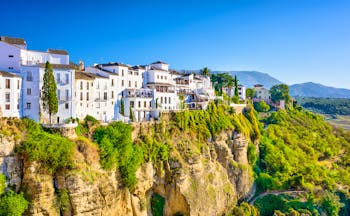
This is a six-night fly-drive touring holiday that can be extended. You tour the picturesque white villages behind the coast and also stop in the sherry town of Jerez.
Al Andalus southern Iberian route train holiday
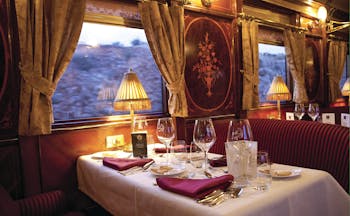
An 8-night luxury rail holiday aboard the opulent Al Andalus as it journeys from Seville to Madrid, with six nights on board and all meals plus excursions included.
Christmas period in Seville
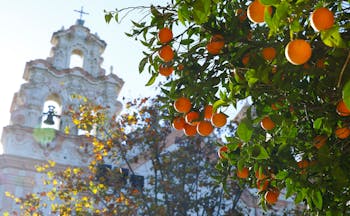
Seville is a city that cherishes and adores the Christmas traditions and festivities. In early December the city is transformed into a spectacle of lights, colours and activities. The main streets and squares are festooned with thousands of lights and Christmas decorations. Christmas markets can be found throughout December all over the city, for example in the Plaza del Duque and in the Avenida de la Constitución, and a special feature is the Nativity Scene Fair next to the cathedral. In Seville, Christmas is celebrated as a time for togetherness but if you happen to be in the city for New Year, the tone changes and the streets are filled with sound and revelling. (Restaurant reservations should be made well in advance for New Year’s Eve).
Frequently Asked Questions
Our bespoke, luxury hotel holidays can be
● Single centre or multi-centre● Long or short stays
● Combine a number of different hotels in different regions
● Utilise a variety of transport arrangements to Spain and within Spain, combining flights, hire-car, rail, ferries and private transfers
Our special interest holidays to Andalusia
● Food and wine holidays● Golf holidays
● Art holidays
● Cultural holidays
● Tennis holidays
● Private guided sightseeing
● Spa holidays
● Family holidays
Included in all our holidays
● Concierge service● Handcrafted helpful hints and local information provided with all our holidays
● Personal service by your sales consultant who looks after all aspects of your holiday
Call us on 01392 441245
Highlights of Andalusia
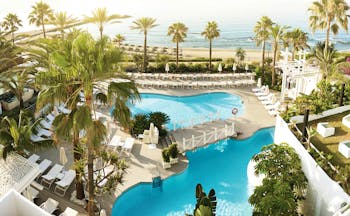
With 800km of coastline, there are plenty of beaches to choose from - facing the Atlantic are the long, sandy beaches of the Costa de la Luz, extending south from the Portuguese border to Tarifa; covering the area between Malaga and Gibraltar is the famous Costa del Sol, known for its numerous beach resorts which range from the cheap and cheerful to exclusive luxury; to the south of Granada is the Costa Tropical, a stretch of coast with sandy coves and a pleasant microclimate; and to the east is the more rugged Costa de Almeria. A number of luxury resorts and hotels are located along each of these coastlines. Surrounding Granada is the Sierra Nevada, a mountain range where the Spanish mainland's highest peak can be found and home to white-washed mountain villages. In the far east of Andalusia is the Sierras de Cazorla, Segura y Las Villas Natural Park, the largest protected area in Spain where you can find hiking trails, mountain villages and many wild animals. Further south is The Cabo de Gata Natural Park, a land and sea reserve near Almeria which is home to unspoilt scenery and an abundance of wildlife. In the west of the region is the Doñana National Park, an extensive area in the delta of the Guadalquivir River which includes marshland and sand dunes and is a breeding ground of the endangered Iberian Lynx. Thanks to the region's great variety in landscapes, culture and cuisine, a luxury holiday to Andalusia is sure to be a delightful experience.
Cultural highlights of Andalusia
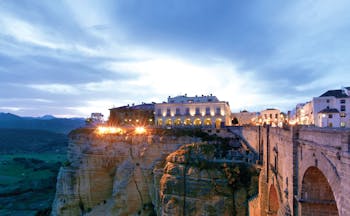
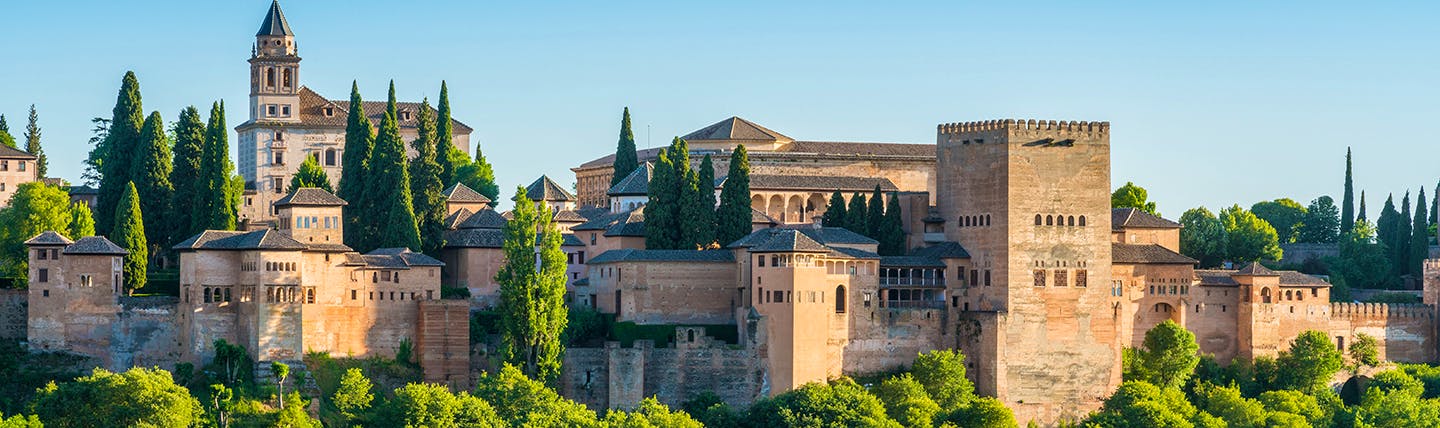
Many of the Andalusia's cultural highlights can be found in the three Moorish cities of Cordoba, Granada and Seville, all of which are home to a number of excellent luxury hotels. Cordoba, a UNESCO World Heritage Site and former centre of Muslim control during Andalusia's colonisation by the Islamic Empire. At the city's heart is the astounding Mezquita de Cordoba, a mediaeval mosque turned Catholic cathedral with endless Moorish arches, columns and glinting tiles of vibrant hues. Other highlights include the fascinating Jewish quarter and Roman ruins galore. Nearer the coast is Granada, where Islamic rule endured the longest and the magical Alhambra remains as a monument to this legacy. A 9th century palace fortress, it guards over the city from an elevated crag amongst vast, aromatic gardens. To the west, on the peaceful plains of River Guadalquivir, Seville quietly awaits discovery along with its three World Heritage Sites: the Alcazar palace, the gothic Cathedral and the General Archive of the Indies. Other towns and cities of interest in Andalusia include Jerez de la Frontera, where you can visit the sherry bodegas which make the city famous and watch the dressage displays which are held at The Royal Andalusian School of Equestrian Art; Cadiz, the oldest city in Europe which is surrounded almost entirely by water; Ronda, a spectacular city which is split in half by a narrow gorge; Malaga, birthplace of Picasso and home to a Museum which displays a collection of his work; the small town of Baeza, where you can find stunning examples of Renaissance architecture; and Almeria, a coastal city which is dominated by the Alcazaba, the largest Moorish fortress in Spain. During your stay in Andalusia make sure to witness the seductive art of flamenco. Alluring, passionate and cathartic, it's easy to understand how this gypsy tradition has become one of the most familiar emblems of Spanish culture.
Festivals in Andalusia
There are a huge number of local festivals held in villages, towns and cities throughout Andalusia, many of which have a religious significance. 5 January: Three Kings parades, February: Shrove Tuesday Carnivals, February: Seville Tapas Fair, February to March: Jerez Flamenco Festival, March/April: Holy week celebrations, April to October: Seville Bullfighting season, April/May: Seville Spring Fair, April/May: Úbeda Classical Music Festival, Mid May: Jerez Horse Fair, June to July: Granada Music & Dance Festival, June - July: Cordoba Guitar Festival, August: Malaga Summer Fair, September: Ronda bullfighting festival, November: Granada Jazz Festival.
Gastronomy in Andalusia
Cuisine in Andalusia is diverse, varying throughout the region and combining Arabic flavours with more common Mediterranean ingredients such as seafood, olive oil and an abundance of fresh fruit and vegetables. As the birthplace of tapas, Andalusia is an excellent place to try the snacks which are often served free with drinks in Granada. Other Andalusian specialities include Serrano ham from the Sierra Nevada and sherry from Jerez de la Frontera, as well as dishes such as ‘Ajo blanco’ (a white gazpacho), ‘Espetos de sardina’ (roasted sardines), ‘Huevos a la flamenca’ (baked eggs with vegetables) and ‘Fritura de pescado’ (mixed fried fish).
Andalusia travel information
Andalusia is reached very easily from the UK by air and rail. We can arrange for you to travel by train with overnight stops. Some clients choose to take their own car all the way.By air
Andalusia's main airport is in Malaga, served by flights to cities throughout Spain and the rest of Europe by airlines including British Airways. Granada airport is also served by British Airways flights, while low cost carriers have flights to Seville, Almeria and Jerez de la Frontera.Rail travel
There are train stations in all the main towns and cities within Andalusia, with regular services making rail travel a convenient option. Many long distance trains travel to Andalusia, with services to both Barcelona and Madrid running from Malaga and Seville.Car hire
Car-hire is recommended when travelling outside the principal cities, and is often the easiest way to travel around.Two centre recommendations
A popular multi-centre holiday in Andalusia is to combine the three cities of Seville, Cordoba and Granada (easily done by train). For a relaxing holiday you can extend your stay with a few days at a luxury resort in the countryside or on the coast.Our bespoke, luxury hotel holidays can be
● Single centre or multi-centre● Long or short stays
● Combine a number of different hotels in different regions
● Utilise a variety of transport arrangements to Spain and within Spain, combining flights, hire-car, rail, ferries and private transfers
Our special interest holidays to Andalusia
● Food and wine holidays● Golf holidays
● Art holidays
● Cultural holidays
● Tennis holidays
● Private guided sightseeing
● Spa holidays
● Family holidays
Included in all our holidays
● Concierge service● Handcrafted helpful hints and local information provided with all our holidays
● Personal service by your sales consultant who looks after all aspects of your holiday
Call us on 01392 441245
Our bespoke, luxury hotel holidays can be
● Single centre or multi-centre● Long or short stays
● Combine a number of different hotels in different regions
● Utilise a variety of transport arrangements to Spain and within Spain, combining flights, hire-car, rail, ferries and private transfers
Our special interest holidays to Andalusia
● Food and wine holidays● Golf holidays
● Art holidays
● Cultural holidays
● Tennis holidays
● Private guided sightseeing
● Spa holidays
● Family holidays
Included in all our holidays
● Concierge service● Handcrafted helpful hints and local information provided with all our holidays
● Personal service by your sales consultant who looks after all aspects of your holiday