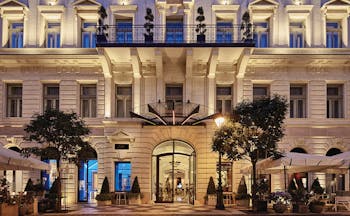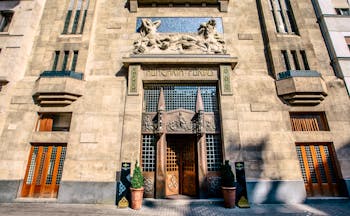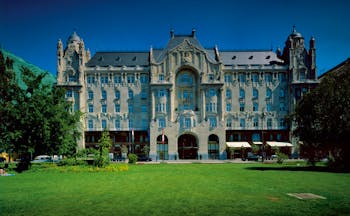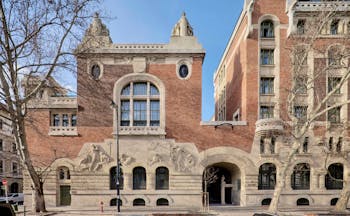
Luxury hotel holidays to Hungary

Luxury holidays to Hungary: luxury hotel holidays, touring holidays and special interest holidays

An Expressions tailor-made holiday to Hungary entices travellers as a country like no other, with a unique language and culture transplanted from Central Asia more than a thousand years ago. Situated right at the heart of Europe, and often mistakenly classified as one of the Balkan countries alongside neighbours Romania, Serbia and Croatia, Hungary boasts a spectacular setting on the banks of the Danube and an enchanting Mitteleuropa vibe – coffee houses and Turkish baths, Habsburg splendours and baroque architecture. Budapest naturally attracts the bulk of visitors to Hungary. With Budapest’s spectacular buildings and hotels, few ever venture beyond the city, except perhaps for a day trip on the Danube Bend. Richly rewarded as they will be, ignoring Hungary’s other towns and regions is a huge mistake: the farmland of the Southern Plain, the beautiful, vineyard-covered Villany Hills in Transdanubia, the forested Northern Uplands bordering Ukraine, the historic town of Sopron so enticingly close to Vienna, the Turkish-flavoured town of Pecs, and the resorts of Lake Balaton – Hungary is a fantastic country to explore, standing at the crossroads of East and West.

Hungary - Frequently Asked Questions

Budapest is often described as one of Europe's great capital cities. What makes it distinctive, and is it worth a dedicated visit?

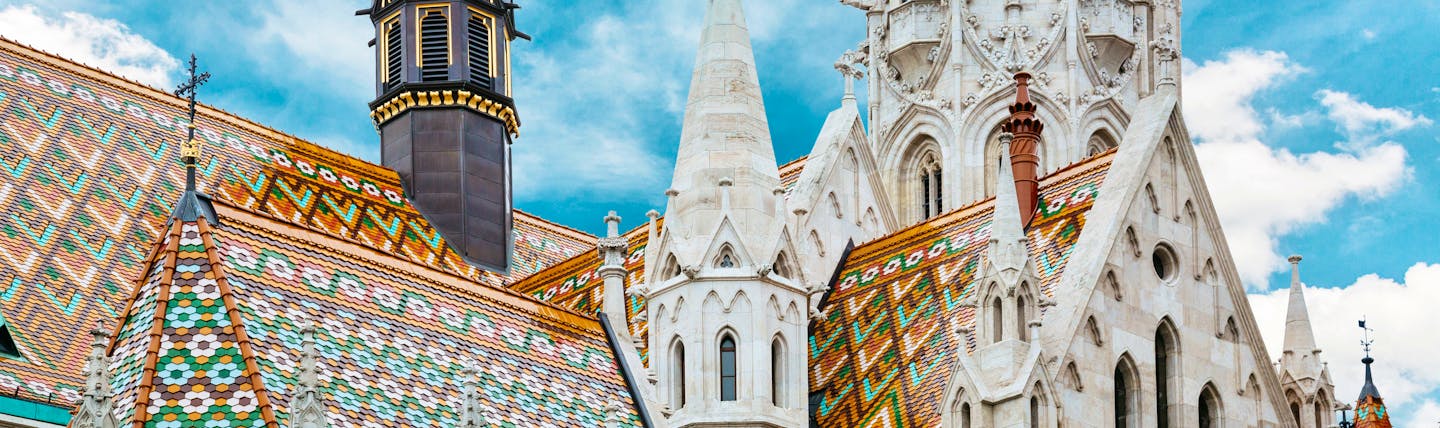
Budapest is distinctive in a way that takes most visitors slightly by surprise. The city is effectively two places — Buda and Pest — divided by the Danube and connected by a series of bridges of which the Chain Bridge, dating from the mid-nineteenth century, is the most famous. Buda is hilly, historic and relatively quiet: the castle district, Matthias Church, the Fishermen's Bastion with its extraordinary views over the river, and the older residential streets of the hill. Pest is the city of wide Hausmann-esque boulevards, the neo-Gothic Parliament building on the riverbank, the great State Opera House, the grand coffee houses of the Andrássy út and the faded imperial grandeur of the Keleti railway station. Together they make a city of real depth and considerable beauty, with an atmosphere — the thermal baths, the ruin bars, the Jewish Quarter, the river at night — that is quite its own. Three nights is the minimum that does it justice; four allows a more relaxed pace and perhaps a day trip on the Danube Bend to Szentendre or Esztergom. Budapest works very well as a dedicated visit, and we offer it both by air and as part of a wider rail itinerary. It also consistently surprises clients who arrive with modest expectations and leave wanting to return.

How do you travel from the UK to Budapest, and is it possible to go entirely by train?

Entirely by train, yes — and Budapest is one of the more straightforward central European destinations to reach by rail from London. The standard approach takes the Eurostar to Brussels or Paris, then continues by fast train through Cologne and Frankfurt or through Zurich and Vienna to Budapest. Travelling via Zurich and Vienna on a day train is one of the most scenic routes in Europe — crossing the Arlberg Pass in Austria before tracking the Danube east from Vienna to Budapest — and the whole journey, with an overnight stop in Zurich or Vienna, takes two comfortable days. The Nightjet overnight sleeper also runs to Vienna from Amsterdam and Cologne, and from Vienna the onward journey to Budapest is under three hours by Railjet — so a combination of the Nightjet to Vienna followed by a morning train to Budapest is a practical and enjoyable option. For those who prefer to fly, Budapest's international airport is well served from UK airports, and it is straightforward to fly one way and return by train, which is how many of our circular itineraries are structured.

Which combinations with other countries work particularly well when Budapest is included?

Budapest sits at the natural end point of several very satisfying rail tours. Vienna and Budapest is the most focused pairing — the two cities are under three hours apart by Railjet, they share a Habsburg inheritance while being temperamentally very different from each other, and the contrast between imperial Vienna and Magyar Budapest makes for a trip that is greater than the sum of its parts. An eight-night itinerary combining a night in Zurich, three nights in Vienna and three nights in Budapest, travelling all the way by train, is one of our most popular central European holidays. Prague, Vienna and Budapest is the natural extension of this — nine to eleven nights taking in three of the great capitals of the former Habsburg world, each distinctive, each connected by fast and comfortable trains. For something more ambitious, our eleven-night itinerary travelling the Arlberg Pass from Switzerland through Innsbruck and Salzburg to Vienna and then on to Budapest offers a longer sweep across the architecture of central Europe. Budapest also works well as the end point of tours that begin in Germany — Berlin, Prague, Vienna and Budapest is a coherent if demanding fourteen-night itinerary for those who want a serious journey through the history of the continent.

Hungary is associated with thermal baths. Is that a genuine part of what a visit offers, or primarily a tourist attraction?

It is genuinely central to Budapest's character rather than an add-on for visitors. Hungary sits above one of the most significant geothermal zones in Europe, and Budapest has more thermal springs within its city boundary than any other capital in the world. The great bath complexes — the Széchenyi in City Park with its outdoor pools and yellow neo-Baroque pavilions, the Gellért on the Buda bank with its Art Nouveau interiors, the Rudas with its Ottoman dome still intact from the sixteenth century — are used daily by local people as much as by visitors, and spending a morning or afternoon in one of them is as authentic an experience of Budapest as visiting the Parliament or the Opera. The ritual of the baths — moving between pools of different temperatures, taking a steam, sitting in the outdoor pool in winter with snow on the surrounding rooftops — is something clients consistently describe as one of the highlights of the trip. We include information on the baths in the practical notes we provide with all Budapest itineraries, with recommendations on which to visit depending on what the client is looking for.

Is Budapest best in a particular season, and are there times when it is especially rewarding?

Budapest is a year-round city and each season makes a different case for itself. Spring — April and May — is when the city is at its most comfortable and the Danube embankments and city parks are at their most photogenic, with blossom along the river and the long evenings beginning to open up. Summer is warm and lively, with outdoor concerts, terrace restaurants along the Danube and the thermal baths at their most sociable; the city is busy but not overwhelmed in the way that some more compact European capitals can be. Autumn brings a beautiful quality of light and the atmospheric appeal of the grand coffee houses takes on a deeper resonance as the evenings draw in. Winter is underrated — Budapest in December, with the Christmas markets on Vörösmarty Square and the thermal baths steaming against the cold, is a particularly evocative experience, and the city is quieter and in many ways more itself than at the height of summer. The Hungarian State Opera is in full season from September through June, and booking a performance there — the building is one of the most beautiful opera houses in Europe — is something we can arrange as part of any itinerary.

Our bespoke, luxury hotel holidays can be

● Single centre or multi-centre
● Long or short stays
● Combine a number of different hotels in different regions
● Utilise a variety of transport arrangements to Hungary and within Hungary, combining flights, hire-car, rail and private transfers

Our special interest holidays to Hungary

● Cultural tours for individuals
● Private guided sightseeing
● City breaks
● Spa breaks
● Family holidays

Included in all our holidays

● Concierge service
● Handcrafted helpful hints and local information provided with all our holidays
● Personal service by your sales consultant who looks after all aspects of your holiday
Call us on 01392 441245

Highlights of Hungary

Budapest, with its coffee houses and thermal baths, as well of course as its wonderful cobbled Old Town, and the mansions, palace and sheer grandiosity of Castle Hill; Sopron one of the most charming medieval cities in Europe, and a gateway to the stunning Lover Hills; Esztergom, seat of Roman Catholicism in Hungary, and site of the country’s most important basilica; Visegrad, with its hilltop medieval castle overlooking the Danube Bend; the baroque architecture and wine cellars of Eger; Hortobagy, a tiny village at the heart of Hungary’s puszta, the country’s original Wild West; the Great Plains cultural capital of Szeged, full of Art Nouveau masterpieces; the vineyards of Villany; Pecs, with its Turkish feel and fabulous museums and mosques, galleries and Roman tombs; Lake Balaton, full of water sports resorts; Heviz, Europe’s largest thermal lake; Sumeg, home to one of Hungary’s most imposing castles; Danube river cruises; Veszprem, with its perfectly preserved castle district.

Travel around Hungary

Public transport is well developed in Hungary, with efficient bus and, in many cities and towns, trolleybus services. Budapest, Szeged, Miskolc and Debrecen also have trams, and there's a three-line metro (underground or subway) system and a suburban railway known as the HÉV in the capital. Hungary's bus network is a good - and sometimes necessary - alternative to the trains, with train travel on the Great Plain in Southern Transdanubia normally involving several time-consuming changes.

Hungary travel information

Hungary can be visited as part of one of our rail touring holidays of Central and Eastern Europe or as a stand-alone holiday by air.

By air

We include a scheduled flight from London to Budapest International Airport with British Airways. Flight time is about 2 and a half hours.

Car hire

Car-hire is the best way to explore, and from April to late October there are numerous boat trips along the Danube from Budapest to Szentendre, Vác, Visegrád and Esztergom.

Our bespoke, luxury hotel holidays can be

● Single centre or multi-centre
● Long or short stays
● Combine a number of different hotels in different regions
● Utilise a variety of transport arrangements to Hungary and within Hungary, combining flights, hire-car, rail and private transfers

Our special interest holidays to Hungary

● Cultural tours for individuals
● Private guided sightseeing
● City breaks
● Spa breaks
● Family holidays

Included in all our holidays

● Concierge service
● Handcrafted helpful hints and local information provided with all our holidays
● Personal service by your sales consultant who looks after all aspects of your holiday
Capital Budapest

Airports Ferihegy International Airport in Budapest

Currency Hungarian Forint

Size 35,000 sq. miles

Population 9.7 million

Average temperature Summers are warm, sometimes very hot, with average temperatures of about 26°C; winters are cold and damp, with January averages of about 4°C.

Call us on 01392 441245

Here you will find a map of Hungary showing the locations of the hotels that we offer

Our bespoke, luxury hotel holidays can be

● Single centre or multi-centre
● Long or short stays
● Combine a number of different hotels in different regions
● Utilise a variety of transport arrangements to Hungary and within Hungary, combining flights, hire-car, rail and private transfers

Our special interest holidays to Hungary

● Cultural tours for individuals
● Private guided sightseeing
● City breaks
● Spa breaks
● Family holidays

Included in all our holidays

● Concierge service
● Handcrafted helpful hints and local information provided with all our holidays
● Personal service by your sales consultant who looks after all aspects of your holiday
Capital Budapest

Airports Ferihegy International Airport in Budapest

Currency Hungarian Forint

Size 35,000 sq. miles

Population 9.7 million

Average temperature Summers are warm, sometimes very hot, with average temperatures of about 26°C; winters are cold and damp, with January averages of about 4°C.

Call us on 01392 441245