Luxury hotel holidays to the Heart of Spain

Luxury holidays to the Heart of Spain: luxury hotel holidays, touring holidays and special interest holidays

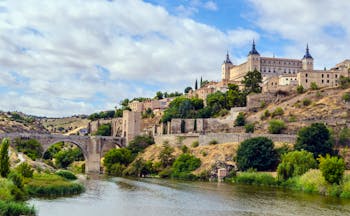
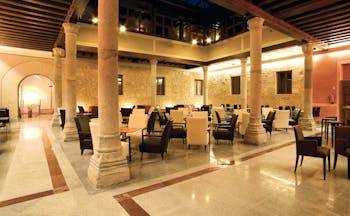
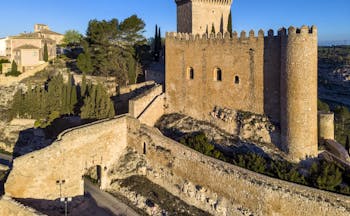
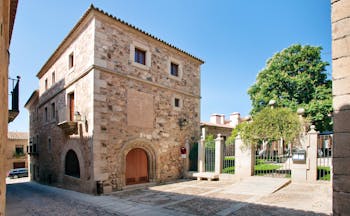
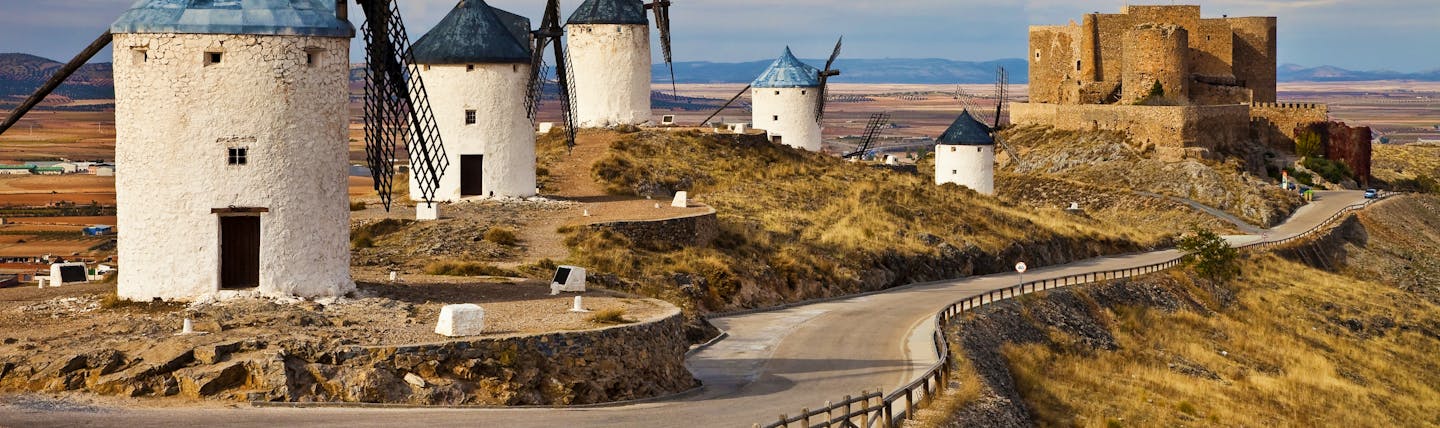
An Expressions tailor-made holiday to the Heart of Spain feature some of the best four and five star hotels in central Spain, featuring vineyard hotels, rural estates and city properties. Located at the geographical heart of Spain is its vibrant capital, Madrid, where days can be filled with art galleries and atmospheric outdoor cafes, and evenings promise an energetic nightlife. Surrounding the city are the dry plains of the country's central plateau which are divided by spectacular mountain ranges and dotted with numerous castles, magnificent cathedrals and ancient Roman ruins. The regions which make up Spain's central plateau have all played a hugely important role in the history of modern Spain, which is evident in the numerous castles which were built to protect towns and villages as the Moors fought the Christians in the 10th and 11th centuries. These are some of the least visited parts of Spain where few tourists venture outside of the main cities, ensuring that visitors will leave feeling like they have discovered something new. At the centre of Spain is Madrid, where atmospheric cobbled streets link bustling squares which are filled with pavement cafes and flea markets, whilst tree-line boulevards are overlooked by neo-classical buildings. Surrounding the city are the dry plains of the country's central plateau which are divided by spectacular mountain ranges and dotted with numerous castles, magnificent cathedrals and ancient Roman ruins. To the north of Madrid is Castilla y León, an elevated region which has played a hugely important role in the history of modern Spain. Rolling countryside is littered with historic cities, isolated villages and mediaeval castles, built by the Christians to defend against the Moorish invaders. Salamanca, Avila, Segovia, León, Valladolid and Burgos are all home to a wealth of art and stunning architecture, including Gothic cathedrals and Roman structures. Away from the cities are natural attractions including mountain ranges and nature reserves, with wheat fields and vineyards covering the high plateaus. To the south and east of Madrid is Castilla-La Mancha, an expansive region with dry plains stretching towards mountains in the distance. The predominantly flat scenery is made up of olive groves, wheat fields, extensive vineyards, hilltop castles and the iconic windmills described by Cervantes. Head to the historic city of Toledo, where Christian, Jewish and Arab cultures blend to create a popular tourist destination, or to Cuenca, a dramatic town where houses seemingly dangle over a plunging gorge. Further west towards the border with Portugal is Extremadura, a region with green pastures and rolling hills, forests and fertile river valleys, as well as charming towns boasting stunning examples of Roman architecture. Elaborate palaces and manor houses are found in clusters throughout the region, built by conquistadors with gold from the New World.

Food and wine in the Heart of Spain

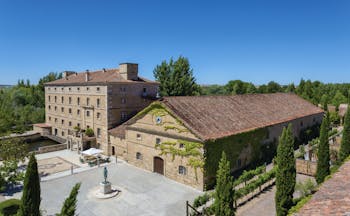
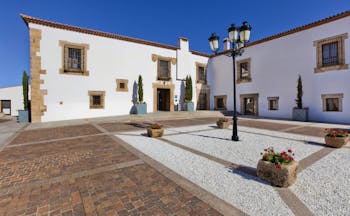
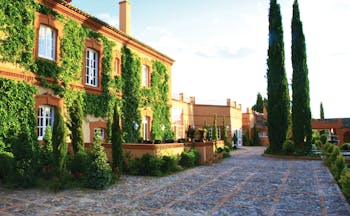
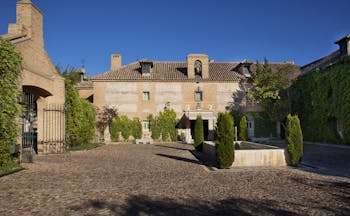
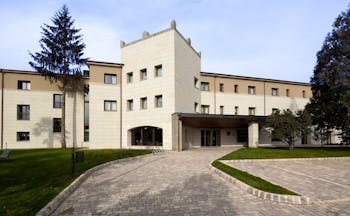
Stay on a wine and olive oil producing estate in the countryside near the city of Salamanca for this authentic immersion into the food and wine of the heart of Spain.

Spanish Extremadura History and Heritage Tour

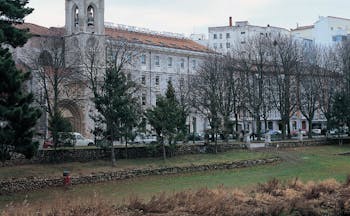
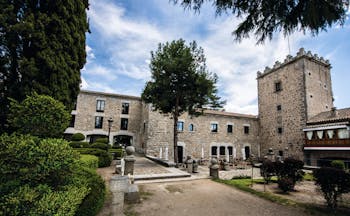
This is a prime example of our discovery tours of this region in central Spain. A 9-night fly-drive tour staying in five historic parador hotels.

Heart of Spain - Frequently Asked Questions

Most people visiting Spain head straight to Andalusia or the coast. What makes the Heart of Spain — Castile, La Mancha and Extremadura — worth a holiday in its own right?

The Heart of Spain is one of the most genuinely rewarding and least visited parts of the country, and the reason most people overlook it is simply that it doesn't have the obvious marketing hook of Andalusia or the beaches. What it does have is extraordinary: a concentration of historic cities that are among the finest in Europe but without the visitor numbers that overwhelm the more famous destinations, a landscape that ranges from the high plateau of La Mancha — flat, windswept, dotted with hilltop castles and ancient windmills — to the green river valleys and Roman cities of Extremadura in the west, and a depth of history that runs from Roman occupation through Moorish rule, Christian reconquest and the age of the conquistadors. Toledo alone — where Christian, Moorish and Jewish cultures coexisted and left behind a layered city of extraordinary richness — is worth the flight. Salamanca, with its golden sandstone university city and one of the most beautiful plazas in Spain, is another. Segovia has a Roman aqueduct that has stood for two thousand years and a fairy-tale castle on a rocky crag above the plain. Ávila is entirely surrounded by its original medieval walls. These are not minor sights: they are among the greatest in Europe, and the fact that you can visit them without queuing or fighting for a restaurant table is a genuine advantage. A fly-drive holiday here suits a particular kind of traveller — curious, unhurried, interested in history and in seeing Spain beyond the brochure — and for that client it is one of the most satisfying holidays we offer.

You mention paradores throughout this region. Which are the most special, and how do you build an itinerary around them?

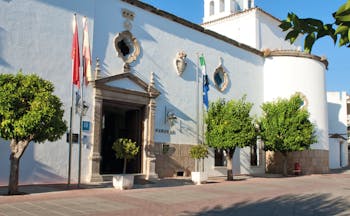
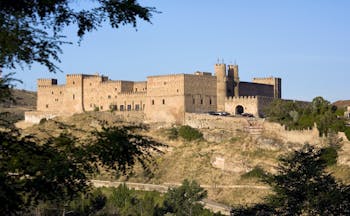
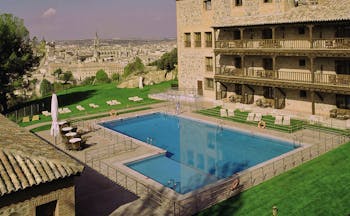
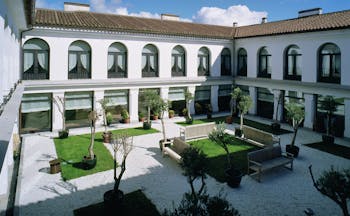
The Heart of Spain has some of the finest paradores in the whole network, and this is the region where the parador concept — historic buildings converted into hotels, each one rooted in its setting — really comes into its own. The Parador de Toledo occupies a hilltop position above the city with views across the entire old town that are simply unforgettable, particularly at dusk when the cathedral and the roofline of the city glow in the evening light. The Parador de Cáceres is a fifteenth-century palace in the heart of Cáceres old town — itself a UNESCO World Heritage Site — with interiors of great character and a restaurant serving Extremaduran cuisine including the region's famous Ibérico ham and local game. The Parador de Trujillo, a converted sixteenth-century convent in the centre of a town that produced some of Spain's greatest conquistadors, has a beautiful cloister garden and a serene quality that is entirely at odds with the dramatic history on its doorstep. The Parador de Cuenca is extraordinary: a converted fourteenth-century convent perched above the gorge of the Júcar, directly opposite the famous hanging houses of Cuenca and connected to the old town by a medieval bridge. The Parador de Sigüenza occupies a twelfth-century castle, one of the most imposing parador buildings in Spain. A fly-drive itinerary connecting four or five of these in sequence — perhaps Toledo, Cuenca, Sigüenza and then west to Cáceres and Trujillo — gives you nine or ten nights that feel completely different from any other holiday in Spain, staying in buildings that are historical monuments in their own right and exploring the surrounding country at your own pace.

We have heard of Salamanca but not really explored it. And what is the Hacienda Zorita?

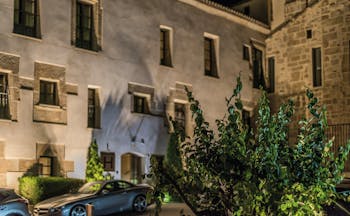
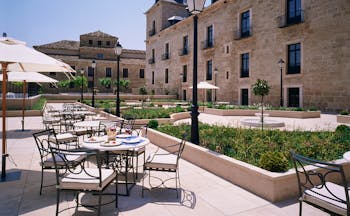
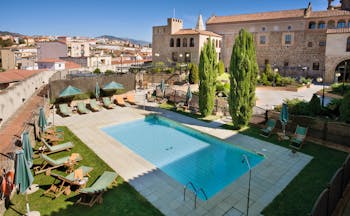
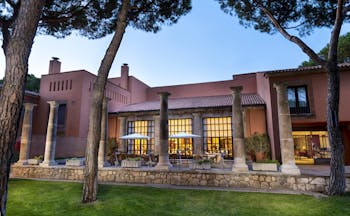
Salamanca is one of those cities that surprises people who come to it without high expectations and leaves them wondering why they had never been before. It is a university city — one of the oldest in Europe, founded in 1218 — and the combination of student energy, golden Plateresque stonework and a Plaza Mayor that most Spanish cities would give anything to have makes it one of the most enjoyable places to spend two or three days in Spain. The old and new cathedrals stand side by side; the university facade is a masterpiece of Renaissance decoration; and the city has a warmth and liveliness that the more heavily visited historic cities can sometimes lack. The Hospes Palacio de San Esteban, a five-star hotel in a converted sixteenth-century monastery in the old town, is our recommended base for the city itself — beautifully restored, with the original stonework and cloisters intact and modern comfort throughout. Seven miles outside Salamanca, on the banks of the River Tormes, the Hacienda Zorita is something quite different and one of our most distinctive hotels in Spain. Founded as a monastery in 1366 and later converted into a flour mill, the estate has been brought back to life as a five-star wine hotel and spa producing its own wines under the Marqués de la Concordia label. The restaurant, Zorita's Kitchen, holds a Michelin star and uses produce grown on the estate. The wine and olive spa is genuinely unusual. We offer a dedicated five-night food and wine holiday based here — with a dinner with wines, a wine tasting and a spa treatment included — or it works equally well as part of a broader Castile touring itinerary, combining a stay at Zorita with the paradores to the south.

The literary and historical connections to this region seem extraordinary — Don Quixote, the conquistadors, Cervantes. How does that come alive on a holiday?

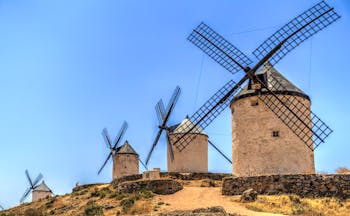
This is one of the things that makes the Heart of Spain genuinely different from anywhere else in Europe, and it rewards clients who have a sense of history or literature enormously. Don Quixote is the first modern novel — published in 1605, still the most read book in Spanish — and the landscape of La Mancha that Cervantes described, the flat plain, the windmills, the dusty roads between isolated villages, is still entirely recognisable today. The windmills of Consuegra, a row of traditional mills on a ridge above the plain with a medieval castle alongside them, are the most evocative spot in Don Quixote country, and Alcalá de Henares — the birthplace of Cervantes, just east of Madrid and easily visited as a day trip — holds a Cervantes week each October that is worth timing a visit around if literature matters to you. Extremadura has an entirely different historical resonance: this is the region that produced the conquistadors who conquered the New World. Hernán Cortés, who conquered Mexico, was born near Mérida. Francisco Pizarro, who conquered Peru, was born in Trujillo, whose main square is still dominated by his equestrian statue. The palaces the returning conquistadors built with their American gold still line the streets of Trujillo and Cáceres, and the Parador de Trujillo — a converted convent in the centre of town — puts you in the middle of that story in the most direct way possible. Mérida, meanwhile, has Roman ruins that rival anything in France or the rest of Spain: the theatre, the amphitheatre, the circus and the bridge over the Guadiana are all exceptionally well preserved and the site museum is one of the finest Roman collections in Europe. A fly-drive itinerary that weaves together the literary landscape of La Mancha, the university cities of Castile and the conquistador towns of Extremadura gives a kind of depth and narrative that few holidays anywhere can match.

How does a fly-drive holiday work here, and can we combine the Heart of Spain with Madrid or with Andalusia?

Fly-drive is the natural way to explore this region, and it is also one of the easiest self-drive holidays in Spain. You fly into Madrid — well served from all UK airports — collect a hire car at the airport and from that point the whole of central Spain is accessible. The cities and paradores are spread across a large area but the roads are excellent and relatively uncrowded, distances between stops are manageable, and the landscape itself — the vast open plateau, the mountain passes, the river gorges — is worth driving through rather than flying over. A typical fly-drive itinerary of seven to nine nights might open in Toledo, an hour south of Madrid and the logical first stop, then move through Cuenca or Sigüenza before crossing to Extremadura for Cáceres, Trujillo and Mérida, returning north through Salamanca and Ávila to drop the car and fly home from Madrid. The combination with Madrid is very natural and popular: two or three nights in the capital — the Prado, the Reina Sofía, the Retiro Park — followed by a fly-drive loop through the surrounding region gives a complete picture of central Spain. The combination with Andalusia is also a well-established route: the drive south from Madrid through Toledo and La Mancha to Córdoba or Seville is very doable over two days with an overnight stop, and several of our touring itineraries follow exactly this arc, often spending a night in Baeza or Úbeda — two Renaissance towns in the olive country of northern Andalusia that feel completely undiscovered and have excellent parador hotels — on the way south. We handle all the logistics: flights, hire car, hotel sequence and any included experiences, so the drive itself feels like exploration rather than administration.

Our bespoke, luxury hotel holidays can be

● Single centre or multi-centre
● Long or short stays
● Combine a number of different hotels in different regions
● Utilise a variety of transport arrangements to Spain and within Spain, combining flights, hire-car, rail, ferries and private transfers

Our special interest holidays to the Heart of Spai

● Food and wine holidays
● Golf holidays
● Art holidays
● Cultural holidays
● Private guided sightseeing
● Spa holidays
● Family holidays

Included in all our holidays

● Concierge service
● Handcrafted helpful hints and local information provided with all our holidays
● Personal service by your sales consultant who looks after all aspects of your holiday
Call us on 01392 441245

Highlights of the Heart of Spain

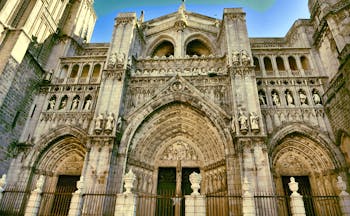
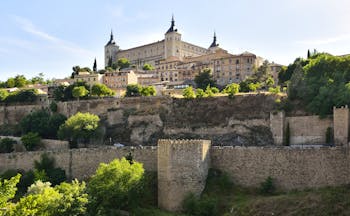
The three world-class art galleries which make up Madrid's Golden Triangle of Art, home to works by Pablo Picasso, Salvador Dalí and Francisco de Goya. The historical sights of Old Madrid, including the lavish Royal Palace, the grand Plaza Mayor and the city's spiritual centre, Puerta del Sol. Parque del Retiro, a popular spot for relaxation in the centre of Madrid with a boating lake. El Escorial, a large royal residence just outside Madrid which also functions as a monastery and is where many Spanish monarchs are buried. The Gothic cathedrals of León, Burgos and Toledo which feature stunning stained glass, mediaeval art and elaborate sculptures. The numerous castles which are scattered across the region including the Gothic-style Belmonte Castle, the Mudejár Coca Castle and the Moorish Alcazaba of Badajoz. The university city of Alcalá de Henares, birthplace of Cervantes, the 16th century author who wrote about the adventures of Don Quixote. The walled city of Ávila. The university city of Salamanca. Segovia, with its Roman Aqueduct and distinctive castle. Cuenca, a picturesque old town with houses which appear to hang over a gorge. The iconic windmills which sit on the plains near Consuegra. Roman ruins in Mérida. Elaborate palaces and manor houses in Trujillo and Cáceres. The wine-producing regions throughout central Spain including Ribera del Duero, La Mancha and Valdepeñas where visitors can visit vineyards and enjoy wine tastings. Mountain ranges which divide the central plateau, with many opportunities for walking and rock climbing.

Festivals in the Heart of Spain

February: Caja Madrid Flamenco Festival, February to March: Madrid Carnival, February to March: Madrid Contemporary Art Fair, March/April: Holy week celebrations, May: San Isidro bullfighting festival (Madrid), May/June: Toledo Corpus Christi processions (Toledo), July to August: Madrid summer arts festival, October: Saffron Rose Festival (Consuegra), October: Cervantes Week (Alcala de Henares), October to November: Madrid Autumn Festival

Gastronomy in the Heart of Spain

As expected, Madrid is home to some excellent restaurants serving a great range of cuisine from throughout Spain and around the world. Roasted meat and game as well as a variety of broths and stews are common features on menus throughout central Spain, where traditional cooking is simple and hearty. Cuisine varies slightly between the regions, with more paprika and saffron being used in the south. Various pulses are grown on the plains of Castilla y León, whilst Manchego cheese produced in La Mancha and high quality Ibérico ham is produced in Extremadura. There are a number of wine regions which produce high-quality red and white wines. Local dishes include ‘Pollo a lo Padre Pero’ (chicken with a spicy sauce), ‘El frite’ (fried lamb), ‘Sopa de ajo’ (garlic soup), ‘Pisto manchego’ (similar to ratatouille), ‘Yemas’ (a rich dessert made with egg yolks).

Climate in the Heart of Spain

The climate of central Spain is generally quite extreme, with extremely hot summers and bitterly cold yet dry winters. Rainfall is generally quite low thanks to the mountains which surround the region. Madrid can be almost unbearable in the summer months as temperatures reach 40 degrees, whilst during the temperatures regularly drop below freezing. Spring and autumn are the best times to visit as temperatures are warm and pleasant, although there is increased rainfall.

Heart of Spain travel information

The Heart of Spain is reached very easily from the UK by air and rail.

By air

Madrid-Barajas Airport is the largest within Spain and is served by a huge number of flights to the UK and other destinations around the world. There are a number of daily flights from London airports with British Airways, as well as flights with low-cost airlines to regional airports. Madrid airport is linked to the city centre by metro and bus. There are a few small regional airports in central Spain, but these operate a very limited number of flights to other cities in Spain.

Rail travel

High speed trains run between Madrid and other cities in Spain including Barcelona, Seville and Valencia. It is also possible to travel from Paris to Madrid, although it is necessary to travel via Barcelona. Most other towns and cities have a train station, allowing easy access to Madrid.

Car hire

As many important towns and cities are easily accessible by rail a hire-car is not essential but is advised as many local highlights are in rural locations. Hire-cars can be collected from a great range of locations.

Two centre recommendations

The starting point for most holidays to central Spain is Madrid, so combine a stay here with a long stay in a relaxing rural hotel, or discover the region's culture and history with a touring holiday visiting a number of important towns and cities.

Our bespoke, luxury hotel holidays can be

● Single centre or multi-centre
● Long or short stays
● Combine a number of different hotels in different regions
● Utilise a variety of transport arrangements to Spain and within Spain, combining flights, hire-car, rail, ferries and private transfers

Our special interest holidays to the Heart of Spai

● Food and wine holidays
● Golf holidays
● Art holidays
● Cultural holidays
● Private guided sightseeing
● Spa holidays
● Family holidays

Included in all our holidays

● Concierge service
● Handcrafted helpful hints and local information provided with all our holidays
● Personal service by your sales consultant who looks after all aspects of your holiday
Call us on 01392 441245

Here you will find a map of Heart of Spain showing the locations of the hotels that we offer

Our bespoke, luxury hotel holidays can be

● Single centre or multi-centre
● Long or short stays
● Combine a number of different hotels in different regions
● Utilise a variety of transport arrangements to Spain and within Spain, combining flights, hire-car, rail, ferries and private transfers

Our special interest holidays to the Heart of Spai

● Food and wine holidays
● Golf holidays
● Art holidays
● Cultural holidays
● Private guided sightseeing
● Spa holidays
● Family holidays

Included in all our holidays

● Concierge service
● Handcrafted helpful hints and local information provided with all our holidays
● Personal service by your sales consultant who looks after all aspects of your holiday
Call us on 01392 441245