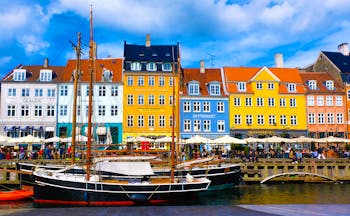

Norway's capital city, Oslo, nestles at the end of the Oslofjord surrounded by hills and islands. Oslo blends skilfully tradition and modernity. The iconic Oslo Opera House on the waterfront sits a short distance from the Akershus fortress and the Old Town Hall dating from 1641 is a stroll away from the Akrobaten pedestrian bridge, a near-futuristic construction of steel and glass. Much of Oslo is within walking distance from the centre and you can explore happily on foot for much of your stay. You'll notice that cars are very much absent from the centre and that trams are a very easy way of reaching places on the outskirts. A fast train serves the airport and there are numerous ferries from the harbour in front of the town hall that take you to the islands in the fjord and to historic villages along the coast.
Oslo
Norway’s fjord-fronting capital divides itself into three noteworthy areas for the visitor: central Oslo west, central Oslo east and Bygdoy.
Central Oslo west contains many of the city’s most important institutions. This part of the city grew into the capital’s heart in the second half of the 19th century. As well as the Nasjonalmuseet and the Nobel Peace Centre, there is the Karl Johans Gate, a cobblestone main thoroughfare, City Hall (Radhuset), Castle Park and modern architecture such as the Astrup Fearnley museum. Vintage sailing boats sit alongside stylish restaurants on the waterfront.
Central Oslo east is the medieval core of the city, founded by King Harald Hardrade in about 1049. Today this part of the city is a blend of ancient and modern, with many buildings dating from the 17th century but also with stunning new ones such as the Oslo Opera House and the Lambda Munch museum (MUNCH). Overlooking the water and clearly a strategic stronghold is Akershus Festning, a fortified castle dating from the reign of King Hakon V in 1299 and reconstructed over the years since. This part of the city is also home to many museums devoted to the history of Oslo and Norway throughout the ages, from the 17th Century to World War II.
Bygdoy, once an island in Oslofjord, is now joined to the mainland and is one of Oslo’s most exclusive residential areas but also home to a collection of museums that reflect Norway’s cultural history. The two most notable are the Norsk Folkermuseum and the Vikingskipshuset. The Viking Ship Museum is being rebuilt and will be relaunched as the Museum of the Viking Age towards the end of 2027. Others are the Kon-Tiki museum, the Norwegian maritime museum, and the Frammuseet (containing the Fram, a polar ship used for three expeditions including the one undertaken by Roald Amundsen). There is also a popular beach, Hukodden.
A short distance from the city are stunning green spaces including the Vigelandsparken with expressive sculptures and the Oslo forest to the north.
Around Oslofjorden
Oslo sits at the northern end of the Oslofjorden and on either side of this fjord can be found some of the oldest settlements in Norway, from the Stone Age and Bronze Age and it was in this area that the best preserved Viking ships in the world were unearthed. About one fifth of the population of Norway live in these ancient villages and towns along the shores of the Oslofjorden. Many burial mounds, castle and wooden structures remain as testament to the heritage of the region. There are many sheltered harbours, home to numerous fishing and sailing boats, quaysides, clapboard houses and islands just offshore. Notable towns to visit include Fredrikstad, which was once a stronghold but is now a lively creative centre of art galleries, bars and restaurants. To the north in the direction of Oslo you’ll find Jeloy with walking trails through woods and quiet sand and pebble beaches, then Son which is one of the best-preserved towns on the fjord, and Hvitsten with colourful wooden houses and beaches, frequented by Edvard Munch. On the western edge of the fjord there is a mixture of Viking remains such as at Borre with several burial mounds, a historical centre and the smallest national park in Norway, pretty towns such as Horten and Tonsberg, and the sun-drenched archipelago of Tjome and Verdens Ende, a popular destination for Norwegians in the summer months.
Christmas season in Oslo
Oslo is a city for all seasons but it’s hard to beat in the winter when it offers a unique combination of events, activities and winter sports – all within a short distance of the city centre. You should expect snow to fall between December and March although it may not settle in the centre of Oslo. Within just 20 minutes of the centre you can try your hand at skiing and tobogganing, and ice skating is possible at Spikersuppa by Karl Johans Gate. The Holmenkollen ski museum has an interactive exhibition, and for the more adventurous there are steaming hot fjord saunas that line the harbourside. The Christmas spirit is alive at the market in Karl Johans Gate in December and at the National Museum of Cultural History where there is a Christmas exhibition. On top of this there are cosy restaurants, boat trips on the fjord and stylish shopping.
Frequently Asked Questions
Our bespoke, luxury hotel holidays can be
● Single centre or multi-centre● Long or short stays
● Combine a number of different hotels in different regions
● Fly to Oslo and then use a mixture of transport
● Rail to Oslo via Copenhagen possible
● Mixture of transport includes flights, hire-car, trains, ferries
Our special interest holidays to Norway
● Cultural tours for individuals● Walking holidays
● Private guided sightseeing
● City breaks
● Ski breaks - downhill and cross-country
● Family holidays
● Hiking
● Biking
● Activities on water such as kayaking, fishing
● Northern Lights hunting
● Sami culture experiences
● Stay in snow hotels
Included in all our holidays
● Concierge service● Handcrafted helpful hints and local information provided with all our holidays
● Personal service by your sales consultant who looks after all aspects of your holiday
Call us on 01392 441245
Highlights of Oslo
Waterfront, Opera House, Akershus Fortress, Norwegian Resistance Museum, Frogner Park, Bydoy and its museums, Oslo city museum, Fjord cruise
Cultural highlights of Oslo
Munch museum, National museum, Viking Ship Museum, Kon-Tiki Museum, Astrup Fearnley Museum
Festivals of Oslo
Norwegian Wood music festival in June, Oslo World music festival, Christmas, Easter, Oslo Medieval Festival at the end of May, Oslo Chamber Music festival held in August, Oslo Jazz Festival held in August, Holmenkollen ski festival
Gastronomy of Oslo
Seafood of all sorts as well as game
Oslo and Oslofjord travel information
You’ll probably arrive at Oslo airport if flying from the UK, or if travelling by train from the UK to Norway, you’ll probably arrive from Gothenburg in Sweden. There are direct flights from London, Manchester, and Edinburgh.By rail
You can reach Oslo by train from London, generally with overnight stops in Cologne, Hamburg and Copenhagen. The train then take the bridge to Malmo and you change trains in Gothenburg for Oslo.By hire-car
You definitely do not need a car in Oslo itself but if you want to visit the Oslofjord and perhaps stay at the hotels we offer on the Oslofjord, then we do recommend a car for that. Driving in Norway is very straightforward and the roads are of excellent quality. Hire-cars come equipped with winter tyres in the winter months.By air
There are direct flights from London with British Airways, Norwegian and SAS. There are also direct flights from other UK regional airports.Our bespoke, luxury hotel holidays can be
● Single centre or multi-centre● Long or short stays
● Combine a number of different hotels in different regions
● Fly to Oslo and then use a mixture of transport
● Rail to Oslo via Copenhagen possible
● Mixture of transport includes flights, hire-car, trains, ferries
Our special interest holidays to Norway
● Cultural tours for individuals● Walking holidays
● Private guided sightseeing
● City breaks
● Ski breaks - downhill and cross-country
● Family holidays
● Hiking
● Biking
● Activities on water such as kayaking, fishing
● Northern Lights hunting
● Sami culture experiences
● Stay in snow hotels
Included in all our holidays
● Concierge service● Handcrafted helpful hints and local information provided with all our holidays
● Personal service by your sales consultant who looks after all aspects of your holiday
Call us on 01392 441245
Our bespoke, luxury hotel holidays can be
● Single centre or multi-centre● Long or short stays
● Combine a number of different hotels in different regions
● Fly to Oslo and then use a mixture of transport
● Rail to Oslo via Copenhagen possible
● Mixture of transport includes flights, hire-car, trains, ferries
Our special interest holidays to Norway
● Cultural tours for individuals● Walking holidays
● Private guided sightseeing
● City breaks
● Ski breaks - downhill and cross-country
● Family holidays
● Hiking
● Biking
● Activities on water such as kayaking, fishing
● Northern Lights hunting
● Sami culture experiences
● Stay in snow hotels
Included in all our holidays
● Concierge service● Handcrafted helpful hints and local information provided with all our holidays
● Personal service by your sales consultant who looks after all aspects of your holiday