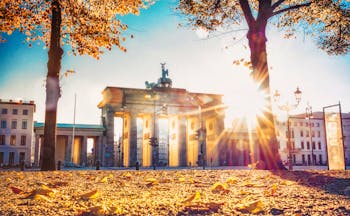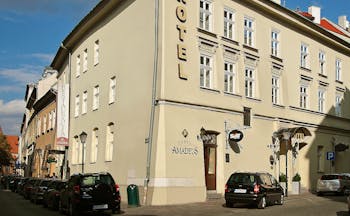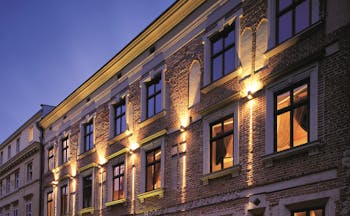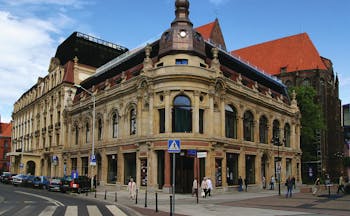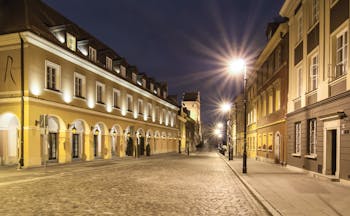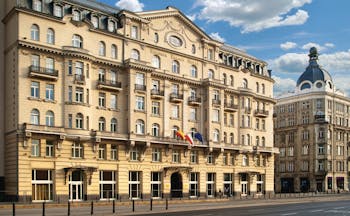
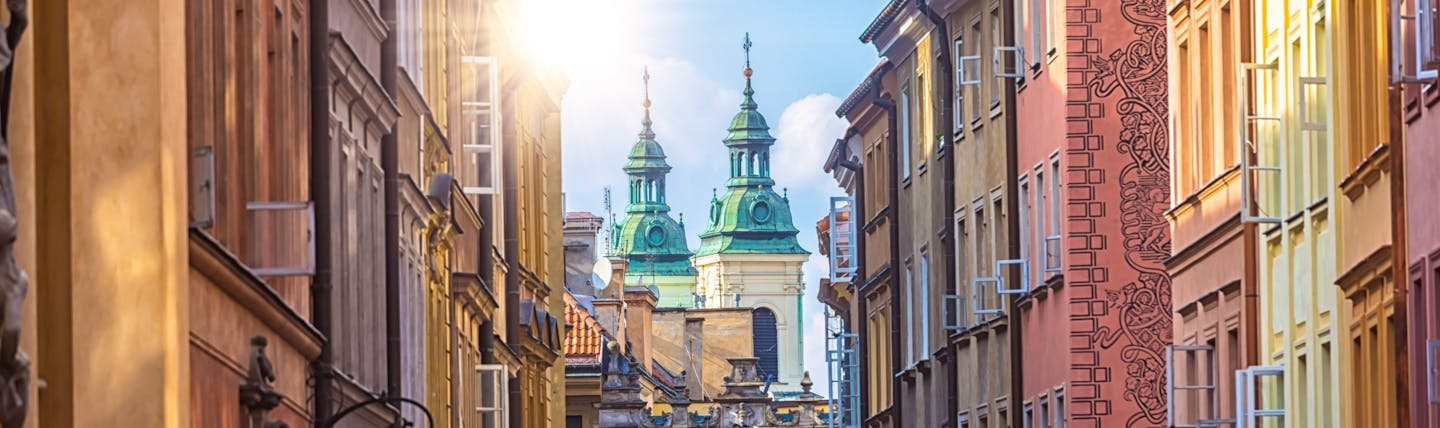
The history of Poland, as we know it today, began in the 10th century. Since then, the country has become a melting pot of key cultures, religions, and key moments in history, thanks in part to its many neighbours. There are stories, both ancient and modern, to be told in every corner, from the Tatras mountaintops, to the Masurian lakes and the Bialowieza Forest. The main cities are clusters of monuments, museums, synagogues under faithful restoration, and impressive buildings that reflect Gothic, Renaissance, Baroque, and Art Nouveau architecture. Outside these cities, Poland is a country of immense natural beauty. The sense of space, scale, and solitude is rivalled only by the likes of Switzerland. Flat plains are broken on the horizon by low, gentle mountains dotted with mediaeval ruins and Teutonic fortresses of red-brick. In the Carpathian Hills, picturesque wooden churches are found via winding hiking paths that then take you on into rich forest and past sublime rivers. In the north, lakes joined together by rivers and waterways make for fantastic canoeing trips for those prepared to make the excursion. The landscape lends itself to outdoor exploration and sports, while the cities bring you back to the layers of cultural history that ripple across Europe.The cuisine in Poland is best described as hearty, wholesome home-cooking. Popular local ingredients include pork, mushrooms, and beetroot, with regions specialising in duck, goose, and trout. Cosy restaurants in traditional buildings exist alongside fine-dining establishments, meaning there is something for every taste. It is, however, the bakeries, patisseries, and desserts that really stand out in Polish cuisine. You are never far from apple strudel, fruit-filled dumplings, and the ‘lody’ Polish ice cream.
Frequently Asked Questions
Our bespoke, luxury hotel holidays can be
● Single centre or multi-centre● Long or short stays
● Combine a number of different hotels in different regions
● Utilise a variety of transport arrangements to Poland and within Poland, combining flights, hire-car, rail and private transfers
Our special interest holidays to Poland
● Cultural tours for individuals● Private guided sightseeing
● City breaks
● Family holidays
Included in all our holidays
● Concierge service● Hancrafted helpful hints and local information provided with all our holidays
● Personal service by your sales consultant who looks after all aspects of your holiday
Call us on 01392 441245
Highlights of Poland
Outside of the main cities, Poland still has plenty to offer. One of the most popular sites is the Wieliczka Salt Mine, a UNESCO World Heritage Site since 1978. The mine is comprised of underground tunnels and chambers and saline lakes. Religious chambers, where the natural stone walls are left exposed, are lit by chandeliers, giving them an ethereal feel. To see one of the castles of the Teutonic Knights, we would recommend the 14th century Malbork Castle, just south of Gdansk in the north. Its typically red walls, archways, and roofs are archetypal of the Teutonic style. Inside, you can view a huge collection of mediaeval artefacts, classical paintings, and a stunning amber collection.
Warsaw Highlights
Warsaw, Poland's capital, offers the best sense of energy of the larger cities. Colourful, tall buildings peer down on the Old Town Square, while the extensive use of bright red brick and red terracotta tiles adds a warmth that isn't often felt in other European capitals. The city almost met with its destruction at the end of the Second World War, but its survival meant the preservation of countless historical monuments that tell the story of the likes of Chopin as well as the tragedy of the Jewish communities. The Palace of Culture & Science is, as the name suggests, too formidable to be called a museum, while the Museum of the History of Polish Jews juxtaposes its intense, emotional exhibits with a sheer, modern exterior style that crops up every now and then elsewhere around the city. A must-see in Warsaw is the Royal Castle, a huge brick structure that almost seems too vast, once home to the Russian tsars and originally the wooden stronghold of the Dukes of Mazovia. The traditional, yet understated, exterior of the Chopin Museum, housed in the Ostrogski Palace, hides a multi-media, high-tech insight into the composer's life and works. Finish your exploration of the city with a wander through the amphitheatre, palace, and manicured lawns of the Lazienki Park. After dark, lively bars and restaurants keep the magic alive into the small hours.
Krakow Highlights
South of Warsaw is the mediaeval city of Krakow, still with its well-preserved Old Town and mediaeval walls. Krakow is known for its sensational architecture, captured by its spired churches, synagogues, and castles. Each street, even the quieter alleyways, have their own type of perfection, in their design and their atmosphere. The 13th century Rynek Glowny is Europe's largest market square. The character of the city really comes into its own in Kazimierz, the old Jewish Quarter, where you can find an abundance of quirky restaurants, bars, and boutique shops. The crowning glory of the city, however, is indisputably the Wawel Royal Castle. The castle has become a well-recognised symbol for the country's national identity, and now pays testament to this with its endless exhibits: the Crown Treasury, the Royal Private Apartments, and its Exhibition of Oriental Art. The highlight of this castle has to be wandering around its grounds, admiring the intricacy of each element of its design, the myriad domes, and its irregular form.
Gdansk Highlights
A port city on the Baltic Coast, Gdansk is a city that was partially reconstructed after the Second World War. It still hugs the shores of the river, with beautiful multi-storied Long Market at its centre, and bourgeois architecture at every turn. Tall townhouses line the river front, each worth appreciating as much as the view out across the water, and the sea-side feel extends back into the city. Wealthy merchants have left a lasting mark on the city, creating a real sense of opulence and extravagance that has attracted incredible restaurants and bars and entices visitors back year after year.
Poland travel information
Poland is reached very easily from the UK by air and rail. We can arrange for you to travel by train with overnight stops. Moving from one city to another in Poland is simple, thanks to the fantastic train connections and large number of airports. Within each of the cities, buses, trams, and bike systems take you around to all the key sites and hidden local secrets.Car hire
For getting out of the cities and venturing into the countryside, we would recommend hiring a car.Our bespoke, luxury hotel holidays can be
● Single centre or multi-centre● Long or short stays
● Combine a number of different hotels in different regions
● Utilise a variety of transport arrangements to Poland and within Poland, combining flights, hire-car, rail and private transfers
Our special interest holidays to Poland
● Cultural tours for individuals● Private guided sightseeing
● City breaks
● Family holidays
Included in all our holidays
● Concierge service● Hancrafted helpful hints and local information provided with all our holidays
● Personal service by your sales consultant who looks after all aspects of your holiday
Call us on 01392 441245
Our bespoke, luxury hotel holidays can be
● Single centre or multi-centre● Long or short stays
● Combine a number of different hotels in different regions
● Utilise a variety of transport arrangements to Poland and within Poland, combining flights, hire-car, rail and private transfers
Our special interest holidays to Poland
● Cultural tours for individuals● Private guided sightseeing
● City breaks
● Family holidays
Included in all our holidays
● Concierge service● Hancrafted helpful hints and local information provided with all our holidays
● Personal service by your sales consultant who looks after all aspects of your holiday