
Frequently Asked Questions
Our bespoke, luxury hotel holidays can be
● Single centre or multi-centre● Long or short stays
● Combine a number of different hotels in different regions and islands
● Island-hopping holidays using flights, cars and ferries
Our special interest holidays to the Canary Island
● Food and wine holidays● Golf holidays
● Tennis holidays
● Private guided sightseeing
● Spa holidays
● Family holidays
● Walking holidays
Included in all our holidays
● Concierge service● Handcrafted helpful hints and local information provided with all our holidays
● Personal service by your sales consultant who looks after all aspects of your holiday
Call us on 01392 441245
Highlights of the Canary Islands
There is great variation between the different islands which make up the Canaries, with each destination offering much for visitors to enjoy during their luxury holiday.
Tenerife: Teide National Park, an area surrounding the volcano with stunning natural landscapes. Traditional towns such as La Orotava and La Laguna. The Museum of Fine Arts in Santa Cruz de Tenerife. Fuerteventura: Untouched white- and black-sand beaches which surround the island. Betancuria, the island's former capital which is now a picturesque town. Primitive stone dwellings in the village of Poblado de la Atalayita.
Lanzarote: The Fire Mountains, a number of volcanoes which form part of Timanfaya National Park. The modern yet charming city of Arrecife. Teguise, an old-fashioned town which hosts a weekly market with folk dancing. Volcanic caves at Jameos del Agua.
Gran Canaria: Picturesque towns and fishing villages such as Puerto do Mogán and Agaete. Undulating sand dunes at Maspalomas, a protected nature reserve. Botanical gardens in Tarifa. Cave complexes in the valley of Barranco de Guayadeque. Views of the volcanic crater at the Caledra de la Bandama. The old quarter of the island's capital, Las Palmas de Gran Canaria.
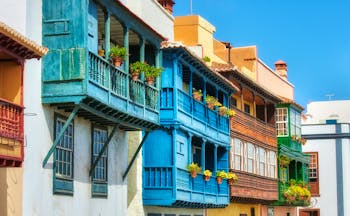
La Palma: Santa Cruz de la Palma, the island's colourful capital where you will find cobbled streets, buildings with pretty wooden balconies and a full-sized replica of Columbus' ship. Caldera de Taburiente National Park, set in a volcanic crater at the island's centre. Picturesque villages including El Paso which is still known for its silk production.
El Hierro: The extensive network of walking trails which traverse the volcanic interior of the island, designated a UNESCO Biosphere Reserve. Natural seawater pools along the coastline, as well as excellent scuba diving opportunities.
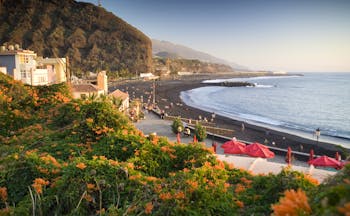
La Gomera: San Sebastián, the island's main town where Christopher Columbus stayed before sailing to the New Wold. Stunning natural scenery including terraced hillsides, subtropical rainforest, dramatic gorges, steep cliffs, picturesque coves and black-sand beaches. Garonjay National Park, a UNESCO World Heritage Site
Gastronomy of the Canary Islands
Due to the geographical location, gastronomy in the Canary Islands incorporates elements of Spanish, African and Latin American cuisine. A staple of Canarian cuisine is fish, which may be grilled, baked, salted or dried in the sun, along with shellfish which is also abundant. Bananas and tropical fruits are all grown across the islands, whilst rum, Malvasía wine and goat's cheeses are also produced. Key ingredients include ‘Gofio’ (cornmeal which is used in bread and stews), ‘Mojo’ (a sauce which contains either coriander or chili peppers and is frequently served with fish and meat) and ‘Papas arrugadas’ (a kind of jacket potato which is cooked in salt water). Typical dishes include ‘Sancocho’ (boiled fish served with potatoes), ‘Puchero canario’ (a hearty stew made with meat and vegetables) and ‘Bienmesabe’ (an almond cream dessert).
Festivals on the Canary Islands
January to February: Canary Islands Music Festival. February: Carnival celebrations. March: Holiy week celebrations. 29 April: Festival of the Aborigines, April to May: Cheese Festivals, 30 May: Day of the Canary Islands, May/June: Corpus Christi celebrations, 14 to 15 June: Festival of Saint John, marking the beginning of summer. July: Festival of the patron saint of fisherman. July: Canary Islands Jazz festival. 14 to 15 August: Festival of Virgen del Candelaria.
Climate of the Canary Islands
The Canary Islands' year-round sunshine, clear skies and spring-like temperatures make them a suitable holiday destination for all seasons. Winters are mild with average temperatures of around 17 degrees, whilst summers are warm with temperatures of around 24 degrees. Most of the islands are cooler and wetter in the northeast thanks to the trade winds which prevent the temperatures from getting too hot in the summer.
Canary Islands travel information
The Canary Islands are reached very easily from the UK by air. There are frequent ferry services between the islands, as well as short connecting flights between the islands.By air
It is possible to fly directly from UK airports to Lanzarote, Gran Canaria and Tenerife's South Airport with airlines including British Airways (although some routes are seasonal). Low cost airlines fly to Tenerife's North Airport as well as La Palma and Fuerteventura. La Gomera is served by low cost airline from Tenerife, whilst El Hierro can be reached from Gran Canaria. Other islands are linked by short flights with low cost airlines. Most hotels and resorts located throughout the Canary Islands offer transfer services.Car hire
For visitors who wish to explore any of the Canary Islands, a hire-car is an incredibly convenient way to travel around. However, it is not possible to take hire-cars between islands.Two centre recommendations
Experience the great diversity of the Canary Islands by visiting more than one of the islands during your luxury holiday, travelling by ferry or hydrofoil. Perhaps stay for a few days on Tenerife before travelling to nearby La Gomera or one of the other smaller islands.Our bespoke, luxury hotel holidays can be
● Single centre or multi-centre● Long or short stays
● Combine a number of different hotels in different regions and islands
● Island-hopping holidays using flights, cars and ferries
Our special interest holidays to the Canary Island
● Food and wine holidays● Golf holidays
● Tennis holidays
● Private guided sightseeing
● Spa holidays
● Family holidays
● Walking holidays
Included in all our holidays
● Concierge service● Handcrafted helpful hints and local information provided with all our holidays
● Personal service by your sales consultant who looks after all aspects of your holiday
Call us on 01392 441245
Our bespoke, luxury hotel holidays can be
● Single centre or multi-centre● Long or short stays
● Combine a number of different hotels in different regions and islands
● Island-hopping holidays using flights, cars and ferries
Our special interest holidays to the Canary Island
● Food and wine holidays● Golf holidays
● Tennis holidays
● Private guided sightseeing
● Spa holidays
● Family holidays
● Walking holidays
Included in all our holidays
● Concierge service● Handcrafted helpful hints and local information provided with all our holidays
● Personal service by your sales consultant who looks after all aspects of your holiday