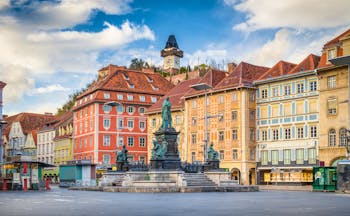

Slovenia is a country with a reputation that is being quickly shaped by its environmental priorities. It was the first country in the world to be declared a Green Destination, and its capital, Ljubljana was named the European Green Capital in 2016. The importance placed on environmental issues can be easily traced back to the necessity of preserving the beautiful and diverse landscape that Slovenia has to offer. Sublime lakes, lined with forested mountains, sit within driving distance of historic submediterranean coastlines. Castles and caves provide plenty to explore both above and below ground, and the spa and health resorts dotted around the country offer havens of relaxation that utilise the natural healing properties of the thermal waters.
A visit to beautiful, green Slovenia takes you through some of Europe's epic and captivating historical periods, its most naturally beautiful settings, and into a rich hub of virtually undiscovered culture. Slovenia is an up-and-coming destination that suits stays throughout the year.
Frequently Asked Questions
Our bespoke, luxury hotel holidays can be
● Single centre or multi-centre● Long or short stays
● Combine a number of different hotels in different regions
● Utilise a variety of transport arrangements to Slovenia and within Slovenia, combining flights, hire-car, rail and private transfers
Our special interest holidays to Slovenia
● Cultural tours for individuals● Private guided sightseeing
● Walking holidays
● City breaks
● Family holidays
Included in all our holidays
● Concierge service● Handcrafted helpful hints and local information provided with all our holidays
● Personal service by your sales consultant who looks after all aspects of your holiday
Call us on 01392 441245
Highlights of Slovenia
The capital city of Ljubljana gives you the best sense of Slovenia as a whole. Perched above the red roofs of the houses below is the Ljubljana Castle, a mediaeval fortress accessed through the surrounding trees by a steep funicular train. The eponymous river winds its way around the city, separating the stunning old town from the developing commercial, modern half. To cross over from one side of the city to the other, use either the famous Dragon Bridge or the landmark Tromostovje Bridge. Ljubljana is home to the National Museum of Slovenia, which is the perfect place to begin learning about the history of the country, once you have got to grips with the meandering streets and enchanting atmosphere. Though this city is the country's capital, it still remains as green and natural as the country's proud status suggests. Trees overhang the channels of the river, burst out between the pretty buildings, and surround the many squares and bridges.
Cultural highlights of Slovenia
The town of Piran on the Slovenian coast is best known for its salt pans, where the world-famous fleur de sel are still made. The mediaeval town itself, with its colourful stone houses, is a cultural and historic monument and looks out across the stunning Adriatic Sea. The rich green forest of two landscape parks acts as a backdrop. The town's main harbour leads directly onto the irregular shape of the picturesque main square, where arcaded townhouses hide cafes and shops. Visitors here benefit from all the beauty of Alpine Europe as well as the Mediterranean climate. One of the renowned Karst caves, Postojna Cave is the most visited cave in Europe, and has the broadest biological diversity of any cave in the world. The railway that takes you the 5km through its many impressive caverns, corridors, and galleries has been in operation for over 140 years. Guided tours draw your attention to features such as the 16m stalagmite, the oldest underground post office in the world, and the olm 'dragon' fish, which has just begun hatching again in the caves. Predjama Castle is the largest cave castle in the world. It has guarded tunnels that lead to the Postojna Cave for over 800 years, clinging to the side of a sheer rock face, framed by a ring of exposed rock and dense vegetation. In the summer, it hosts the Erazem Knight Tournament. In the north west of the country is Lake Bled. Considered an Alpine lake, Lake Bled is something of a paradise, with Slovenia's only island located on its waters. The picturesque island itself is reason enough to visit: a small curve of trees with a cluster of red-roofed houses and a single tall black spire. You can look down across the lake from the clifftop castle, reached via 90 stone steps, or take a traditional boat, known as a pletna, out onto the water. The thermal springs of Lake Bled paved the way for Slovenia's reputation for health resorts. At the beginning of the 20th century it was particularly revered. Today, the country remains hugely popular with those seeking the expertise of prestigious spa hotels, many of which line Lake Bled's shores. For a true insight into traditional Slovenian culture, visit Lipica, the home of the original stud farm of the Lipizzaner white horses. The farm was first set up in 1580 in the Karst, and today you can still watch the elegant shows or enjoy a horse-drawn carriage ride.
Slovenia travel information
Slovenia is reached very easily from the UK by air and rail. We can arrange for you to travel by train with overnight stops. Slovenia also features as part of our Eastern Europe rail touring holiday.Travel within Slovenia
Buses and trains are the most popular way of getting around in Slovenia. Ljubljana is the heart of the bus network, with buses going out to other major cities, towns, and villages regularly. The rail network is also well-developed, providing excellent connections for those looking to tour the country or go out for long day trips.Our bespoke, luxury hotel holidays can be
● Single centre or multi-centre● Long or short stays
● Combine a number of different hotels in different regions
● Utilise a variety of transport arrangements to Slovenia and within Slovenia, combining flights, hire-car, rail and private transfers
Our special interest holidays to Slovenia
● Cultural tours for individuals● Private guided sightseeing
● Walking holidays
● City breaks
● Family holidays
Included in all our holidays
● Concierge service● Handcrafted helpful hints and local information provided with all our holidays
● Personal service by your sales consultant who looks after all aspects of your holiday
Call us on 01392 441245
Our bespoke, luxury hotel holidays can be
● Single centre or multi-centre● Long or short stays
● Combine a number of different hotels in different regions
● Utilise a variety of transport arrangements to Slovenia and within Slovenia, combining flights, hire-car, rail and private transfers
Our special interest holidays to Slovenia
● Cultural tours for individuals● Private guided sightseeing
● Walking holidays
● City breaks
● Family holidays
Included in all our holidays
● Concierge service● Handcrafted helpful hints and local information provided with all our holidays
● Personal service by your sales consultant who looks after all aspects of your holiday