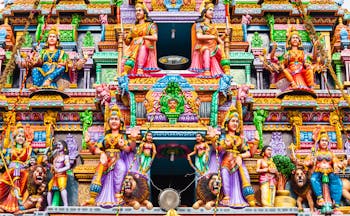
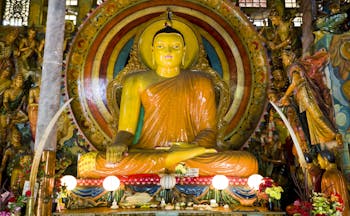
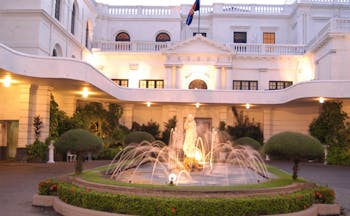
Sri Lanka's capital, Colombo, has gradually grown from humble beginnings as a tiny 5th century trading post for gems to become Sri Lanka’s largest city and its most important port. The island’s commercial capital is a hectic mix of old and new, colonial architecture sitting next to modern glass and tree-lined residential suburbs bordered by shacks. Nifty 3-wheelers and the occasional bullock cart vie with noisy buses and 4-wheel drives for supremacy on the streets. There is a lot to see and explore during your stay in Colombo. To the north of the city is Fort, a business area with shops and offices and touches of residual colonial charm. The fort which gave the district its name has long since gone, though the Lighthouse Clock Tower in North Chatham Street and the 18th century ‘Queen’s House’, now the president’s official residence, still exist. To the south is Galle Face Green, a sea-front expanse of green lawn beside an esplanade which is used to host race meetings and sports events and is a popular gathering place, especially for kite-flying or a sunset stroll. At its south end stands the colonial Galle Face Hotel, the oldest hotel in Colombo which was built in 1864. Further south is Cinnamon Gardens, the city’s most fashionable neighbourhood with tree-lined streets and colonial mansions. A small national art gallery borders the pleasant Viharamahadevi Park. The National Museum, on Albert Crescent, has a collection ranging from religious bronzes to possessions of the last Kandyan kings. All around the city, Buddhist temples, Hindu Kovils, mosques and churches give a glimpse into the spiritual vibrancy of Sri Lankan life, especially during religious festivals. Gangaramaya Buddhist temple, in particular, is fascinating for any visitor, as well as the Hindu Temple at Sea Street which is lined with goldsmith's shops, the Dutch Church at Wolfendal, dating back to 1749 and the historic Davatagaha Mosque. Colombo also offers some excellent shopping opportunities: the lively Pettah Bazaar competes with shopping malls and fashion stores and you can buy anything from gems to cricket bats. Stores such as Barefoot, Paradise Road, Gandhara and Odel have a designer-chic range of home ware, fabrics, arts & crafts and clothes.
Frequently Asked Questions
Colombo deserves a proper stay, and we usually recommend two nights rather than one. Most visitors see it only between the airport and the expressway, which is a pity, because the city holds the clearest record anywhere on the island of Sri Lanka's layered past: Portuguese, Dutch and British colonial building in Fort and Pettah, Hindu kovils and mosques along the old bazaar streets, the elegant villas of Cinnamon Gardens, and some remarkable twentieth-century architecture. It is also where contemporary Sri Lankan life is most visible, in its restaurants, galleries and design shops. The city is busy, hot and noisy in places, and we would not pretend otherwise, but with a good hotel as a base and a guide for the first morning, it becomes far easier to read. Two nights give you one full day to explore at an unhurried pace, a sunset on Galle Face Green and an evening meal at a good restaurant, and they set the rest of the holiday in context in a way that a night near the airport cannot.
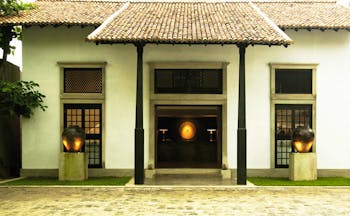
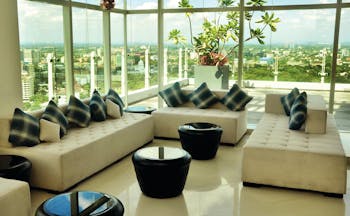
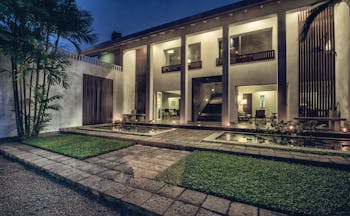
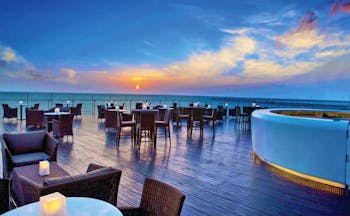
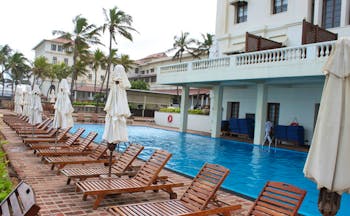
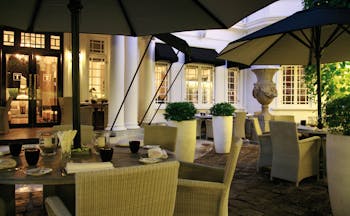
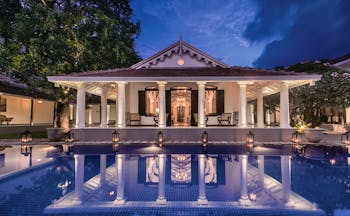
The choice comes down to three settings, and each suits a different kind of traveller. On the seafront at the edge of Fort, The Kingsbury and the Regency wing of the Galle Face Hotel offer the classic large-hotel experience; the Galle Face, opened in 1864 and the oldest hotel in Colombo, has a colonial grandeur and an ocean terrace that is the city's traditional place for a sundowner. Inland, in the leafy residential districts of Cinnamon Gardens and Kollupitiya, are the boutique houses we often prefer for clients who value character and calm: Tintagel, the Paradise Road hotel in the former Bandaranaike family home; Uga Residence, a restored colonial mansion with a small number of suites; the intimate Zylan; and Taru Villas Lake Lodge, a stylish and well-priced option. Cinnamon Red is a modern, well-run choice with a rooftop pool overlooking the ocean. Twelve kilometres south, the Mount Lavinia Hotel, built around an early nineteenth-century governor's residence, sits directly on its own stretch of beach and suits those who would rather be by the sea than in the city. We know these properties individually and will match the hotel to how you like to travel.
A well-paced day begins in Fort and Pettah, the old commercial heart, with a guide. In Fort, the Lighthouse Clock Tower, the Old Dutch Hospital (now restored as a courtyard of restaurants and shops) and the colonial façades around President's House give a sense of the city's administrative past. A short walk away, Pettah is a dense working bazaar where each street keeps to its trade, and where the Dutch Period Museum, the red and white Jami Ul-Alfar Mosque and the colourful Hindu kovils of Sea Street, lined with goldsmiths, sit within a few minutes of each other. The Wolvendaal Church, built by the Dutch from 1749, is nearby. After lunch, the National Museum on Albert Crescent, with its religious bronzes and regalia of the last Kandyan kings, rewards an hour or two, and Gangaramaya Temple and the Seema Malaka pavilion on Beira Lake offer a vivid picture of Buddhist practice in the city. End the day on Galle Face Green as the sun sets over the Indian Ocean, when families, kite-flyers and street-food stalls fill the esplanade. A second day might take in Kelaniya Raja Maha Vihara, one of the island's most revered temples, a short drive north-east of the city.
Rather more than most visitors realise. Bawa, Sri Lanka's most influential architect and the leading figure of tropical modernism, lived and worked in Colombo for most of his career. His town house, Number 11, on a quiet lane in Kollupitiya, was formed by joining a row of small houses into a single sequence of courtyards, light wells and verandahs, and it is cared for by the Geoffrey Bawa Trust. It may only be seen on one of the Trust's guided tours, held on weekend mornings, and private tours can be arranged in advance, which we can do for you. His former office is now The Gallery Café, run by Paradise Road, which makes an obvious place for lunch or dinner. On Beira Lake, the Seema Malaka pavilion at Gangaramaya Temple is his work, and his Parliament complex at Sri Jayawardenepura Kotte, set on an island in an artificial lake, can be seen from the shore. For those who want to follow Bawa further, our Geoffrey Bawa touring holiday combines Colombo with Lunuganga, his country estate near Bentota, and several of the hotels he designed, which is the fullest way to understand his work.
Colombo is where Sri Lanka's food culture is at its broadest, and it is the easiest place on the island to eat well outside your hotel. Lagoon crab is the city's signature dish, and the Old Dutch Hospital in Fort is a pleasant setting for it. Beyond that, look for hoppers, the bowl-shaped rice-flour pancakes eaten at breakfast or supper; lamprais, a baked parcel of rice and curries wrapped in banana leaf that reflects the city's Dutch Burgher heritage; and kottu, chopped roti stir-fried on a griddle, best eaten from the stalls along Galle Face Green. Your driver-guide or hotel will know which places are good at the moment. For shopping, Colombo has a design scene of real quality. Barefoot is known for its handwoven textiles in bright colours, and has a café and bookshop; Paradise Road offers homeware and objects with a strong design sense; and Odel is the city's department store. Pettah Bazaar is the place for spices, fabrics and everyday goods, and fine Ceylon tea and gems are both widely available, although for gems we recommend buying only from established dealers. Food-minded clients may enjoy our Flavours of Sri Lanka touring holiday, which includes hands-on cookery.
Either works, and the right answer depends largely on your flight times. Bandaranaike International Airport lies at Katunayake, about an hour north of the city by expressway. Flights from London often arrive in the morning after an overnight journey, so a first night in Colombo, in a comfortable hotel with a quiet afternoon by the pool, is a gentle start before the drive to the Cultural Triangle, roughly four hours to Dambulla. Ending in Colombo is equally sensible: the south coast is around two hours away by the Southern Expressway, which makes the city a natural final stop after Galle, with time for shopping and a last dinner before an evening flight home. Where clients would rather not travel into the city at all on arrival, the Negombo coast, close to the airport, is a practical alternative for the first or last night. Colombo also connects easily by road to Kandy, about three and a half hours away, and by rail along the coast. Private transfers are included with all our Sri Lanka holidays, and on a touring holiday your driver-guide meets you at the airport, so the decision is really about pace and preference, and we will advise on the best order for your dates.
Colombo is warm throughout the year, with daytime temperatures usually around 30°C and high humidity, softened a little on the seafront by the sea breeze. The driest and most comfortable months on the west coast are broadly December to March. The south-west monsoon brings heavier rain from around May into the summer, although it tends to arrive in showers rather than settled grey days, and the city remains perfectly visitable. For those interested in religious festivals, February brings the Navam Perahera, a procession of dancers, drummers and caparisoned elephants that sets out from Gangaramaya Temple around the full moon. In January, the Duruthu Perahera takes place at Kelaniya, just outside the city. In May, Vesak, which marks the birth, enlightenment and death of the Buddha, sees Colombo hung with lanterns and illuminated pandals, and roadside stalls offer free food and drink to passers-by; it is a particularly atmospheric time to be in the city. Festival dates follow the lunar calendar and change each year, so we will confirm them when planning your holiday and can arrange your stay to coincide with them.
Our bespoke, luxury hotel holidays can be
● Single centre or multi-centre
● Long or short stays
● Combine a number of different hotels in different regions
● Utilise a variety of transport arrangements to Sri Lanka and within Sri Lanka, combining flights, rail, and private transfers
Our special interest holidays to Colombo
● Cultural tours for individuals
● Visits to local festivals
● Private guided sightseeing
● Family holidays
Included in all our holidays
● Concierge service
● Handcrafted helpful hints and local information provided with all our holidays
● Personal service by your sales consultant who looks after all aspects of your holiday