




Porto and Northern Portugal luxury fly-drive touring holiday featuring a stay in Porto, the Douro Valley, the mountains and the Silver Coast
This is northern Portugal at its most revelatory — a self-drive journey of ten nights that traces a great arc through landscapes of astonishing variety, visiting towns and villages of outstanding beauty and historical depth, and returning to Porto by way of the Atlantic coast. It is a holiday that rewards those who travel slowly, stop often and allow the road to lead where it will.
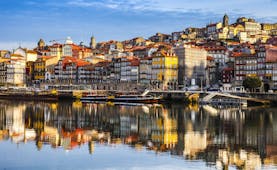
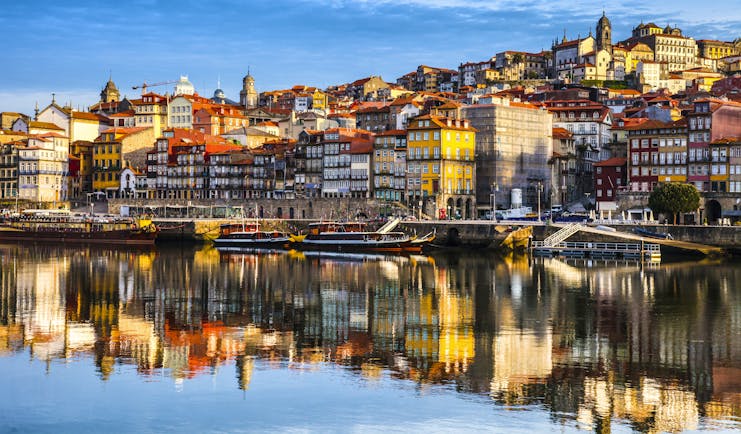
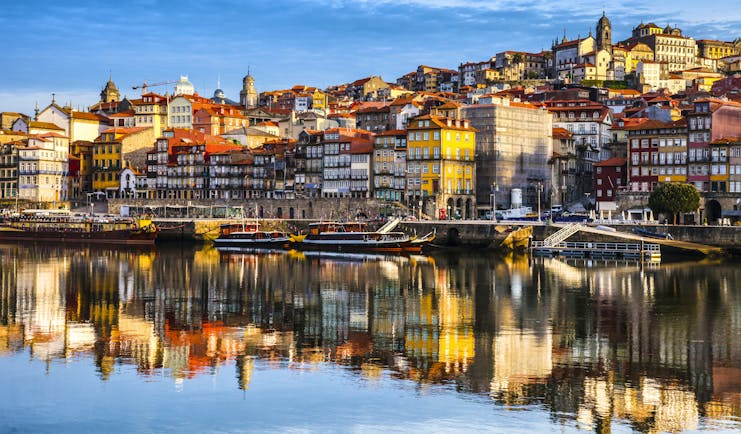
The tour begins in Porto, one of the great cities of western Europe. Its UNESCO World Heritage historic centre — the Ribeira waterfront, the gilded Baroque churches of São Francisco and the Sé Cathedral, the elegant Palácio da Bolsa — demands at least two days' exploration. Across the river in Vila Nova de Gaia, the cellars of the famous Port wine lodges offer tours and tastings that are among the most evocative experiences the city provides.
From Porto, a hire car is collected and the journey begins in earnest. The route east to Amarante — taken on the scenic N106 or N15 rather than the motorway — passes through gold-smithing Gondomar and the Vinho Verde town of Penafiel before descending into the Tâmega Valley. Amarante itself is one of Portugal's most enchanting small towns: a graceful 16th-century bridge, a magnificent convent church, the superb Museu Amadeo de Souza-Cardoso, and excellent regional restaurants serving kid goat, river trout and the town's celebrated local pastries.
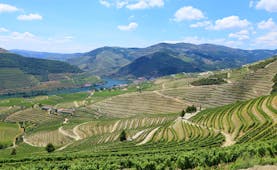
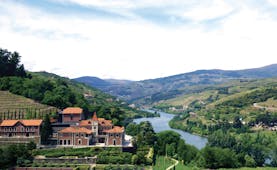
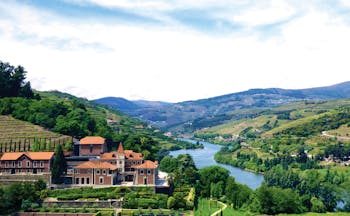
The onward drive to Pinhão crosses the Serra do Marão — one of the great scenic drives in Portugal — climbing to 1,300 metres through high moorland and granite wilderness before descending dramatically into the UNESCO-listed Douro Valley, where centuries of human endeavour have carved the famous terraced vineyards into near-vertical hillsides. The N222 river road from Régua to Pinhão, passing the gates of legendary Port wine quintas, is widely regarded as one of the most beautiful in Europe.
From Pinhão, the route continues via the pilgrimage town of Lamego — with its extraordinary 600-step Baroque stairway — across the wild granite plateau of the Serra de Montemuro and down into the deep green Paiva Valley to Arouca. Here, a magnificent 10th-century Benedictine monastery and the landscapes of a UNESCO Global Geopark — including the world-record 516 Arouca suspension bridge and the Paiva Walkways river gorge trail — offer two days of rich discovery.
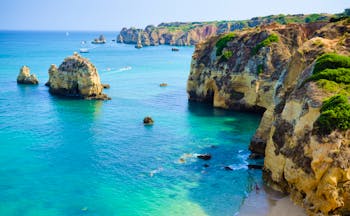
The final stages of the tour are ones of satisfying contrast. Aveiro — the 'Venice of Portugal', with its painted moliceiro canal boats, exuberant Art Nouveau architecture and celebrated ovos moles confections — provides two nights of coastal elegance. The return to Porto follows the Silver Coast, calling at the striped beach houses of Costa Nova, the azulejo-adorned streets of Ovar, the Atlantic pine forests and the seafront promenades of Espinho, before the Douro comes into view once more.
Highlights
Porto • Amarante and the Tâmaga Valley • Serra do Marão • Pinhão and the Douro Valley • Lamego • Serra de Montemuro • Arouca and the Arouca Geopark • São João da Madeira • Aveiro
Day by day
This touring holiday of northern Portugal begins in the compelling city of Porto, on the banks of the River Douro. Take a taxi to your hotel in the city, where you will spend two nights (or, ask us to arrange a private transfer for you). Time to orientate yourself and find somewhere for dinner.
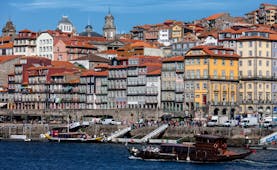
There are an astounding number of impressive sights in Porto. Colourful façades of narrow houses with terracotta roofs hug the hillside as the town rises up from the banks of the Douro. Closer inspection will reveal the adornment of the houses by distinctive tiles, often in shades of blue and white and sometimes depicting historical or biblical scenes. The historic Ribeira district, with its tall, teetering townhouses tumbling down to the broad sweep of the Rio Douro, is one of the most atmospheric urban waterfronts in all of Europe — indeed, the entire historic centre is a UNESCO World Heritage Site. If you have not already done so, the Sé Cathedral is not to be missed: every column, archway and altar adorned in the gilded Baroque splendour for which 17th-century Portugal is so celebrated. A short walk brings you to the Igreja de São Francisco, whose interior glitters with an extraordinary surfeit of carved and gilded woodwork, and to the elegant Palácio da Bolsa, whose Arabian Room rivals anything you might encounter in Sintra or Lisbon. Finally, many Port cellars line the southern banks of the River Douro in Vila Nova de Gaia and a tour and tasting is a must whilst in the city.
This morning, collect your hire-car from the city centre office and embark on what should be an unhurried journey but full of distinctive, local pleasures. We suggest that you take the N106 or N15 rather than the A4 motorway. Start to make the most of the freedom of your own car and stop at a roadside adega, linger on a hilltop and draw in the views, or follow a sign to a Romanesque chapel off-the-beaten-track. The slower journey of just 60 kilometres or so will reward you with some of the most quietly satisfying countryside in northern Portugal.
Heading east along the southern bank of the Douro, the city's density gradually gives way to a more verdant landscape. The road passes through Gondomar, a modest town with a long tradition of gold- and silver-smithing — its artisans have supplied Portuguese jewellers for centuries, and small workshops can still be found tucked into the old streets. The surrounding countryside is pleasant and pastoral, with granite farmhouses half-hidden behind bowers of hydrangeas, a sight as characteristic of the northern Portuguese interior as the ubiquitous terracotta roof tile. Some 30 kilometres east of Porto, the handsome town of Penafiel occupies a high ridge overlooking the valley of the Sousa river, and it is very much worth pausing here.
This is wine country — Penafiel is celebrated as one of the principal producers of Vinho Verde, the crisp, lightly sparkling young wine that is Portugal's most refreshing contribution to the wine lover's cellar. The town itself is attractive in the manner of many northern Portuguese towns: a broad central square, grand 18th-century mansions of dressed granite, and a collegiate church whose Baroque façade catches the afternoon light beautifully. The Museu Municipal de Penafiel holds an interesting collection of Roman, medieval and ethnographic artefacts that speak to the extraordinary depth of habitation in this river valley. A little to the north of Penafiel lies the Solar de Sanfins, a fine example of a Portuguese solar — a manor house — and the area is dotted with similar quintas, some of which offer wine tastings.
From Penafiel, the road narrows and the landscape begins to shift perceptibly. The wide valley floor gives way to a more undulating terrain of wooded hillsides, granite outcrops and small holdings bright with maize and bean. This is the transitional zone between the coastal plains and the highland interior, and the light has a particular quality here — clear and golden, with the kind of luminosity that falls differently on every bend of the road. You may encounter ox-carts and old women dressed in black; time passes rather differently in this part of Portugal.
The descent into the Tâmega Valley is genuinely lovely. The river, running swiftly over its granite bed, is flanked by willow, alder and the occasional flash of scarlet poppy against the green, and the views across to the Serra do Marão — the great mountain wall that marks the western edge of the Douro's highland region — grow ever more impressive as you approach Amarante.
Amarante, the Jewel of the Tâmega, is one of the most attractive small towns in Portugal. It occupies both banks of the Tâmega river, which flows swiftly beneath the town's most celebrated landmark: the triple-arched 16th-century stone bridge, the Ponte de São Gonçalo, which is as graceful a piece of engineering as you will find in the north of the country. The bridge leads directly to the magnificent Convento de São Gonçalo, a monastic complex founded in the 16th century and housing a church of considerable grandeur, with an elaborate Renaissance portal and a gilded interior of notable richness. São Gonçalo himself was a 13th-century hermit-friar, and the town's patron saint; his tomb in the church has been a place of pilgrimage for centuries, and local tradition holds that touching it brings good fortune in matters of love.
The riverside setting of Amarante is enchanting — tall stone houses with red-tiled roofs rise directly from the water's edge, their reflections shimmering in the current below, while the hills behind are carpeted in the terraced vines that produce the local Vinho Verde. The town's old centre rewards leisurely exploration: the Rua 31 de Janeiro is lined with arcaded buildings, there are small squares with outdoor cafés, and an agreeable air of prosperous, quietly confident local life.
The Museu Amadeo de Souza-Cardoso, housed within the former convent, is a cultural surprise of the first order. Souza-Cardoso (1887–1918), a native of Amarante, was one of the most gifted Portuguese painters of the early 20th century, a contemporary of Modigliani and Picasso in Paris, and the museum holds a superb collection of his modernist and avant-garde works — a reminder that Portugal's artistic heritage extends well beyond the azulejo and the Baroque.
Do allow time for lunch or dinner in Amarante: the town has several excellent restaurants specialising in the regional cooking of the Minho and Douro, with kid goat, river trout, smoked meats and the local pastries — notably the Tortas de Amarante and the rather phallic doces de São Gonçalo, traditional confections linked to the saint's romantic associations — all making appearances on the menu.
If the drive from Porto to Amarante offers a gentle and gradual introduction to the landscapes of northern Portugal, the onward journey to Pinhão is of an altogether more dramatic character. This is a route of genuine scenic grandeur — one that climbs through the wild granite heights of the Serra do Marão, traverses a landscape of extraordinary, almost elemental beauty, and then descends in a series of sweeping curves into the deeply carved valley of the Rio Douro, where the terraced vineyards of Port wine country unfold before you in one of the most memorable views in all of Europe. The distance is modest — barely 80 kilometres — but the journey should on no account be hurried. Departing Amarante along the N15, the road immediately begins to assert its intentions. Within a few kilometres of the town, the comfortable valley floor is left behind and the landscape becomes more insistent — granite walls, dense stands of eucalyptus and pine, and the first intimations of the high ground ahead. The Tâmega river falls away below, and the hillsides grow steeper and more austere. Villages here are small and stone-built, their houses huddled together against the Atlantic weather that sweeps in from the west, and the gardens — where they exist — are bright with the camellias, hydrangeas and ferns that thrive in the moist upland climate of the Minho borderlands.
Before committing yourself entirely to the mountains, it is worth pausing to look back at Amarante, whose setting — the pale stone town gathered around its bridge and convent, the hills rising behind — is perhaps even more beautiful when seen from above than from within.
The Serra do Marão is the great natural barrier that divides coastal, Atlantic Portugal from the drier, hotter interior of the Douro and Trás-os-Montes. It is a landscape of considerable wildness: high moorland plateaux of heather, broom and gorse, granite tors rising from the ridge lines, fast-running streams tumbling through rocky gorges, and — in spring — a riotous profusion of yellow flowering shrubs that turns the entire mountainside golden. In winter, the peaks can carry snow, and mist descends without warning even in the warmer months; the light up here has a quality that is quite unlike the limpid sunshine of the valleys below.
The highest point of the N15 pass reaches approximately 1,300 metres, and the views from the road — both back towards the coast and forward into the Douro hinterland — are, on a clear day, simply extraordinary. This is a landscape that invites a pause: pull off the road at one of the natural viewpoints and you may find yourself alone on the mountain with nothing but the wind, the smell of warm resin from the pine trees, and a panorama that stretches for scores of kilometres in every direction.
The Serra do Marão was long regarded as the edge of the known world by coastal Portuguese, and the crossing of these mountains historically marked the passage into a more ancient, more remote Portugal — the land of Trás-os-Montes, literally "behind the mountains." Though Pinhão lies just short of that province, something of that sense of crossing a threshold persists even today.
The eastern descent from the Serra do Marão is one of the great drives in Portugal. The road falls steeply through a series of bends and hairpins, and as it does so, the landscape undergoes a transformation that is almost theatrical in its abruptness. The Atlantic moisture and soft greens of the western slopes give way, within just a few kilometres, to a drier, warmer, more Mediterranean world: terracotta earth, schist rock-faces shimmering in the heat, and the first of the vineyards — those extraordinary, gravity-defying terraces of the Douro, cut by hand into the near-vertical hillsides over many centuries, and now recognised as a UNESCO World Heritage Cultural Landscape.
The sensation of driving down into the Douro Valley for the first time is one that remains with travellers long after the journey is over. The valley is immensely deep — the river lies hundreds of metres below the ridgeline — and the terraces step down to the water in great sweeping tiers, each one planted with the low, gnarled vines whose grapes become the world's greatest fortified wine. In the late summer the grapes hang in heavy, dusty clusters; in autumn the leaves turn amber, ochre and crimson; in winter the bare vines trace geometric patterns across the pale schist; in spring, the first tender green shoots catch the light with an almost luminous delicacy.
The road brings you down eventually to the valley floor and to Peso da Régua — known simply as Régua — the principal town of the Douro wine region and in many ways its historic capital. It was here, in 1756, that the Marquis of Pombal established the world's first formally demarcated wine region, drawing the boundaries of the area within which Port wine could legitimately be produced — a measure as radical in its day as anything in the history of wine regulation anywhere in the world.
Régua itself is an unpretentious, working river town, and none the worse for that. It has an animated quayside where the old rabelo boats — the flat-bottomed, square-sailed craft once used to carry barrels of Port down the river to the lodges of Vila Nova de Gaia — are moored as a reminder of the trade that shaped this entire region. The Museu do Douro is an excellent introduction to the valley's history, culture and viticulture, housed in a handsome building on the waterfront, and should not be missed by anyone with a serious interest in wine or in the social history of northern Portugal. The town's railway station is also worth a moment's attention: its platforms are faced with magnificent blue-and-white azulejo panels depicting scenes of the grape harvest and river life — a reminder that in Portugal, the most exuberant decorative art can turn up in the most unexpected of places.
Régua is also the starting point for the famous Douro Valley railway line, one of the most scenic train journeys in Europe, which follows the river eastward through the heart of the demarcated region towards Pocinho. If time permits, even a short stretch of this journey by train is a memorable experience — though for the purposes of this drive, we press on by car along the river road.
The final section of the drive, from Régua to Pinhão along the N222 road on the south bank of the Douro, is widely regarded as one of the most beautiful river roads in Europe, and the accolade is entirely deserved. The road hugs the northern bank — or, depending on your chosen route, the southern bank — of the river, passing beneath towering schist cliffs and between the walls of the great wine estates. The quintas here are the most illustrious addresses in the Port wine world: Quinta do Crasto, Quinta da Romaneira, Quinta do Vale Meão, and others whose names will be familiar to any lover of fine wine. Many offer tastings and tours, and an afternoon spent in the cellars of one of these estates, listening to the history of the house and sampling wines of extraordinary complexity and age, is an experience that belongs in a different category from ordinary tourism.
The light on this stretch of road is remarkable at every hour of the day. In the morning it falls cool and golden across the terraces; at noon it bleaches the schist to the colour of pale bone; in the late afternoon it turns the river to hammered copper and the south-facing slopes to deep amber, and the valley fills with a warm, resinous silence broken only by the sound of water and the distant barking of farm dogs.
Pinhão is a small village — little more than a single street along the riverbank — but in the world of Port wine it occupies a position of extraordinary prestige. It lies at the junction of the Douro and the Pinhão river, deep in the heart of the Cima Corgo, the sub-region whose schist soils and extreme continental climate produce the finest and most concentrated Port wine grapes in the demarcated region. Virtually every great Port wine house has quintas within sight of this village.
Like Régua, Pinhão's railway station is a gallery in its own right: the azulejo panels that line the platform walls, depicting the traditional scenes of the grape harvest in the valley, are among the most celebrated examples of this quintessentially Portuguese art form outside Lisbon, and they reward careful and unhurried attention.
The village has a quiet, end-of-the-road quality that is part of its considerable charm. Sitting on the terrace of one of the riverside restaurants or hotels as the evening light fades over the terraced hills, a glass of the local wine in hand and the sound of the river below, it is not difficult to understand why those who come here so rarely wish to leave.
Of all the drives that northern Portugal offers the discerning traveller, the journey from Pinhão westward to Arouca is perhaps the most richly varied in character. It is a route that begins deep in the ancient schist landscape of the upper Douro, climbs through one of Portugal's most historically significant pilgrimage towns, crosses the high granite uplands of the Montemuro and descends into a valley of ravishing green beauty that feels, even now, genuinely remote from the wider world. Allow a full and unhurried day for it.
To leave Pinhão is never quite easy. The village has a quality of concentrated stillness — the terraced vineyards rising above the confluence of the Douro and Pinhão rivers, the quintas half-hidden behind their walls, the river reflecting the pale sky — that tends to detain those who have been fortunate enough to spend time here. Before you go, take a final moment on the station platform to look again at those celebrated azulejo panels, their blue-and-white scenes of harvest and river life as fresh and immediate as the day they were laid.
We recommend the N222 west from Pinhão to Régua, then following the N2 south to Lamego before taking the mountain roads via Castro Daire and along the Paiva valley to Arouca. This is an emphatically scenic route, and a hire car gives you the essential freedom to stop, to diverge, to explore. The distance is approximately 130 kilometres but the driving time, if the journey is taken as it deserves to be taken, is a full and rewarding day.
The road west from Pinhão follows the south bank of the Douro through some of the most celebrated wine country in the world. The river here is broad and slate-grey, the terraces above it dense with vines, and the names on the estate gates — Quinta do Crasto, Quinta de la Rosa, Ramos Pinto — read like a roll-call of the greatest Port wine houses. Even if you have tasted your fill, the sheer visual drama of this valley retains its power: the scale of the human endeavour involved in constructing those terraces on such precipitous slopes over so many centuries is a thing to contemplate with genuine wonder.
After some twenty kilometres, the road brings you to Lamego — a town that merits a generous halt, for it repays exploration richly. Lamego is one of the most important pilgrimage towns in Portugal, and its great sanctuary, Nossa Senhora dos Remédios, dominates the hillside above the town in a manner that arrests the eye from a considerable distance. The approach to the sanctuary is via an extraordinary Baroque stairway of some six hundred steps, rising in a series of zig-zagging flights through archways, across balustraded terraces and past ornamental chapels, fountains and azulejo-tiled panels depicting scenes from the Old Testament. The theatrical grandeur of this composition — conceived in the 18th century as a conscious act of religious and civic ambition — invites comparison with the great pilgrimage stairways of Braga and even of Santiago de Compostela, and the views from the upper terraces across the rooftops of Lamego to the hills beyond are alone worth the ascent.
The town below is equally engaging. Lamego's cathedral, the Sé, is one of the oldest in Portugal, its origins dating to the 12th century, though the present building is a compendium of alterations and embellishments accumulated across the following six centuries — the graceful Gothic cloister and the fine azulejo panels in the nave are particularly notable. The Museu de Lamego, housed in the former episcopal palace, holds a collection of outstanding quality: Flemish tapestries of the 16th century, Portuguese paintings of rare distinction, and a series of carved and gilded altarpieces removed from a convent now lost to history — works of a beauty and technical accomplishment that would be celebrated anywhere in Europe.
Lamego has another, more convivial claim to fame: it is the home of Raposeira, one of Portugal's finest sparkling wines, produced by the traditional method in the town's cellars and well worth seeking out over lunch. The town has several excellent restaurants, and this is a natural and pleasant place to pause before continuing westward.
Beyond Lamego, the character of the journey changes markedly. The road climbs away from the Douro valley into the Serra de Montemuro, a high granite massif that forms part of the great mountain spine of northern Portugal and is, even by the standards of this magnificently wild country, a landscape of quite exceptional solitude and grandeur. These are ancient mountains — rounded, heathered and swept by the wind — and the plateau that extends across their upper reaches has a quality of austere, treeless openness that can feel almost Scandinavian in character, particularly in the cooler months when cloud shadows race across the moorland and the streams run full and fast between their mossy banks.
Villages up here are few and small, their houses built of rough-hewn granite in the manner of settlements that have not changed their essential form in centuries. You may encounter a shepherd moving a flock of sheep across the road, or an elderly woman carrying firewood along a track; the modern world has arrived here, but it has done so quietly and without entirely displacing what was there before. In spring, the hillsides are covered in flowering broom and heather; in autumn, the bracken turns deep bronze and the granite outcrops emerge from the fading vegetation with a new austerity.
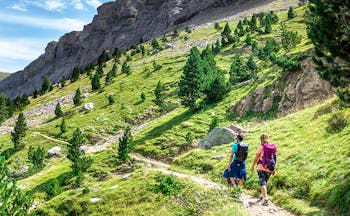
The road across the Montemuro offers a succession of long views — south towards the Douro, west towards the coastal ranges, north to the Serra do Marão on the horizon — and there are natural stopping points where the scale and silence of the landscape can be properly appreciated. This is, emphatically, not a section of road to drive in a hurry.
Descending from the high plateau, the road passes through Castro Daire, a modest market town in the valley of the Paiva river that marks the transition from the Douro hinterland to the more westerly uplands of the Beira Alta. Castro Daire is not a place of great architectural distinction, but it is a working Portuguese town of considerable authenticity, with a lively market and a fine Romanesque parish church whose carved portal and interior stonework are evidence of the prosperity that this valley once enjoyed. The surrounding countryside — deep green, well-watered and dramatically hilly — is a world away from the arid terraces of the Douro, and the change in atmosphere is palpable.
From Castro Daire, the road follows the valley of the Rio Paiva southward, and this is a stretch of driving of the very highest order. The Paiva is one of the cleanest rivers in Europe — its waters running clear as glass over smooth granite boulders, its banks forested with oak, alder and willow, its gorges cutting deep and narrow through the schist and granite of the Geopark. The valley is impossibly green in comparison to the sunburned south, and the play of light on water, rock and forest canopy creates an effect of almost Pre-Raphaelite beauty.
The Paiva Walkways — Passadiços do Paiva — follow the river through its gorge for some eight kilometres and are among the most celebrated walking routes in Portugal; those with time and inclination will find the experience of descending to the river's edge and walking through the gorge immensely rewarding. The world-record-holding 516 Arouca suspension bridge, which crosses the Paiva gorge at a height of 175 metres and a length of 516 metres, is a more recent addition to the landscape, but one that has brought Arouca to international attention and offers those not afflicted by vertigo a perspective on the gorge and its forests that is genuinely breathtaking.
The town of Arouca announces itself gradually rather than dramatically — a modest settlement of stone houses and green gardens in a sheltered valley, dominated by the enormous and imposing bulk of its Benedictine monastery, the Mosteiro de Arouca. This is a building of remarkable presence and historical importance: founded in the 10th century and rebuilt and enlarged repeatedly over the following eight hundred years, it reached its greatest splendour under the patronage of Queen Mafalda — daughter of King Sancho I of Portugal — who retired here in the 13th century and whose silver reliquary tomb is among the most beautiful objects in the monastery's possession. The church interior is dazzling: gilded altarpieces, carved choir stalls of exceptional quality, blue-and-white azulejo panels, and the serene marble tombs of the royal abbesses who shaped the community across the centuries. The Museu de Arte Sacra, housed within the convent buildings, contains a collection of ecclesiastical art and treasury pieces of outstanding quality.
Arouca lies at the heart of the Arouca Geopark, designated a UNESCO Global Geopark in recognition of its extraordinary geological heritage. The rocks and landscapes of the geopark tell a story stretching back some 500 million years, and scattered across the region are sites of quite remarkable scientific and visual interest — including the famous Trilobite beds of Canelas, where fossilised sea creatures of astonishing size have been found preserved in the Ordovician schist, among the finest such specimens anywhere in the world.
The town itself is a place of genuine charm: unhurried, friendly, and possessed of that quality of quiet self-sufficiency that characterises the best of Portugal's smaller towns. The central square, the riverside walks and the views across to the wooded hills that frame the valley on every side make Arouca a destination to savour rather than simply pass through.
The final leg of this exceptional northern Portuguese circuit — from Arouca westward to Aveiro on the coast — is a journey of satisfying contrasts and quiet revelation. It covers no great distance, little more than 60 kilometres as the crow flies, but the transformation it accomplishes is remarkable: in the space of a morning's unhurried driving, the traveller descends from the granite uplands of the Geopark, follows the lovely valley of the Rio Vouga through a landscape of wooded hills and old market towns, and arrives at last at the lagoon city of Aveiro, one of the most singular and enchanting urban destinations in all of Portugal. It is a journey that rounds off the grand northern circuit with something approaching perfection.
The road west from Arouca begins with the kind of driving that reminds one why northern Portugal rewards those who come by car rather than by any other means. The landscape here is dense, green and deeply folded — forested ridges of oak and pine, granite outcrops emerging from the canopy like the ruins of some vast natural architecture, and the sound of water everywhere, in streams and cascades dropping away through the undergrowth beside the road. This is the western flank of the Arouca Geopark, and though the great geological spectacles of the Paiva gorge and the trilobite beds lie behind you, the sense of being in a landscape of deep antiquity and considerable power persists well beyond the geopark boundary.
The villages on this descent are small and largely unchanged in character from the communities they have been for centuries: granite houses with overhanging eaves, communal bread ovens, vegetable plots and pergolas heavy with vines, elderly residents sitting in doorways in the afternoon sun. There is a temptation to press on towards Aveiro, but these villages repay a slow and appreciative passage; they are the authentic Portugal that too many visitors miss entirely.
As the road descends from the Arouca hills, it meets the valley of the Rio Vouga, and from this point the character of the journey shifts into a gentler, more pastoral key. The Vouga is a river of considerable loveliness — broad and unhurried in its lower reaches, running between meadows and alder groves, with occasional sandy beaches where the current curves around a gravel bar — and the valley through which it flows has the kind of deep, quiet beauty that one associates with the less-visited corners of northern Portugal.
The N224 follows the valley with admirable fidelity, and the driving is a pleasure: not dramatic in the manner of the Serra do Marão or the Paiva gorge, but continuously rewarding in its details — the way the light falls across a hillside of old cork oaks, the flash of a kingfisher above a still pool, the sudden opening of a view across the valley to a church tower on the opposite ridge. The Vouga valley was once served by one of Portugal's most celebrated narrow-gauge railway lines, the Linha do Vouga, and though much of the line is now dormant, the old station buildings — small, azulejo-decorated, faintly melancholy in their disuse — can be seen at intervals along the road as eloquent reminders of a more leisurely age of travel.
This is also, characteristically for this part of Portugal, wine country of a quiet but serious kind: the vineyards here produce Vinho Verde of notable freshness and character, and the quintas along the valley are less grand than those of the Douro but no less proud of what they make. A roadside adega willing to pour a glass of the local production is not difficult to find.
The road passes close to São João da Madeira, a compact industrial town that has earned a place of genuine distinction in the story of Portuguese craftsmanship. This is the heart of Portugal's hat-making industry — an activity that has been carried on here since the 19th century and that achieved a level of technical and artistic sophistication remarkable for so modest a town. The Oliva Creative Factory, housed in a magnificently repurposed 19th-century industrial complex, is a cultural destination of real quality, exploring the history of local industry and creativity with imagination and flair, and the Museu da Chapelaria — the hat museum — is one of those engagingly specialist institutions that Portugal does so well, telling the history of a single craft in fascinating depth. For the traveller with an hour to spare and an appetite for the unexpected, São João da Madeira is well worth the slight detour.
A few kilometres north of São João, and easily combined with it into a single stop, Santa Maria da Feira is one of the best-preserved and most visually striking medieval fortresses in Portugal. The Castelo de Santa Maria da Feira rises from its rocky promontory above the town in a state of remarkable completeness — its four cylindrical towers with their distinctive conical spires visible from a considerable distance across the surrounding plain and giving the building a faintly fairy-tale quality that belies its very real military history. The castle's origins lie in the 11th century, and it was here that the young Alfonso Henriques — who would become Portugal's first king — spent part of his childhood; its subsequent history touches many of the defining moments of the early Portuguese monarchy.
The interior is open to visitors and the climb to the upper battlements is rewarded with views across the broad coastal plain towards Aveiro and the sea — a panorama that neatly anticipates the next stage of the journey. The town below the castle has a pleasant, unhurried character, with a good market square and the kind of local cafés and tascas where the cooking is honest, generous and deeply Portuguese.
The final approach to Aveiro crosses a landscape that is quite unlike anything encountered earlier on this journey. The terrain flattens decisively as the road descends from the last of the coastal hills onto the broad alluvial plain that borders the Ria de Aveiro — the great tidal lagoon, some 45 kilometres long, that separates this stretch of the Atlantic coast from the interior. The light changes with the landscape: the focused, golden light of the mountains gives way to something broader, more diffuse and more luminous — the reflected light of water and sky that is characteristic of estuary and lagoon country everywhere, and that gives Aveiro its distinctive, slightly dreamlike atmosphere.
Salt pans and reed beds appear at the roadside. Herons stand motionless in the shallows. The air carries a faint salt tang. You are, unmistakably, approaching the sea.
The comparison with Venice is, perhaps inevitably, one that Aveiro wears with a mixture of pride and mild exasperation, for the city is very much its own singular creation rather than a pale echo of anything Italian. Nevertheless, the presence of canals — the central ones bright with the painted prows of the traditional moliceiro boats, those high-prowed, brilliantly decorated craft once used to harvest the seaweed (moliço) from the lagoon bed and now serving as one of the city's most beloved icons — does give Aveiro a waterborne character quite unlike any other Portuguese city, and one that immediately captivates the visitor.
The city's historic centre is a compact delight. The Central Canal, flanked by handsome 19th and early 20th-century buildings, is the natural heart of urban life, and the moliceiro rides along its length offer an unhurried and charming perspective on the city's architecture. Aveiro was prosperous in the 19th and early 20th centuries — its wealth built on salt, seaweed, fish and trade — and this prosperity expressed itself in a particularly exuberant fashion in the Art Nouveau buildings that line the streets of the historic centre. The Casa Major Pessoa and the Casa dos Ovos Moles are among the finest examples: their façades of glazed azulejo tilework in organic, sinuous motifs of extraordinary colour and complexity represent one of the most concentrated expressions of the Art Nouveau sensibility in Portugal, and arguably in Europe.
The Museu de Aveiro, housed in the former Convento de Jesus, is among the most beautifully presented museums in the country. The convent itself is a building of great refinement — its church interior lined from floor to vault with gilded Baroque woodcarving of the highest quality, and its cloister faced with some of the most remarkable azulejo panels in Portugal, depicting scenes from the life of the Infanta Santa Joana, daughter of King Alfonso V, who lived and died here in the 15th century and was beatified in 1693. Her magnificent tomb of polychrome marble is among the supreme achievements of Portuguese Baroque funerary art.
No visit to Aveiro is complete without an encounter with the city's most celebrated confection: the ovos moles, those small, shell-shaped wafers of sugared egg yolk made to an ancient convent recipe that has been produced here, with very little alteration, for centuries. They are an emblematic local pleasure, and the specialist shops along the canal where they are made and sold are an institution of the city.
The lagoon itself — the Ria de Aveiro — rewards exploration beyond the city centre. The salt pans to the south, still worked by hand in the traditional manner, are a landscape of haunting, melancholy beauty: great rectangular pans of silver water under a wide sky, edged with white pyramids of harvested salt and populated by wading birds. The fishing village of Costa Nova, a short drive or boat ride across the lagoon, is famous for its palheiros — the striped, candy-coloured timber beach houses that line the seafront in red, blue, green and white — and the broad Atlantic beach beyond is magnificent: wide, clean and swept by the full force of the ocean wind.
This final leg of the great northern Portuguese circuit — from Aveiro northward along the Atlantic coast to Porto — is the most intimate and perhaps the most quietly surprising of the four drives. It covers a distance of barely 70 kilometres, and in terms of sheer scenic drama it cannot compete with the mountain passes of the Marão or the terraced immensity of the Douro valley. What it offers instead is something subtler and in its own way deeply rewarding: a procession of Atlantic beach towns and fishing communities strung along one of the most beautiful and least-discovered stretches of the Portuguese coast, interspersed with glimpses of lagoon, pine forest and dune landscape of great natural distinction, and culminating in the triumphant return to Porto — a city that, seen again after the long journey through the interior, feels more magnificent than ever.
Depending on the time of your return flight from Porto, we suggest resisting the temptation of the A29 motorway, which disposes of this journey in less than an hour, and taking instead the coastal road — the N327 and its connecting roads — which follows the shore with far greater fidelity and reveals a Portugal that the motorway traveller never suspects.
The coastal N327 and its connecting roads are unhurried, occasionally unsigned, and all the more rewarding for it. We would suggest leaving Aveiro after breakfast, taking the Torreira detour before the midday heat, lunching in Ovar or Cortegaça on fish as fresh as any you will find in Portugal, and arriving in Porto by the late afternoon in time to cross the Luís I bridge on foot as the city turns gold in the evening light.
Leaving Aveiro to the north, the road skirts the upper reaches of the Ria — that vast, shallow lagoon whose shifting channels, salt pans and reed beds extend for some 45 kilometres along the coast and whose birdlife is, for those with an eye for such things, a source of continuous delight. Egrets and grey herons patrol the shallows with their characteristic air of abstracted authority; in the right season, flocks of flamingos — rose-pink against the silver water — stand in the more saline pools in numbers that can take the breath away; avocets, godwits and spoonbills work the mudflats at low tide with a purposeful industry that is a pleasure to watch.
The landscape here is wide and luminous — flat, open country under an enormous sky, the light reflected from the water giving everything a pearlescent quality that is particularly beautiful in the early morning or in the hour before sunset. This is a world shaped entirely by the interaction of land, water and Atlantic weather, and its spare, horizontal beauty is of a kind that grows on one slowly and then, quite suddenly, becomes impossible to leave.
A short detour across the lagoon via the bridge at Murtosa brings you to the Torreira peninsula — a narrow finger of land separating the Ria from the open Atlantic — and this is a digression well worth making. The peninsula has a wild, end-of-the-world quality: pine forests planted against the encroaching sand dunes, long Atlantic beaches where the surf runs in from the open ocean without interruption from any nearer shore, and a scattering of modest fishing communities whose character has changed rather less than one might expect in an age of mass tourism.
The beach at Torreira itself is magnificent: broad, clean and largely uncommercialised, with the dunes rising behind it in great pale ridges and the surf breaking in long lines far out to sea. On a fine day in early summer or early autumn, before and after the main holiday season, this is a beach of extraordinary beauty and considerable solitude — an experience of the Atlantic coast quite different from the more famous and more visited shores of the Algarve.
Returning to the mainland, the road north brings you to the outskirts of Ovar, whose coastal satellite, Furadouro, is one of the more characterful small beach resorts on this stretch of coast. Furadouro has the appealing, slightly faded dignity of a Portuguese seaside town that enjoyed its great moment of fashion in the early 20th century and has settled since into a comfortable, unhurried prosperity. The beach is superb — wide, white and Atlantic-facing — and the resort town behind it has kept enough of its original architectural character to make a stroll through its streets genuinely pleasurable.
Ovar itself, a few kilometres inland, is a town of considerable and somewhat overlooked charm. It is celebrated throughout Portugal for a particularly distinctive tradition of exterior azulejo decoration: here, entire house façades are clad in ceramic tiles of every conceivable pattern and colour, giving the older streets of the town a chromatic exuberance quite unlike anything else in the region. The effect is partly that of an open-air museum of decorative art — blue geometric patterns, floral friezes, narrative panels — and partly simply that of a town which has decided, across several centuries, that beauty is a public responsibility as much as a private pleasure. The parish church of São Cristóvão adds a Baroque flourish to the townscape, and the local carnival — one of the most celebrated in Portugal — has generated a tradition of colourful street art and civic festivity whose traces are visible throughout the year.
Ovar is also renowned for one of Portugal's most irresistible confections: the pão-de-ló de Ovar, a soft, deeply eggy sponge cake of ancient recipe — intentionally under-baked at its centre to a condition of quivering, almost custardy richness — that has been made here for centuries and that the town guards with a proprietary pride entirely commensurate with its quality. Any bakery in Ovar will provide the necessary evidence.
North of Ovar, the road enters a long stretch of coastline defined by the great pine forests — the pinhal — that were planted along this shore from the 18th century onwards to stabilise the dunes and protect the agricultural land behind them from the encroaching sand. These forests have a particular atmosphere: tall, resinous and cathedral-quiet, their canopy filtering the Atlantic light into pools and columns of pale gold, their floor carpeted in pine needles and the occasional flourish of flowering heather. The road through them has a quality of focused, slightly mysterious beauty — you are never quite sure what lies on the other side of the next dune ridge — and the sudden emergence onto the beach, where the full force of the Atlantic presents itself without warning, is consistently dramatic.
The small resort of Cortegaça, set at the forest's edge, is a place of genuine prettiness — a compact grid of beach villas and cafés, its streets shaded by umbrella pines, its beach one of the finest and least crowded on this stretch of coast. This is very much a Portuguese resort in the truest sense, frequented primarily by Portuguese families rather than by international visitors, and the better for it: the fish restaurants are excellent, the atmosphere is relaxed and domestic, and the sense of being in a place that has not been reconfigured for the benefit of the tourist industry is wholly refreshing.
A few kilometres further north, Espinho announces itself as a town of considerably greater ambition than its coastal neighbours. In the late 19th and early 20th centuries, Espinho was one of the most fashionable seaside resorts in Portugal — the preferred destination of Porto's prosperous bourgeoisie during the summer months — and something of that Belle Époque confidence persists in the architecture of its older streets: handsome villas with verandas and ornamental ironwork, grand hotels in various states of preservation, a casino that still evokes the social world for which it was built.
The town is laid out on a neat grid plan — unusual in Portugal, where towns tend to have grown organically around their original cores — and the seafront promenade is long, well-maintained and animated. The beach is magnificent: enormous, Atlantic-facing, and backed by the kind of firm, pale sand that makes it one of the best in the north of Portugal. For those who wish to stretch their legs before the final approach to Porto, a walk along the Espinho promenade in the sea air is a most agreeable interlude.
North of Espinho, the coast road passes through a sequence of smaller resorts — Valadares, Francelos, Granja, Miramar — that form a more or less continuous ribbon of villas, cafés and seafront gardens between Espinho and the southern suburbs of Porto. This is prosperous commuter territory, and the houses here — many of them substantial properties set in well-kept gardens, their owners evidently drawn by the combination of Atlantic air and proximity to the city — have a comfortable, confident air that speaks to the wealth that Porto and its hinterland have generated across the centuries.
Miramar is worth a brief halt for one of the more surpassing curiosities of this entire route: the Capela do Senhor da Pedra, a small Baroque chapel built directly on a rocky outcrop in the sea — accessible at low tide across the beach, it stands on its wave-washed platform like a devotional gesture addressed not to any human congregation but to the ocean itself. The chapel's origins lie in the 17th century, and the sight of it at high tide, surrounded by the Atlantic swell and outlined against the sky, is one of those images of Portugal that stays with the traveller indefinitely.
It has been a lovely holiday & once again, you did not disappoint. Thank you again for everything. We look forward to contacting you again for our next adventure.Mrs H, July 2025
Holiday price guide Prices from £3,980 per person based on two people sharing a double or twin room.
Holiday Code POFD05
Call us on 01392 441245
Porto and Northern Portugal luxury fly-drive touring holiday featuring a stay in Porto, the Douro Valley, the mountains and the Silver Coast
This touring holiday of northern Portugal begins in the compelling city of Porto, on the banks of the River Douro. Take a taxi to your hotel in the city, where you will spend two nights (or, ask us to arrange a private transfer for you). Time to orientate yourself and find somewhere for dinner.
There are an astounding number of impressive sights in Porto. Colourful façades of narrow houses with terracotta roofs hug the hillside as the town rises up from the banks of the Douro. Closer inspection will reveal the adornment of the houses by distinctive tiles, often in shades of blue and white and sometimes depicting historical or biblical scenes. The historic Ribeira district, with its tall, teetering townhouses tumbling down to the broad sweep of the Rio Douro, is one of the most atmospheric urban waterfronts in all of Europe — indeed, the entire historic centre is a UNESCO World Heritage Site. If you have not already done so, the Sé Cathedral is not to be missed: every column, archway and altar adorned in the gilded Baroque splendour for which 17th-century Portugal is so celebrated. A short walk brings you to the Igreja de São Francisco, whose interior glitters with an extraordinary surfeit of carved and gilded woodwork, and to the elegant Palácio da Bolsa, whose Arabian Room rivals anything you might encounter in Sintra or Lisbon. Finally, many Port cellars line the southern banks of the River Douro in Vila Nova de Gaia and a tour and tasting is a must whilst in the city.
This morning, collect your hire-car from the city centre office and embark on what should be an unhurried journey but full of distinctive, local pleasures. We suggest that you take the N106 or N15 rather than the A4 motorway. Start to make the most of the freedom of your own car and stop at a roadside adega, linger on a hilltop and draw in the views, or follow a sign to a Romanesque chapel off-the-beaten-track. The slower journey of just 60 kilometres or so will reward you with some of the most quietly satisfying countryside in northern Portugal.
Heading east along the southern bank of the Douro, the city's density gradually gives way to a more verdant landscape. The road passes through Gondomar, a modest town with a long tradition of gold- and silver-smithing — its artisans have supplied Portuguese jewellers for centuries, and small workshops can still be found tucked into the old streets. The surrounding countryside is pleasant and pastoral, with granite farmhouses half-hidden behind bowers of hydrangeas, a sight as characteristic of the northern Portuguese interior as the ubiquitous terracotta roof tile. Some 30 kilometres east of Porto, the handsome town of Penafiel occupies a high ridge overlooking the valley of the Sousa river, and it is very much worth pausing here.
This is wine country — Penafiel is celebrated as one of the principal producers of Vinho Verde, the crisp, lightly sparkling young wine that is Portugal's most refreshing contribution to the wine lover's cellar. The town itself is attractive in the manner of many northern Portuguese towns: a broad central square, grand 18th-century mansions of dressed granite, and a collegiate church whose Baroque façade catches the afternoon light beautifully. The Museu Municipal de Penafiel holds an interesting collection of Roman, medieval and ethnographic artefacts that speak to the extraordinary depth of habitation in this river valley. A little to the north of Penafiel lies the Solar de Sanfins, a fine example of a Portuguese solar — a manor house — and the area is dotted with similar quintas, some of which offer wine tastings.
From Penafiel, the road narrows and the landscape begins to shift perceptibly. The wide valley floor gives way to a more undulating terrain of wooded hillsides, granite outcrops and small holdings bright with maize and bean. This is the transitional zone between the coastal plains and the highland interior, and the light has a particular quality here — clear and golden, with the kind of luminosity that falls differently on every bend of the road. You may encounter ox-carts and old women dressed in black; time passes rather differently in this part of Portugal.
The descent into the Tâmega Valley is genuinely lovely. The river, running swiftly over its granite bed, is flanked by willow, alder and the occasional flash of scarlet poppy against the green, and the views across to the Serra do Marão — the great mountain wall that marks the western edge of the Douro's highland region — grow ever more impressive as you approach Amarante.
Amarante, the Jewel of the Tâmega, is one of the most attractive small towns in Portugal. It occupies both banks of the Tâmega river, which flows swiftly beneath the town's most celebrated landmark: the triple-arched 16th-century stone bridge, the Ponte de São Gonçalo, which is as graceful a piece of engineering as you will find in the north of the country. The bridge leads directly to the magnificent Convento de São Gonçalo, a monastic complex founded in the 16th century and housing a church of considerable grandeur, with an elaborate Renaissance portal and a gilded interior of notable richness. São Gonçalo himself was a 13th-century hermit-friar, and the town's patron saint; his tomb in the church has been a place of pilgrimage for centuries, and local tradition holds that touching it brings good fortune in matters of love.
The riverside setting of Amarante is enchanting — tall stone houses with red-tiled roofs rise directly from the water's edge, their reflections shimmering in the current below, while the hills behind are carpeted in the terraced vines that produce the local Vinho Verde. The town's old centre rewards leisurely exploration: the Rua 31 de Janeiro is lined with arcaded buildings, there are small squares with outdoor cafés, and an agreeable air of prosperous, quietly confident local life.
The Museu Amadeo de Souza-Cardoso, housed within the former convent, is a cultural surprise of the first order. Souza-Cardoso (1887–1918), a native of Amarante, was one of the most gifted Portuguese painters of the early 20th century, a contemporary of Modigliani and Picasso in Paris, and the museum holds a superb collection of his modernist and avant-garde works — a reminder that Portugal's artistic heritage extends well beyond the azulejo and the Baroque.
Do allow time for lunch or dinner in Amarante: the town has several excellent restaurants specialising in the regional cooking of the Minho and Douro, with kid goat, river trout, smoked meats and the local pastries — notably the Tortas de Amarante and the rather phallic doces de São Gonçalo, traditional confections linked to the saint's romantic associations — all making appearances on the menu.
If the drive from Porto to Amarante offers a gentle and gradual introduction to the landscapes of northern Portugal, the onward journey to Pinhão is of an altogether more dramatic character. This is a route of genuine scenic grandeur — one that climbs through the wild granite heights of the Serra do Marão, traverses a landscape of extraordinary, almost elemental beauty, and then descends in a series of sweeping curves into the deeply carved valley of the Rio Douro, where the terraced vineyards of Port wine country unfold before you in one of the most memorable views in all of Europe. The distance is modest — barely 80 kilometres — but the journey should on no account be hurried. Departing Amarante along the N15, the road immediately begins to assert its intentions. Within a few kilometres of the town, the comfortable valley floor is left behind and the landscape becomes more insistent — granite walls, dense stands of eucalyptus and pine, and the first intimations of the high ground ahead. The Tâmega river falls away below, and the hillsides grow steeper and more austere. Villages here are small and stone-built, their houses huddled together against the Atlantic weather that sweeps in from the west, and the gardens — where they exist — are bright with the camellias, hydrangeas and ferns that thrive in the moist upland climate of the Minho borderlands.
Before committing yourself entirely to the mountains, it is worth pausing to look back at Amarante, whose setting — the pale stone town gathered around its bridge and convent, the hills rising behind — is perhaps even more beautiful when seen from above than from within.
The Serra do Marão is the great natural barrier that divides coastal, Atlantic Portugal from the drier, hotter interior of the Douro and Trás-os-Montes. It is a landscape of considerable wildness: high moorland plateaux of heather, broom and gorse, granite tors rising from the ridge lines, fast-running streams tumbling through rocky gorges, and — in spring — a riotous profusion of yellow flowering shrubs that turns the entire mountainside golden. In winter, the peaks can carry snow, and mist descends without warning even in the warmer months; the light up here has a quality that is quite unlike the limpid sunshine of the valleys below.
The highest point of the N15 pass reaches approximately 1,300 metres, and the views from the road — both back towards the coast and forward into the Douro hinterland — are, on a clear day, simply extraordinary. This is a landscape that invites a pause: pull off the road at one of the natural viewpoints and you may find yourself alone on the mountain with nothing but the wind, the smell of warm resin from the pine trees, and a panorama that stretches for scores of kilometres in every direction.
The Serra do Marão was long regarded as the edge of the known world by coastal Portuguese, and the crossing of these mountains historically marked the passage into a more ancient, more remote Portugal — the land of Trás-os-Montes, literally "behind the mountains." Though Pinhão lies just short of that province, something of that sense of crossing a threshold persists even today.
The eastern descent from the Serra do Marão is one of the great drives in Portugal. The road falls steeply through a series of bends and hairpins, and as it does so, the landscape undergoes a transformation that is almost theatrical in its abruptness. The Atlantic moisture and soft greens of the western slopes give way, within just a few kilometres, to a drier, warmer, more Mediterranean world: terracotta earth, schist rock-faces shimmering in the heat, and the first of the vineyards — those extraordinary, gravity-defying terraces of the Douro, cut by hand into the near-vertical hillsides over many centuries, and now recognised as a UNESCO World Heritage Cultural Landscape.
The sensation of driving down into the Douro Valley for the first time is one that remains with travellers long after the journey is over. The valley is immensely deep — the river lies hundreds of metres below the ridgeline — and the terraces step down to the water in great sweeping tiers, each one planted with the low, gnarled vines whose grapes become the world's greatest fortified wine. In the late summer the grapes hang in heavy, dusty clusters; in autumn the leaves turn amber, ochre and crimson; in winter the bare vines trace geometric patterns across the pale schist; in spring, the first tender green shoots catch the light with an almost luminous delicacy.
The road brings you down eventually to the valley floor and to Peso da Régua — known simply as Régua — the principal town of the Douro wine region and in many ways its historic capital. It was here, in 1756, that the Marquis of Pombal established the world's first formally demarcated wine region, drawing the boundaries of the area within which Port wine could legitimately be produced — a measure as radical in its day as anything in the history of wine regulation anywhere in the world.
Régua itself is an unpretentious, working river town, and none the worse for that. It has an animated quayside where the old rabelo boats — the flat-bottomed, square-sailed craft once used to carry barrels of Port down the river to the lodges of Vila Nova de Gaia — are moored as a reminder of the trade that shaped this entire region. The Museu do Douro is an excellent introduction to the valley's history, culture and viticulture, housed in a handsome building on the waterfront, and should not be missed by anyone with a serious interest in wine or in the social history of northern Portugal. The town's railway station is also worth a moment's attention: its platforms are faced with magnificent blue-and-white azulejo panels depicting scenes of the grape harvest and river life — a reminder that in Portugal, the most exuberant decorative art can turn up in the most unexpected of places.
Régua is also the starting point for the famous Douro Valley railway line, one of the most scenic train journeys in Europe, which follows the river eastward through the heart of the demarcated region towards Pocinho. If time permits, even a short stretch of this journey by train is a memorable experience — though for the purposes of this drive, we press on by car along the river road.
The final section of the drive, from Régua to Pinhão along the N222 road on the south bank of the Douro, is widely regarded as one of the most beautiful river roads in Europe, and the accolade is entirely deserved. The road hugs the northern bank — or, depending on your chosen route, the southern bank — of the river, passing beneath towering schist cliffs and between the walls of the great wine estates. The quintas here are the most illustrious addresses in the Port wine world: Quinta do Crasto, Quinta da Romaneira, Quinta do Vale Meão, and others whose names will be familiar to any lover of fine wine. Many offer tastings and tours, and an afternoon spent in the cellars of one of these estates, listening to the history of the house and sampling wines of extraordinary complexity and age, is an experience that belongs in a different category from ordinary tourism.
The light on this stretch of road is remarkable at every hour of the day. In the morning it falls cool and golden across the terraces; at noon it bleaches the schist to the colour of pale bone; in the late afternoon it turns the river to hammered copper and the south-facing slopes to deep amber, and the valley fills with a warm, resinous silence broken only by the sound of water and the distant barking of farm dogs.
Pinhão is a small village — little more than a single street along the riverbank — but in the world of Port wine it occupies a position of extraordinary prestige. It lies at the junction of the Douro and the Pinhão river, deep in the heart of the Cima Corgo, the sub-region whose schist soils and extreme continental climate produce the finest and most concentrated Port wine grapes in the demarcated region. Virtually every great Port wine house has quintas within sight of this village.
Like Régua, Pinhão's railway station is a gallery in its own right: the azulejo panels that line the platform walls, depicting the traditional scenes of the grape harvest in the valley, are among the most celebrated examples of this quintessentially Portuguese art form outside Lisbon, and they reward careful and unhurried attention.
The village has a quiet, end-of-the-road quality that is part of its considerable charm. Sitting on the terrace of one of the riverside restaurants or hotels as the evening light fades over the terraced hills, a glass of the local wine in hand and the sound of the river below, it is not difficult to understand why those who come here so rarely wish to leave.
Of all the drives that northern Portugal offers the discerning traveller, the journey from Pinhão westward to Arouca is perhaps the most richly varied in character. It is a route that begins deep in the ancient schist landscape of the upper Douro, climbs through one of Portugal's most historically significant pilgrimage towns, crosses the high granite uplands of the Montemuro and descends into a valley of ravishing green beauty that feels, even now, genuinely remote from the wider world. Allow a full and unhurried day for it.
To leave Pinhão is never quite easy. The village has a quality of concentrated stillness — the terraced vineyards rising above the confluence of the Douro and Pinhão rivers, the quintas half-hidden behind their walls, the river reflecting the pale sky — that tends to detain those who have been fortunate enough to spend time here. Before you go, take a final moment on the station platform to look again at those celebrated azulejo panels, their blue-and-white scenes of harvest and river life as fresh and immediate as the day they were laid.
We recommend the N222 west from Pinhão to Régua, then following the N2 south to Lamego before taking the mountain roads via Castro Daire and along the Paiva valley to Arouca. This is an emphatically scenic route, and a hire car gives you the essential freedom to stop, to diverge, to explore. The distance is approximately 130 kilometres but the driving time, if the journey is taken as it deserves to be taken, is a full and rewarding day.
The road west from Pinhão follows the south bank of the Douro through some of the most celebrated wine country in the world. The river here is broad and slate-grey, the terraces above it dense with vines, and the names on the estate gates — Quinta do Crasto, Quinta de la Rosa, Ramos Pinto — read like a roll-call of the greatest Port wine houses. Even if you have tasted your fill, the sheer visual drama of this valley retains its power: the scale of the human endeavour involved in constructing those terraces on such precipitous slopes over so many centuries is a thing to contemplate with genuine wonder.
After some twenty kilometres, the road brings you to Lamego — a town that merits a generous halt, for it repays exploration richly. Lamego is one of the most important pilgrimage towns in Portugal, and its great sanctuary, Nossa Senhora dos Remédios, dominates the hillside above the town in a manner that arrests the eye from a considerable distance. The approach to the sanctuary is via an extraordinary Baroque stairway of some six hundred steps, rising in a series of zig-zagging flights through archways, across balustraded terraces and past ornamental chapels, fountains and azulejo-tiled panels depicting scenes from the Old Testament. The theatrical grandeur of this composition — conceived in the 18th century as a conscious act of religious and civic ambition — invites comparison with the great pilgrimage stairways of Braga and even of Santiago de Compostela, and the views from the upper terraces across the rooftops of Lamego to the hills beyond are alone worth the ascent.
The town below is equally engaging. Lamego's cathedral, the Sé, is one of the oldest in Portugal, its origins dating to the 12th century, though the present building is a compendium of alterations and embellishments accumulated across the following six centuries — the graceful Gothic cloister and the fine azulejo panels in the nave are particularly notable. The Museu de Lamego, housed in the former episcopal palace, holds a collection of outstanding quality: Flemish tapestries of the 16th century, Portuguese paintings of rare distinction, and a series of carved and gilded altarpieces removed from a convent now lost to history — works of a beauty and technical accomplishment that would be celebrated anywhere in Europe.
Lamego has another, more convivial claim to fame: it is the home of Raposeira, one of Portugal's finest sparkling wines, produced by the traditional method in the town's cellars and well worth seeking out over lunch. The town has several excellent restaurants, and this is a natural and pleasant place to pause before continuing westward.
Beyond Lamego, the character of the journey changes markedly. The road climbs away from the Douro valley into the Serra de Montemuro, a high granite massif that forms part of the great mountain spine of northern Portugal and is, even by the standards of this magnificently wild country, a landscape of quite exceptional solitude and grandeur. These are ancient mountains — rounded, heathered and swept by the wind — and the plateau that extends across their upper reaches has a quality of austere, treeless openness that can feel almost Scandinavian in character, particularly in the cooler months when cloud shadows race across the moorland and the streams run full and fast between their mossy banks.
Villages up here are few and small, their houses built of rough-hewn granite in the manner of settlements that have not changed their essential form in centuries. You may encounter a shepherd moving a flock of sheep across the road, or an elderly woman carrying firewood along a track; the modern world has arrived here, but it has done so quietly and without entirely displacing what was there before. In spring, the hillsides are covered in flowering broom and heather; in autumn, the bracken turns deep bronze and the granite outcrops emerge from the fading vegetation with a new austerity.
The road across the Montemuro offers a succession of long views — south towards the Douro, west towards the coastal ranges, north to the Serra do Marão on the horizon — and there are natural stopping points where the scale and silence of the landscape can be properly appreciated. This is, emphatically, not a section of road to drive in a hurry.
Descending from the high plateau, the road passes through Castro Daire, a modest market town in the valley of the Paiva river that marks the transition from the Douro hinterland to the more westerly uplands of the Beira Alta. Castro Daire is not a place of great architectural distinction, but it is a working Portuguese town of considerable authenticity, with a lively market and a fine Romanesque parish church whose carved portal and interior stonework are evidence of the prosperity that this valley once enjoyed. The surrounding countryside — deep green, well-watered and dramatically hilly — is a world away from the arid terraces of the Douro, and the change in atmosphere is palpable.
From Castro Daire, the road follows the valley of the Rio Paiva southward, and this is a stretch of driving of the very highest order. The Paiva is one of the cleanest rivers in Europe — its waters running clear as glass over smooth granite boulders, its banks forested with oak, alder and willow, its gorges cutting deep and narrow through the schist and granite of the Geopark. The valley is impossibly green in comparison to the sunburned south, and the play of light on water, rock and forest canopy creates an effect of almost Pre-Raphaelite beauty.
The Paiva Walkways — Passadiços do Paiva — follow the river through its gorge for some eight kilometres and are among the most celebrated walking routes in Portugal; those with time and inclination will find the experience of descending to the river's edge and walking through the gorge immensely rewarding. The world-record-holding 516 Arouca suspension bridge, which crosses the Paiva gorge at a height of 175 metres and a length of 516 metres, is a more recent addition to the landscape, but one that has brought Arouca to international attention and offers those not afflicted by vertigo a perspective on the gorge and its forests that is genuinely breathtaking.
The town of Arouca announces itself gradually rather than dramatically — a modest settlement of stone houses and green gardens in a sheltered valley, dominated by the enormous and imposing bulk of its Benedictine monastery, the Mosteiro de Arouca. This is a building of remarkable presence and historical importance: founded in the 10th century and rebuilt and enlarged repeatedly over the following eight hundred years, it reached its greatest splendour under the patronage of Queen Mafalda — daughter of King Sancho I of Portugal — who retired here in the 13th century and whose silver reliquary tomb is among the most beautiful objects in the monastery's possession. The church interior is dazzling: gilded altarpieces, carved choir stalls of exceptional quality, blue-and-white azulejo panels, and the serene marble tombs of the royal abbesses who shaped the community across the centuries. The Museu de Arte Sacra, housed within the convent buildings, contains a collection of ecclesiastical art and treasury pieces of outstanding quality.
Arouca lies at the heart of the Arouca Geopark, designated a UNESCO Global Geopark in recognition of its extraordinary geological heritage. The rocks and landscapes of the geopark tell a story stretching back some 500 million years, and scattered across the region are sites of quite remarkable scientific and visual interest — including the famous Trilobite beds of Canelas, where fossilised sea creatures of astonishing size have been found preserved in the Ordovician schist, among the finest such specimens anywhere in the world.
The town itself is a place of genuine charm: unhurried, friendly, and possessed of that quality of quiet self-sufficiency that characterises the best of Portugal's smaller towns. The central square, the riverside walks and the views across to the wooded hills that frame the valley on every side make Arouca a destination to savour rather than simply pass through.
The final leg of this exceptional northern Portuguese circuit — from Arouca westward to Aveiro on the coast — is a journey of satisfying contrasts and quiet revelation. It covers no great distance, little more than 60 kilometres as the crow flies, but the transformation it accomplishes is remarkable: in the space of a morning's unhurried driving, the traveller descends from the granite uplands of the Geopark, follows the lovely valley of the Rio Vouga through a landscape of wooded hills and old market towns, and arrives at last at the lagoon city of Aveiro, one of the most singular and enchanting urban destinations in all of Portugal. It is a journey that rounds off the grand northern circuit with something approaching perfection.
The road west from Arouca begins with the kind of driving that reminds one why northern Portugal rewards those who come by car rather than by any other means. The landscape here is dense, green and deeply folded — forested ridges of oak and pine, granite outcrops emerging from the canopy like the ruins of some vast natural architecture, and the sound of water everywhere, in streams and cascades dropping away through the undergrowth beside the road. This is the western flank of the Arouca Geopark, and though the great geological spectacles of the Paiva gorge and the trilobite beds lie behind you, the sense of being in a landscape of deep antiquity and considerable power persists well beyond the geopark boundary.
The villages on this descent are small and largely unchanged in character from the communities they have been for centuries: granite houses with overhanging eaves, communal bread ovens, vegetable plots and pergolas heavy with vines, elderly residents sitting in doorways in the afternoon sun. There is a temptation to press on towards Aveiro, but these villages repay a slow and appreciative passage; they are the authentic Portugal that too many visitors miss entirely.
As the road descends from the Arouca hills, it meets the valley of the Rio Vouga, and from this point the character of the journey shifts into a gentler, more pastoral key. The Vouga is a river of considerable loveliness — broad and unhurried in its lower reaches, running between meadows and alder groves, with occasional sandy beaches where the current curves around a gravel bar — and the valley through which it flows has the kind of deep, quiet beauty that one associates with the less-visited corners of northern Portugal.
The N224 follows the valley with admirable fidelity, and the driving is a pleasure: not dramatic in the manner of the Serra do Marão or the Paiva gorge, but continuously rewarding in its details — the way the light falls across a hillside of old cork oaks, the flash of a kingfisher above a still pool, the sudden opening of a view across the valley to a church tower on the opposite ridge. The Vouga valley was once served by one of Portugal's most celebrated narrow-gauge railway lines, the Linha do Vouga, and though much of the line is now dormant, the old station buildings — small, azulejo-decorated, faintly melancholy in their disuse — can be seen at intervals along the road as eloquent reminders of a more leisurely age of travel.
This is also, characteristically for this part of Portugal, wine country of a quiet but serious kind: the vineyards here produce Vinho Verde of notable freshness and character, and the quintas along the valley are less grand than those of the Douro but no less proud of what they make. A roadside adega willing to pour a glass of the local production is not difficult to find.
The road passes close to São João da Madeira, a compact industrial town that has earned a place of genuine distinction in the story of Portuguese craftsmanship. This is the heart of Portugal's hat-making industry — an activity that has been carried on here since the 19th century and that achieved a level of technical and artistic sophistication remarkable for so modest a town. The Oliva Creative Factory, housed in a magnificently repurposed 19th-century industrial complex, is a cultural destination of real quality, exploring the history of local industry and creativity with imagination and flair, and the Museu da Chapelaria — the hat museum — is one of those engagingly specialist institutions that Portugal does so well, telling the history of a single craft in fascinating depth. For the traveller with an hour to spare and an appetite for the unexpected, São João da Madeira is well worth the slight detour.
A few kilometres north of São João, and easily combined with it into a single stop, Santa Maria da Feira is one of the best-preserved and most visually striking medieval fortresses in Portugal. The Castelo de Santa Maria da Feira rises from its rocky promontory above the town in a state of remarkable completeness — its four cylindrical towers with their distinctive conical spires visible from a considerable distance across the surrounding plain and giving the building a faintly fairy-tale quality that belies its very real military history. The castle's origins lie in the 11th century, and it was here that the young Alfonso Henriques — who would become Portugal's first king — spent part of his childhood; its subsequent history touches many of the defining moments of the early Portuguese monarchy.
The interior is open to visitors and the climb to the upper battlements is rewarded with views across the broad coastal plain towards Aveiro and the sea — a panorama that neatly anticipates the next stage of the journey. The town below the castle has a pleasant, unhurried character, with a good market square and the kind of local cafés and tascas where the cooking is honest, generous and deeply Portuguese.
The final approach to Aveiro crosses a landscape that is quite unlike anything encountered earlier on this journey. The terrain flattens decisively as the road descends from the last of the coastal hills onto the broad alluvial plain that borders the Ria de Aveiro — the great tidal lagoon, some 45 kilometres long, that separates this stretch of the Atlantic coast from the interior. The light changes with the landscape: the focused, golden light of the mountains gives way to something broader, more diffuse and more luminous — the reflected light of water and sky that is characteristic of estuary and lagoon country everywhere, and that gives Aveiro its distinctive, slightly dreamlike atmosphere.
Salt pans and reed beds appear at the roadside. Herons stand motionless in the shallows. The air carries a faint salt tang. You are, unmistakably, approaching the sea.
The comparison with Venice is, perhaps inevitably, one that Aveiro wears with a mixture of pride and mild exasperation, for the city is very much its own singular creation rather than a pale echo of anything Italian. Nevertheless, the presence of canals — the central ones bright with the painted prows of the traditional moliceiro boats, those high-prowed, brilliantly decorated craft once used to harvest the seaweed (moliço) from the lagoon bed and now serving as one of the city's most beloved icons — does give Aveiro a waterborne character quite unlike any other Portuguese city, and one that immediately captivates the visitor.
The city's historic centre is a compact delight. The Central Canal, flanked by handsome 19th and early 20th-century buildings, is the natural heart of urban life, and the moliceiro rides along its length offer an unhurried and charming perspective on the city's architecture. Aveiro was prosperous in the 19th and early 20th centuries — its wealth built on salt, seaweed, fish and trade — and this prosperity expressed itself in a particularly exuberant fashion in the Art Nouveau buildings that line the streets of the historic centre. The Casa Major Pessoa and the Casa dos Ovos Moles are among the finest examples: their façades of glazed azulejo tilework in organic, sinuous motifs of extraordinary colour and complexity represent one of the most concentrated expressions of the Art Nouveau sensibility in Portugal, and arguably in Europe.
The Museu de Aveiro, housed in the former Convento de Jesus, is among the most beautifully presented museums in the country. The convent itself is a building of great refinement — its church interior lined from floor to vault with gilded Baroque woodcarving of the highest quality, and its cloister faced with some of the most remarkable azulejo panels in Portugal, depicting scenes from the life of the Infanta Santa Joana, daughter of King Alfonso V, who lived and died here in the 15th century and was beatified in 1693. Her magnificent tomb of polychrome marble is among the supreme achievements of Portuguese Baroque funerary art.
No visit to Aveiro is complete without an encounter with the city's most celebrated confection: the ovos moles, those small, shell-shaped wafers of sugared egg yolk made to an ancient convent recipe that has been produced here, with very little alteration, for centuries. They are an emblematic local pleasure, and the specialist shops along the canal where they are made and sold are an institution of the city.
The lagoon itself — the Ria de Aveiro — rewards exploration beyond the city centre. The salt pans to the south, still worked by hand in the traditional manner, are a landscape of haunting, melancholy beauty: great rectangular pans of silver water under a wide sky, edged with white pyramids of harvested salt and populated by wading birds. The fishing village of Costa Nova, a short drive or boat ride across the lagoon, is famous for its palheiros — the striped, candy-coloured timber beach houses that line the seafront in red, blue, green and white — and the broad Atlantic beach beyond is magnificent: wide, clean and swept by the full force of the ocean wind.
This final leg of the great northern Portuguese circuit — from Aveiro northward along the Atlantic coast to Porto — is the most intimate and perhaps the most quietly surprising of the four drives. It covers a distance of barely 70 kilometres, and in terms of sheer scenic drama it cannot compete with the mountain passes of the Marão or the terraced immensity of the Douro valley. What it offers instead is something subtler and in its own way deeply rewarding: a procession of Atlantic beach towns and fishing communities strung along one of the most beautiful and least-discovered stretches of the Portuguese coast, interspersed with glimpses of lagoon, pine forest and dune landscape of great natural distinction, and culminating in the triumphant return to Porto — a city that, seen again after the long journey through the interior, feels more magnificent than ever.
Depending on the time of your return flight from Porto, we suggest resisting the temptation of the A29 motorway, which disposes of this journey in less than an hour, and taking instead the coastal road — the N327 and its connecting roads — which follows the shore with far greater fidelity and reveals a Portugal that the motorway traveller never suspects.
The coastal N327 and its connecting roads are unhurried, occasionally unsigned, and all the more rewarding for it. We would suggest leaving Aveiro after breakfast, taking the Torreira detour before the midday heat, lunching in Ovar or Cortegaça on fish as fresh as any you will find in Portugal, and arriving in Porto by the late afternoon in time to cross the Luís I bridge on foot as the city turns gold in the evening light.
Leaving Aveiro to the north, the road skirts the upper reaches of the Ria — that vast, shallow lagoon whose shifting channels, salt pans and reed beds extend for some 45 kilometres along the coast and whose birdlife is, for those with an eye for such things, a source of continuous delight. Egrets and grey herons patrol the shallows with their characteristic air of abstracted authority; in the right season, flocks of flamingos — rose-pink against the silver water — stand in the more saline pools in numbers that can take the breath away; avocets, godwits and spoonbills work the mudflats at low tide with a purposeful industry that is a pleasure to watch.
The landscape here is wide and luminous — flat, open country under an enormous sky, the light reflected from the water giving everything a pearlescent quality that is particularly beautiful in the early morning or in the hour before sunset. This is a world shaped entirely by the interaction of land, water and Atlantic weather, and its spare, horizontal beauty is of a kind that grows on one slowly and then, quite suddenly, becomes impossible to leave.
A short detour across the lagoon via the bridge at Murtosa brings you to the Torreira peninsula — a narrow finger of land separating the Ria from the open Atlantic — and this is a digression well worth making. The peninsula has a wild, end-of-the-world quality: pine forests planted against the encroaching sand dunes, long Atlantic beaches where the surf runs in from the open ocean without interruption from any nearer shore, and a scattering of modest fishing communities whose character has changed rather less than one might expect in an age of mass tourism.
The beach at Torreira itself is magnificent: broad, clean and largely uncommercialised, with the dunes rising behind it in great pale ridges and the surf breaking in long lines far out to sea. On a fine day in early summer or early autumn, before and after the main holiday season, this is a beach of extraordinary beauty and considerable solitude — an experience of the Atlantic coast quite different from the more famous and more visited shores of the Algarve.
Returning to the mainland, the road north brings you to the outskirts of Ovar, whose coastal satellite, Furadouro, is one of the more characterful small beach resorts on this stretch of coast. Furadouro has the appealing, slightly faded dignity of a Portuguese seaside town that enjoyed its great moment of fashion in the early 20th century and has settled since into a comfortable, unhurried prosperity. The beach is superb — wide, white and Atlantic-facing — and the resort town behind it has kept enough of its original architectural character to make a stroll through its streets genuinely pleasurable.
Ovar itself, a few kilometres inland, is a town of considerable and somewhat overlooked charm. It is celebrated throughout Portugal for a particularly distinctive tradition of exterior azulejo decoration: here, entire house façades are clad in ceramic tiles of every conceivable pattern and colour, giving the older streets of the town a chromatic exuberance quite unlike anything else in the region. The effect is partly that of an open-air museum of decorative art — blue geometric patterns, floral friezes, narrative panels — and partly simply that of a town which has decided, across several centuries, that beauty is a public responsibility as much as a private pleasure. The parish church of São Cristóvão adds a Baroque flourish to the townscape, and the local carnival — one of the most celebrated in Portugal — has generated a tradition of colourful street art and civic festivity whose traces are visible throughout the year.
Ovar is also renowned for one of Portugal's most irresistible confections: the pão-de-ló de Ovar, a soft, deeply eggy sponge cake of ancient recipe — intentionally under-baked at its centre to a condition of quivering, almost custardy richness — that has been made here for centuries and that the town guards with a proprietary pride entirely commensurate with its quality. Any bakery in Ovar will provide the necessary evidence.
North of Ovar, the road enters a long stretch of coastline defined by the great pine forests — the pinhal — that were planted along this shore from the 18th century onwards to stabilise the dunes and protect the agricultural land behind them from the encroaching sand. These forests have a particular atmosphere: tall, resinous and cathedral-quiet, their canopy filtering the Atlantic light into pools and columns of pale gold, their floor carpeted in pine needles and the occasional flourish of flowering heather. The road through them has a quality of focused, slightly mysterious beauty — you are never quite sure what lies on the other side of the next dune ridge — and the sudden emergence onto the beach, where the full force of the Atlantic presents itself without warning, is consistently dramatic.
The small resort of Cortegaça, set at the forest's edge, is a place of genuine prettiness — a compact grid of beach villas and cafés, its streets shaded by umbrella pines, its beach one of the finest and least crowded on this stretch of coast. This is very much a Portuguese resort in the truest sense, frequented primarily by Portuguese families rather than by international visitors, and the better for it: the fish restaurants are excellent, the atmosphere is relaxed and domestic, and the sense of being in a place that has not been reconfigured for the benefit of the tourist industry is wholly refreshing.
A few kilometres further north, Espinho announces itself as a town of considerably greater ambition than its coastal neighbours. In the late 19th and early 20th centuries, Espinho was one of the most fashionable seaside resorts in Portugal — the preferred destination of Porto's prosperous bourgeoisie during the summer months — and something of that Belle Époque confidence persists in the architecture of its older streets: handsome villas with verandas and ornamental ironwork, grand hotels in various states of preservation, a casino that still evokes the social world for which it was built.
The town is laid out on a neat grid plan — unusual in Portugal, where towns tend to have grown organically around their original cores — and the seafront promenade is long, well-maintained and animated. The beach is magnificent: enormous, Atlantic-facing, and backed by the kind of firm, pale sand that makes it one of the best in the north of Portugal. For those who wish to stretch their legs before the final approach to Porto, a walk along the Espinho promenade in the sea air is a most agreeable interlude.
North of Espinho, the coast road passes through a sequence of smaller resorts — Valadares, Francelos, Granja, Miramar — that form a more or less continuous ribbon of villas, cafés and seafront gardens between Espinho and the southern suburbs of Porto. This is prosperous commuter territory, and the houses here — many of them substantial properties set in well-kept gardens, their owners evidently drawn by the combination of Atlantic air and proximity to the city — have a comfortable, confident air that speaks to the wealth that Porto and its hinterland have generated across the centuries.
Miramar is worth a brief halt for one of the more surpassing curiosities of this entire route: the Capela do Senhor da Pedra, a small Baroque chapel built directly on a rocky outcrop in the sea — accessible at low tide across the beach, it stands on its wave-washed platform like a devotional gesture addressed not to any human congregation but to the ocean itself. The chapel's origins lie in the 17th century, and the sight of it at high tide, surrounded by the Atlantic swell and outlined against the sky, is one of those images of Portugal that stays with the traveller indefinitely.
It has been a lovely holiday & once again, you did not disappoint. Thank you again for everything. We look forward to contacting you again for our next adventure.Mrs H, July 2025
Holiday price guide Prices from £3,980 per person based on two people sharing a double or twin room.
Holiday Code POFD05
Our prices include
● 2 nights’ bed and breakfast in a classic room at the Pestana Vintage, Porto
● 2 nights’ bed and breakfast in a classic room at the Casa da Calcada, Amarante
● 2 nights’ bed and breakfast in a classic room at the Vintage House, Pinhão
● 2 nights’ bed and breakfast in a classic room at the Mosteiro de Arouca, Arouca
● 2 nights’ bed and breakfast in a classic room at the Palacete de Valdemouro, Aveiro
● Flights London to Porto return, economy
● Hire of a group C car for 8 days from Porto back to Porto airport
● Concierge service and Expressions Holidays regional helpful hints
Our prices do not include
● Early check-in or late check-out at any hotels (although we can arrange this on request at additional cost)
● Any other services not mentioned above, such as additional transfers, entrance fees and meals except daily breakfast
● Personal holiday insurance. This is essential and cover should be in place from when you book the holiday.
● Local tourist tax, usually between Euros 1 and 3 per person per night, and payable locally to the hotel
Additional information This holiday can be arranged throughout the year. Additional nights can be added at any point on this itinerary. Timings can vary depending on the month and day of the week.
Call us on 01392 441245
Porto and Northern Portugal luxury fly-drive touring holiday featuring a stay in Porto, the Douro Valley, the mountains and the Silver Coast
Pestana Vintage Porto is a 5-star luxury hotel and UNESCO World Heritage Site, overlooking the river Douro. The hotel’s modern, elegant interior and welcoming comforts make it an ideal base from which to explore Portugal’s second largest city.
Classic double room
Casa da Calçada is a 5-star boutique hotel in a beautiful riverfront location. The hotel boasts a Michelin-starred restaurant and produces its own "Vinho Verdes" wines, and offers guests an idyllic retreat in the Douro Valley region.
Classic double room

The Vintage House is a luxury five-star hotel in the heart of the Douro Valley in Pinhão, Portugal. Housed within an 18th century wine lodge once owned by Taylor’s Port, this characterful property offers 50 elegantly appointed rooms with river views, Mediterranean dining at the Rabelo Restaurant, and a magnificent outdoor pool overlooking terraced vineyards.
Classic double room

Mosteiro de Arouca is a five-star hotel occupying the south wing of a 10th century monastery in Arouca, surrounded by the dramatic landscapes of the UNESCO Arouca Geopark. This luxury retreat combines centuries of monastic heritage with contemporary comfort, offering 53 elegant rooms, Michelin-quality dining, and access to natural wonders, including the 516 Arouca suspension bridge and Paiva Walkways.
Classic double room

Palacete de Valdemouro is a luxury five-star hotel set within an 18th century neoclassical palace in the heart of Aveiro, near Porto. This sophisticated Small Luxury Hotels property offers 39 elegantly appointed rooms and suites, Michelin-calibre dining developed with two-Michelin-starred chef Rui Paula, and a contemporary art mural by renowned Portuguese artist Vhils, creating an intimate retreat that celebrates the literary heritage of Portugal's greatest novelist, Eça de Queiroz.
Classic double room
It has been a lovely holiday & once again, you did not disappoint. Thank you again for everything. We look forward to contacting you again for our next adventure.Mrs H, July 2025
Holiday price guide Prices from £3,980 per person based on two people sharing a double or twin room.
Holiday Code POFD05
Call us on 01392 441245
Porto and Northern Portugal luxury fly-drive touring holiday featuring a stay in Porto, the Douro Valley, the mountains and the Silver Coast
About Portugal
An Expressions tailor-made holiday to Portugal's countryside bursts with pretty villages, glitters with historical treasures and World Heritage sites, as well as converted mediaeval monasteries, and elegant manor houses now hosting some of the finest hotels in Europe. Though Portugal's spirit is undoubtedly rural, its big towns Porto and Lisbon are lively, magical places making full use of their waterside setting, offering rich picking for those that like to wander, with colourful waterside cafes and boutiques, leafy boulevards and old-fashioned trams still rattling through the streets. Smaller towns offer their own enchantment, with well-preserved medieval quarters that invite exploring in towns like Évora, Coimbra, Guimarães and Braga. Outside the cities, travellers can enjoy Portugal's warm sunny weather, exploring centuries-old vineyards, visiting stone villages in the mountains or soaking up rays on the magnificent southern shoreline. Dramatic scenery lies all along the coast from windswept cliffs with edge-of-the-world views to wild dune-covered beaches. More than just a static backdrop, the scenery sets the stage for outdoor adventure. Hiking, surfing, windsurfing, horse-riding, big game fishing, kayaking, diving, golfing, and mountain biking are a few ways to spend a sun-drenched afternoon. 600 miles southwest of Portugal lies the island of Madeira, home to Reid's Palace Hotel, an elegant and glamorous five star hotel in a superb location, ideal for holidays all year round, due to the mild winter climate, and on an island renowned for its beautiful vegetation.
Highlights of Lisbon
The area close to the city of Lisbon is known for its variety of attractions. Moorish architecture left over from Arabic rule can be seen in the Castelo de Sao Jorge in the Alfama. Collections of Portuguese art are on display in the Museu Gulbenkian, the Museu de Arte Antiga, and the Berardo Collection. For a taste of Portugal's maritime history, visit the Monasteiro dos Jeronimos. Sintra, the favourite haunt of Lord Byron, is home to twin-peak-top castles and royal palaces. Beautiful, golden sandy beaches can be found in Cascais to the west of Lisbon, or on the Costa da Caparica to the south; particularly idyllic are the coves between Setubal and Sesimbra. Peniche is a picturesque seaside town renowned for being one of Europe's best surfing spots. You can explore all that the area around the city of Lisbon has to offer with our Tour of the City and Countryside of the Lisboa Region.
Highlights of the Algarve
Known for having some of Portugal's most scenic beaches, the Algarve is a popular destination for those looking for a beach or water sports holiday enjoying the Portuguese sunshine. Sagres and Tavira are recognised as the best places for this. In Albufeira, Armacao de Pera, and Lagos you will find an abundance of the light-catching rocky outcrops and peaceful coves that the Algarve is so well known for. Salema, Burgau, and Sagres were once busy little fishing villages, and now still stand as testament to this important aspect of Portuguese culture. The Reserva Natural da Ria Formosa lies just off the southern coastline, the islands of which can be accessed from many towns, including Faro, Olhao, Fuseta, Cabanas, and Tavira; most of which are also ideal starting points from which to try a little surfing. White-washed and serene Alcoutim is an example of the less-developed Portuguese towns, with a hint of Andalucia in its appearance, and Loule is the perfect place to wander around a bustling market. You may also wish to visit the Roman ruins at Milreu, the Moorish town of Silves, or the Spa town of Caldas de Monchique. For outdoor pursuits, head into the Serra de Monchique Mountain Range.
Highlights of Porto and the Douro Valley
At the mouth of the Rio Douro lies Porto, an atmospheric town with a dramatic aspect and almost Parisian lifestyle. Its streets are lined with historic buildings and wine lodges serving the best of Portuguese wines. The nearby wine towns of Penafiel, Peso da Regua, Pinhao, and Amarante are also recommended for wine-tasting, but have a much more rural location. Amarante, in particular, is believed to be the most attractive wine town in the area, with a central triple-arched bridge, tall stone red-roofed houses interspersed with verdant trees, and a gently flowing river. To witness a sample of Portuguese Baroque architecture, visit the pilgrimage town of Lamego. The main attraction of this town, the Sanctuary of Our Lady of Remedios, lies at the top of an elaborate and intricately decorated set of zig-zagged stairways that pass through archways and across viewing balconies. In Porto, some of the greatest artistic triumphs of 17th century Portugal reside, the Se Cathedral in particular, in which every inch of the columns, archways, and altar have been adorned in golden floral and religious motifs, in true Baroque style. For something even more historic, visit the Palaeolithic rock formations of Vila Nova de Foz Coa, the largest outdoor gallery of stone age remains in the world, which have since been neighboured by flourishing vineyards. Along the rocky gorges of the river, you will find a number of castle-towns, including the Medieval walled town of Trancoso and the fortress town of Almeida.
Highlights of Madeira
A green and fertile island in the Atlantic Ocean, Madeira is situated off the coast of Morocco. Its coastline combines beautiful sandy beaches with rocky cliffs, the latter of which can be best appreciated at Cabo Girao. The island's capital, Funchal, is packed full with historic buildings, including 15th century churches and convents and a Se Cathedral as ornate as the one in Porto. Enjoy the relentless joviality of the street markets, or visit more peaceful attractions, such as the basalt cave of Capela de Sao Vicente or the island's protected nature reserves. Rare Laurissilva forests can be walked, trekked, or hiked through, affording guests sensational views; and the crystal clear waters off the coast can be swam through, perhaps below the water's surface so the ecosystems that live in the reefs can be appreciated. One of the greatest pleasures of Madeira, however, is wandering over the beaches, surveying the rock pools, and taking in the sights from the clifftops. Aside from the key regions that our Portuguese programme focuses on, there is much to find and see in Portugal. Those willing to drive a little further during the day will enjoy a much more diverse touring holiday.
Facts in brief
Capital LisbonAirport There are international airports at Lisbon, Porto and Faro, served by a variety of airlines from the UK, including British Airways, EasyJet, bmibaby, TAP, Jet2.
Size 35,000 sq. miles
Population 10 million