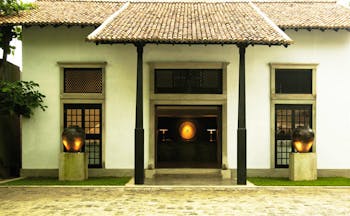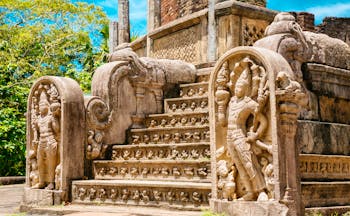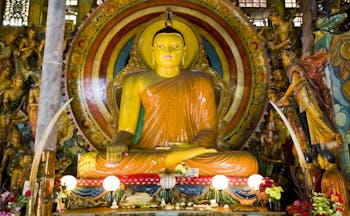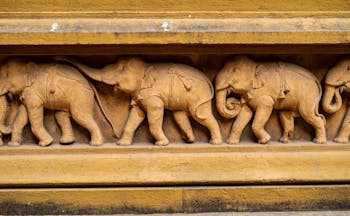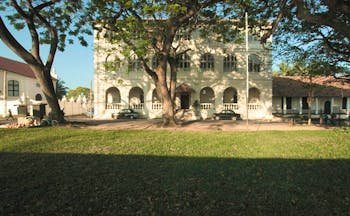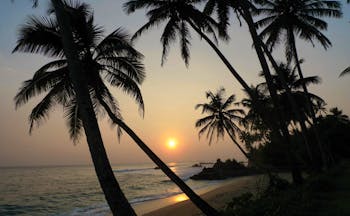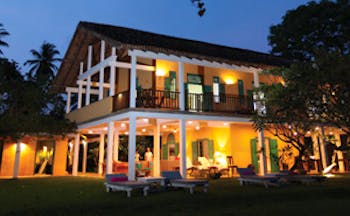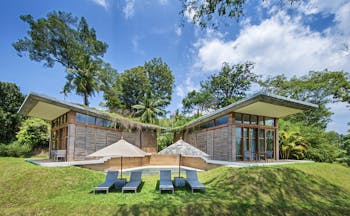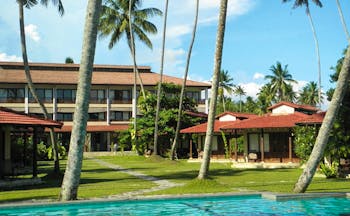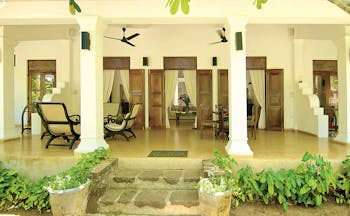
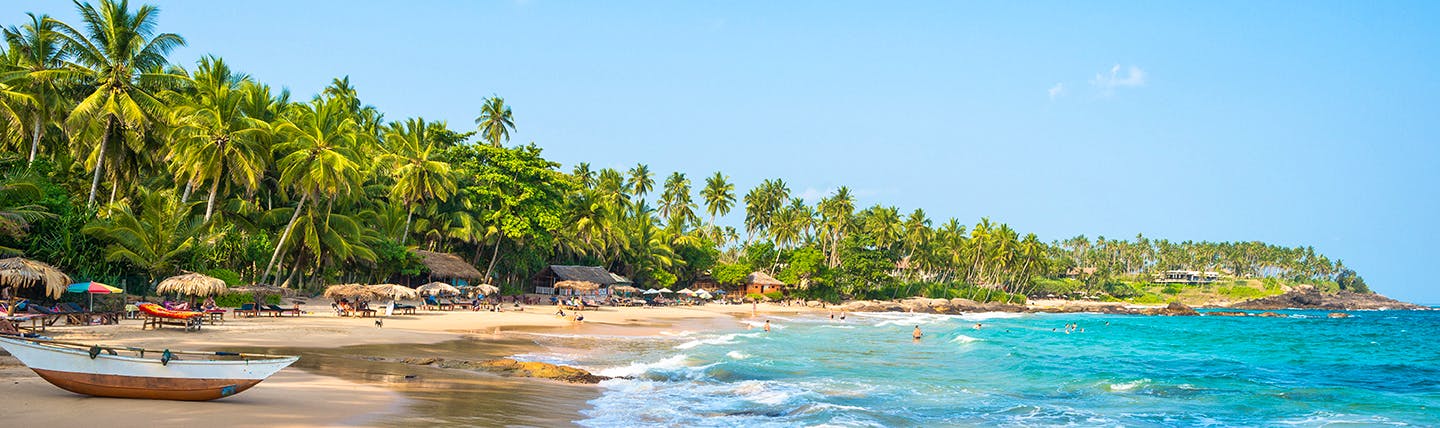
Southern Sri Lanka uncovers a world of historic Dutch forts, beautiful beaches and fishermen fishing on stilts, where sleepy villages lie hidden in palms behind the wide sandy bays and sheltered coves. The further east you go, the less populated and the more naturally wild and remote the landscapes become. The lush inland forest reserves of Hiyare and Kottawa and Singharaja in the south-west contrast sharply with the arid south-eastern national parks of Yala, Uda Walave and Bundala, where wild elephants and migratory birds flock around the water ‘tanks’ and where leopards and sloth bear have been known to roam. Between December and April, the south coast is popular for whale and dolphin watching, in the waters off Weligama Bay. Galle, on the south-west tip of Sri Lanka, is a reminder of the Dutch presence on the island. The new town may have the usual urban bustle, but the Dutch Fort, built in 1663, retains a timeless air. The Galle Fort, constructed by the Dutch East Indian Company as a fortified town, is a UNESCO world heritage site. It is still intact and has a thriving community living and working within its walls. You can walk along part of the ramparts with views out to sea on one side and the best free view of the famous Galle cricket ground on the other. There is a national museum housing Dutch and Singhalese exhibits of historical interest as well as a newly-opened Maritime Museum, a lighthouse and a 17th century Dutch Reform Church. Restoration work is underway to make the underground tunnels open to visitors. The myriad narrow streets within the Fort are fascinating for their architecture, lined with official buildings, shops and old town houses, some of which have been converted to stylish villas and boutique hotels. Outside the ramparts, Galle functions busily as a provincial town and port. Brightly painted fishing boats line the shore and there is a lively market area with a whole pavilion dedicated to fish. Galle and the surrounding villages are full of artisans – lace makers, jewellers, woodcarvers, painters and people making things out of coir, rush and reed. The National Crafts Council has a centre by the old entrance to Galle Fort and there are plenty of small shops selling crafts, jewellery and antiques, as well as a few designer boutiques. The region around Galle is fascinating and incredibly beautiful with its rainforest reserves, indigenous wildlife, low-lying tea estates on rolling hills, traditional villages and crafts, ancient Buddhist temples, coconut plantations, rice paddies, fishing villages and palm-fringed, sandy coves.
Local highlights
Unuwatuna: A beautiful crescent-shaped sandy beach, 5 km east of Galle. Acclaimed as one of the top beaches of the world, it is about 1 km long and discreetly lined with beachside guest houses and cafés, creating a young and trendy atmosphere. This bay was badly hit during the Tsunami but most of the properties have now been re-built. People do snorkel and dive here on a reef and you can go out on a glass-bottom boat. It can be easily reached by car, bike or 3-wheeler if you are staying in Galle or Thalpe.
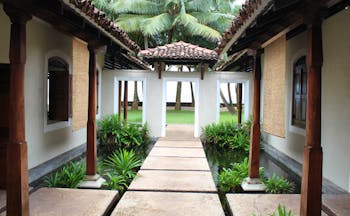
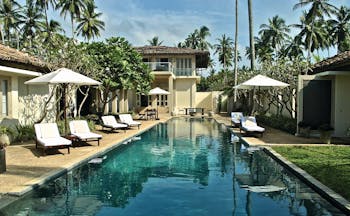
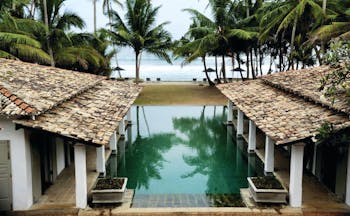
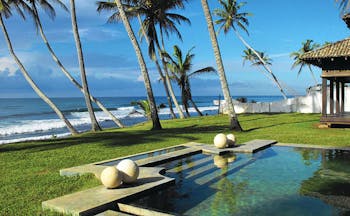
Thalpe: 8 km from Galle Fort, Thalpe has a fashionable stretch of golden sand fringed by coconut palms and Indian Ocean. It is now lined with exclusive villas and small boutique hotels which embody the influence of Geoffrey Bawa, the famous Sri Lankan architect of designs with open spaces to the sea. In season, sea turtles are seen laying their eggs here on the beach.
Koggala: The soft sand beaches are quite narrow and dotted with stilt fishermen. Near the Fortress Hotel, there is a folk museum in the home of Martin Wickramasinghe, one of Sri Lanka’s most important writers of the 20th century. The well-preserved buildings are filled with displays dedicated to his life and work and a collection of hand-made tools, toys, carriages and implements, giving a fascinating insight into Sri Lanka’s folk history and rural life. North of the coast road lies the vast expanse of Koggala Lake, a haven for migratory birds. Local boat trips will usually take you to two or three of the 11 islands, one of which is a bird sanctuary. The lake serves as the landing and departure point for the sea planes of the Sri Lankan Airlines air taxi service to/from Colombo and Bentota. Koggala is also the base for a domestic (military) airport, garment factories and a batik factory.Cinnamon plantations abound in the hinterland and you can visit a ‘low country’ tea plantation and factory where Ceylon tea and white organic tea are produced (the latter being the world's most expensive tea, plucked by unmarried girls).
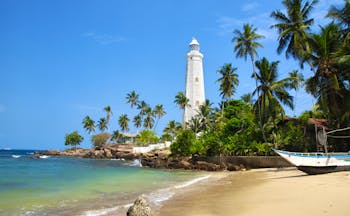
Weligama Bay: The beautiful Weligama Bay stretches from Weligama right round to Mirissa, two small fishing towns, and is blessed with soft, sandy beaches ideal for daily walks, runs and impromptu games of cricket. It has good surfing waves and a fine sand bottom, attracting experienced as well as first-time surfers. There are some sheltered waters for snorkelling in the calm season and scuba divers can enjoy discovering old shipwrecks offshore. Mirissa is the main embarkation point for deep-sea fishing and whale-watching trips between December and April, when there is a good chance of sighting blue whales and spinner dolphins. Matara is an important provincial town with Dutch Fort ramparts and a University that is housed in impressive buildings designed by Geoffrey Bawa. The nearby Dondra lighthouse is Sri Lanka’s most southerly point.
Tangalle: Tangalle is a quaint town with a number of provincial offices, partly set on a hill that affords pleasant views across the coast. Its fishing harbour was badly damaged during the tsunami. The coastline around Tangalle is one of long stretches of sand and hidden coves, bordering dense coconut plantations and tropical forest. It is full of the marvels of nature such as the Hoo-Maniya Blow Hole and sea turtles that lay their eggs on the shore (at Rekawa). Snorkelling in the sheltered, clear waters during the calm season reveals the beauty of the sea life. Further east from Tangalle, the scenery changes noticeably to mark the start of the dry zone, arriving at the provincial town of Hambantota, This is currently the focus of investment with new buildings, roads, industries, port and an airport on the way. It has a large Malay-muslim population and is the salt capital of Sri Lanka, with saltpans everywhere. Inland on the outskirts of the Yala ‘zone’, lie Tissamaharama, with its spiritual dagobas and Tissa Wewa (an ancient ‘tank’), and Kataragama, one of the three most venerated religious sites in Sri Lanka, held sacred by Buddhists, Hindus and Muslims alike. Throngs of pilgrims bear fruit platter offerings here, particularly at evening puja (7 pm onwards).
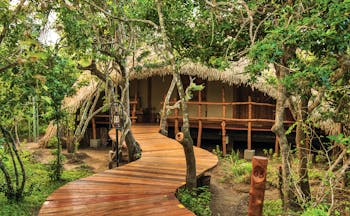
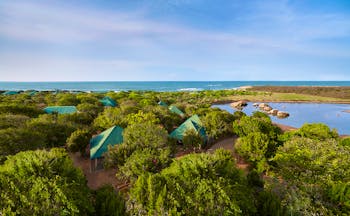
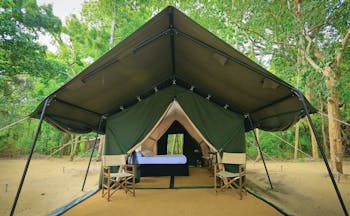
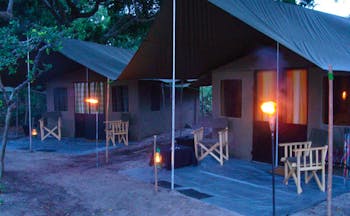
The South-Eastern National Parks: Enjoy enthralling wildlife safaris by jeep in the national parks of Yala, Uda Walave and Bundala – best in the early morning or late afternoon. For something unique, we can arrange for you to stay overnight in a luxury tented camp.
Uda Walawe National Park: Uda Walawe is good place to see elephants in the wild as there are known to be up to 350 of them residing in the park. This is dry savannah-like terrain, very hot with some wooded areas, a river and lagoons. Sightings are frequent of water buffalo, grey langur monkeys and migratory birds such as woolly-necked storks, and maybe a crocodile or two. There is also an Elephant Transit Home near the entrance to the park (separate fee), supported by WWF, where you can see young elephants up to 5 years old roaming free or feeding in the enclosure 3 or 4 times a day. Uda Walawe can be visited on a day excursion from Tangalle (1.5 hours drive each way) or other hotels along the south coast, though it will take up to 4 hours to drive from Galle. For something very special, stay one or two nights in a luxury tented camp inside Uda Walawe National Park (see our Nature & Wildlife section), giving you the chance to experience the night-time sounds of the wilderness and starry skies, maybe sighting nocturnal anteaters or the rare slender loris.
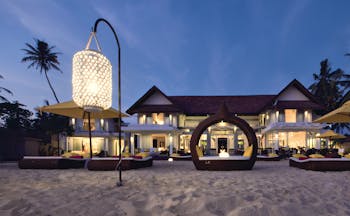
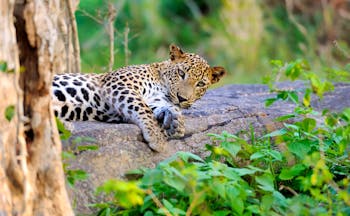
Yala National Park: Yala covers an area of 965 square kilometres and became a wildlife reserve in 1938. The park is believed to have one of the highest densities of leopards in the world and therefore offers one of the best chances to see these animals in the wild. You are likely to see elephants, sambhur, spotted deer, wild boar and occasionally sloth bear, mongoose or mugger crocodile. This is very dry, sun-scorched terrain with little shade, bordered by a starkly beautiful coastline and interspersed with watering holes. Yala can be visited on a day excursion from Tangalle (3 hours drive each way). It is advisable to stay overnight at Yala Village near the park entrance in order to fully enjoy the Yala experience (see our Nature & Wildlife section).
Bundala National Park: Bundala is a coastal wetland, with shallow, brackish lagoons. Mainly for bird-watching – greater flamingos (especially in September), peacocks, babblers, bulbuls, cormorants, open-billed storks, egrets, blackheaded ibis, yellow wattled lapwing, pheasant-tailed jacana, snake birds and Brahman kites. Macaque monkeys and water buffalo are frequently seen, sometimes elephants and the secretive porcupines (or at least their holes!) This is very hot terrain, offering little shade. Bundala can be visited on a day excursion from Tangalle (2 hours drive), or when staying at Yala Village, or en route between the Tea country and Tangalle.
Places to Stay In and Around Galle:
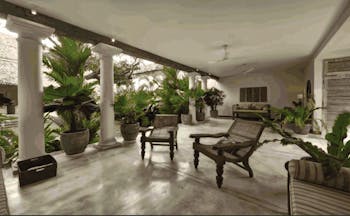
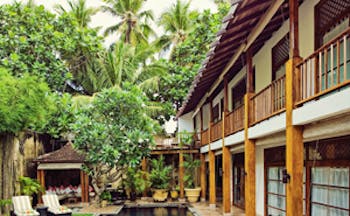
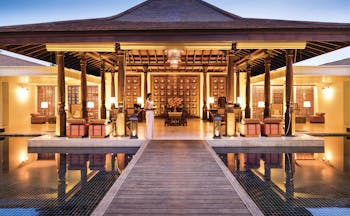
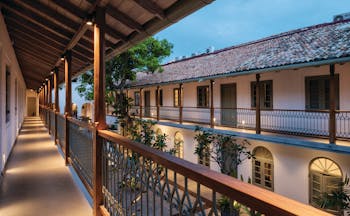
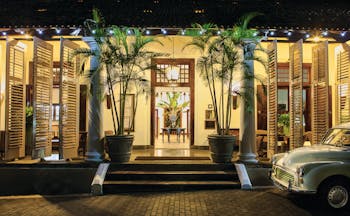
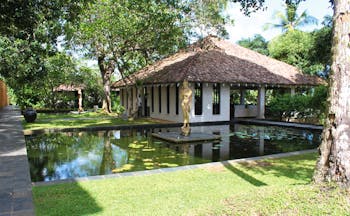
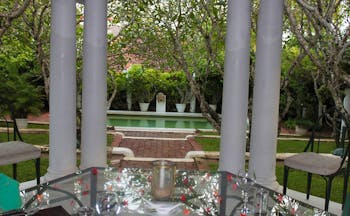
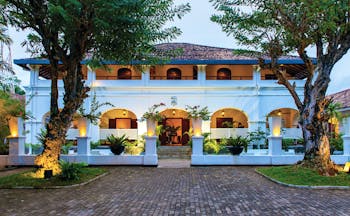
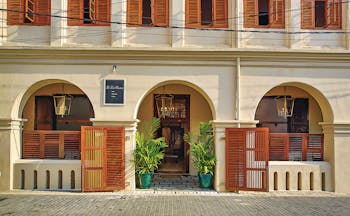
Jetwing Lighthouse Hotel - stands proudly on a small promontory before the town with magnificent ocean vistas, a masterpiece of Geoffrey Bawa, with two swimming pools, spa and gardens fronting a beach. Inside the ramparts of Galle Fort: mangalla - a blend of Aman luxury and colonial splendour in what was previously the historic New Oriental Hotel, with a tranquil Baths Spa and 3-14 day Ayurveda programmes. The Fort Printers - a delightful private hotel with only 5 bedrooms. It retains much of its original character from an eventful past when it housed Moslem traders, English colonialists, a printing house and school. Galle Fort Hotel – this stylish hotel occupies a 17th century Dutch Merchant’s house, once the residence of a French Count.
Located above Galle: The Dutch House – located on a hill, above the town, this boutique former residence of a Dutch East India Admiral has just four bedrooms furnished in exquisite Dutch colonial style, with enchanting veranda and garden. The Sun House – boutique sister property to the Dutch House, the Sun House offers 7 bedrooms, plenty of colonial charm and highly acclaimed cuisine. The restaurants at Amangalla, Galle Fort Hotel and The Fort Printers all provide charming settings in which to enjoy mouth-watering international and Sri Lankan meals within the Fort.
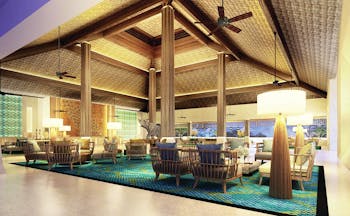
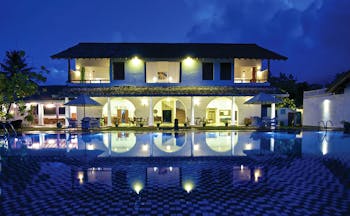
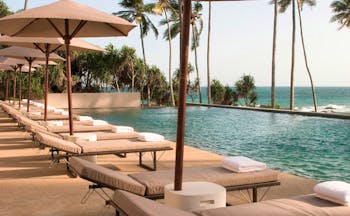
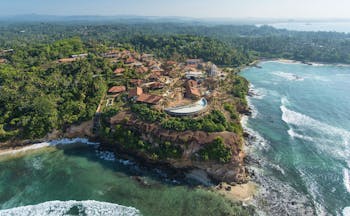
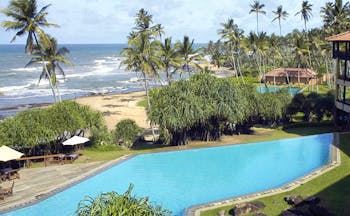
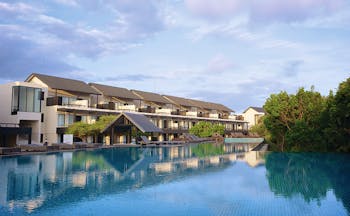
Places to Stay on the South Coast: Luxury hotel by the beach: The Fortress in Koggala – a superb, architecturally stunning, luxury hotel with 49 bedrooms and suites, airy and spacious with wide-open ocean views. Highlights include first class dining, a 52-metre pool and a wonderful inner sanctum spa. Ideal for weddings, honeymoons, families and friends alike.
Boutique luxury by the beach: The newly opened Weligama Bay Resort has 24 bedrooms, suites and bungalows in a wonderful position on Weligama bay, good for beach activities. It has an air-conditioned restaurant, open-air terrace and a spa.
Luxury and pure indulgence by the beach – in the deep south:
Amanwella - relax in the tranquil luxury of an Aman resort, set in coconut groves around a crescent-shaped beach near Tangalle. Its 30 contemporary suites feature plunge pools, panoramic windows and private terraces. Enjoy superb cuisine, in-suite, in the air-conditioned restaurant, at the beach club or by the amazing swimming pool.
Barefoot seclusion by the beach: The Beach House, near Tangalle is a private villa with 5 bedrooms, set in secluded gardens bordering a quiet, beautiful beach. Ideal for a small group of family and friends.
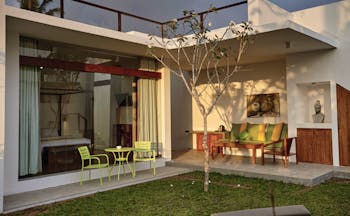
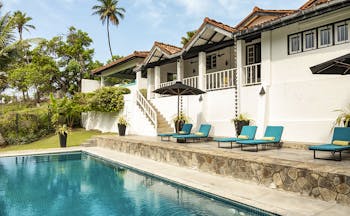
Laid-back chic in Thalpe: We have selected three boutique properties in Thalpe on the coast east of Galle, each on the beach front and with a swimming pool and food & beverage service for in-house guests, bookable by the room, villa or entire property. Apa Villas has 7 villa-style suites at ground level, The Frangipani Tree has 9 contemporary suites in 3 villas, with a tennis court and beach spa, Era Beach is a small boutique hotel with 8 bedrooms on two levels and two open sea-facing pavilions for dining, lounge and bar.
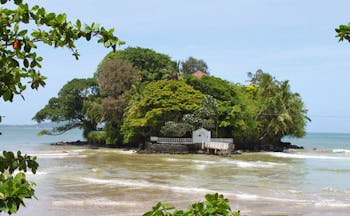
Something unique: Taprobane Island – stay on your own private island in a neo-Palladian villa, sheer tropical fantasy on Weligama bay.
A hidden gem: Kahanda Kanda – a luxury countryside retreat for relaxation and romance, situated on the north side of Koggala Lake amidst tea plantation and tropical forest, secluded with just 5 lavishly furnished suites.
For Well-being: Amangalla, The Fortress and Jetwing Lighthouse Hotel offer a full range of spa and Ayurveda facilities and special spa packages, whilst the Barberyn Beach Ayurveda Resort in Weligama provides seriously authentic Ayurveda health holidays lasting two weeks (see our Wellbeing section).
For Honeymoons & Weddings: Stay at The Fortress hotel or Jetwing Lighthouse Hotel on your honeymoon and enjoy their special offers of extra special treats. Weddings can be arranged at Jetwing Lighthouse Hotel, The Fortress and Amangalla
Getting Out and About in Galle: Fascinating Galle has plenty to offer the visitor: Galle Fort – UNESCO World Heritage Site, and one of the few living fort cities in the world; Walk around the ramparts of Galle at dawn or at sunset; Arts & crafts shopping – jewellery, lace, rush & reed, home décor, furniture, antiques, batik and boutiques; The Dutch Reformed Church; Galle Literary Festival in January; National Museum; Maritime Museum in the Dutch warehouses of Galle Fort, just re-opened; Galle Markets; Galle Cricket Stadium; Hot-air balloon ride (December to April); River boat trip. A little way inland from Galle/Koggala: Hiyare Nature Reserve (volunteering possible); Kottawe Nature Reserve; Kanneliya Forest; Samakanda (organic farm, visit, walks and lunches available upon request); Village life bike rides; Handicrafts in the villages e.g. lace-making, rush & reed, woodcarving; Yatagala Temple.
Climate: The average temperatures on the South coast is 32C and 65% humidity, though it is cooler and more humid in the west, getting progressively hotter and less humid the further east you go, especially the east of Tangalle. The evenings are a little cooler and the coasts enjoy sea breezes. Rainfall is experienced mainly during the south-west monsoon from May to August. The ‘calm’ season is December to April, when the seas are general calm and there is little rainfall. Whilst the sea appears calm out of the monsoons, there are still undercurrents and riptides.
Festivals and Events in the South
January: The Galle Literary Festival - this 4-day festival brings together Sri Lankan and international authors from around the world for writing workshops, talks, exhibitions and more at various locations in Galle. Past guests have included Vickram Seth and Gore Vidal.
July: Unuwatuna Perahera - a 7-day festival commencing on full moon day. Matara/Dondra Perahera - with dedications to Lord Vishnu. Kataragama Esala Festival - a 10-day festival when pilgrims give penance to the Hindu war god, Skanda.
July to September: Kite flying on the ramparts of Galle
Getting out and about
On the way from Galle to Yala you can enjoy: Stilt Fishermen; Cinnamon plantations; Unuwatuna beach; Martin Wickramasinghe’s house – museum (literary and 20th century life); Koggala Lake; Hinduangoda White tea factory and estate; Lace-making – Weligama, Dickwella; Surfing – popular surfing beaches from Unuwatuna to Mirissa; Weligama Bay; Coastal villages and fishing harbours; Whale Watching and Dolphin Watching (from Mirissa); Diving (from Mirissa); Deep-sea fishing trips (from Mirissa); Provincial town of Matara (Dutch heritage – fort and church); Dondra Head and Dondra Lighthouse; Kudawala Blow Hole; Mulkirigala Buddhist temple (inland); Uda Walawe National Park and Elephant Transit Home (inland); Sea Turtles laying their eggs on the beach, usually February to July (Rekawa Turtle Project); Kalametiya bird sanctuary; Bundala Nature Reserve (bird-watching mainly); Yala National Park; Kataragama – centre for Buddhist, Hindu and Muslim pilgrimages; Tissamaharama - ancient ‘tank’ and dagobas.
Driving distances: Colombo International Airport to Galle – 3 hours (150 km), Colombo International Airport to Koggala – 3.5 hours (165 km), Colombo International Airport to Tangalle - 5 hours (230 km), Galle to Weligama – 30-40 minutes (25 km), Galle to Tangalle – 2 hours (80 km), Galle to Yala – 4 hours (180 km), Nuwara Eliya to Tangalle – 5 hours (210 km). A new Sri Lankan Airlines air taxi service (sea plane) operates daily between Colombo international airport, Bentota and Koggala. Private helicopter charter transfers can also be arranged.