Czech Republic - Frequently Asked Questions
Prague has an extraordinary reputation. Does it live up to it, and is it best seen as part of a wider rail tour?
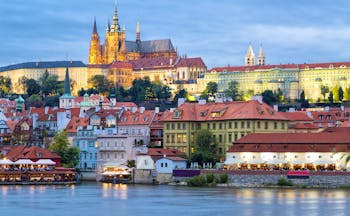
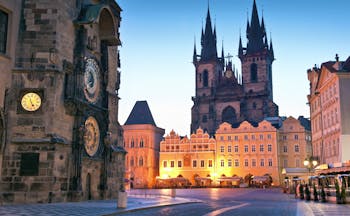
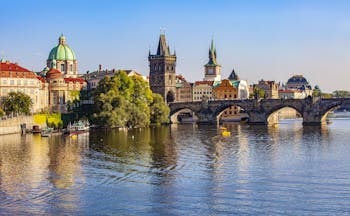
Prague does live up to it — almost unusually so among European cities that carry that weight of expectation. The old town is genuinely intact in a way that few central European capitals are: the Charles Bridge, the castle district above the Vltava, the astronomical clock in the Old Town Square, the Josefov Jewish Quarter, the Baroque churches and palaces of Malá Strana. It survived the twentieth century largely unscathed and the result is a medieval and Baroque city of remarkable coherence. Three nights gives you two full days and is the minimum to do it justice; four nights allows a more relaxed pace and the possibility of a day trip — Kutná Hora, with its ossuary and Gothic cathedral, is two hours by train and one of the most memorable half-days in central Europe. As for whether Prague works best within a wider tour — it does, because of its position. It sits naturally on rail routes that connect it to Germany to the north and west, and to Vienna and Budapest to the south and east. Coming to Prague on the overnight sleeper from Zurich or breaking the journey in Cologne or Berlin is a pleasurable and logical way to travel, and the cities that follow it — Vienna, Budapest — make for a coherent progression through the great capitals of central European civilisation.
How do you travel from the UK to Prague by train, and how long does it take?
There are two main approaches, and we use both depending on the itinerary and the client's preference. The first is by day train: Eurostar from London St Pancras to Brussels, then onward by fast train through Cologne and Frankfurt to Prague. With an early Eurostar departure you can reach Prague the same evening, though most clients prefer to break the journey with a night in Cologne or Berlin — which turns the travel day into something worthwhile in itself rather than merely an endurance. The second approach is the overnight sleeper: the Nightjet service runs from Amsterdam and Cologne to Prague, and from Zurich to Prague via Munich, with couchette and private sleeper compartments available. A departure from Brussels in the early evening, connecting onto the Nightjet at Cologne, delivers you to Prague the following morning — a civilised and efficient way to travel that eliminates the need for a hotel night en route. We recommend the sleeper outward journey for most clients who are doing a circular tour, and the day train return through Germany and Belgium for those who prefer to travel in daylight on the way home.
Which combinations with other countries work particularly well when Prague is part of the itinerary?
Several, and they suit rather different types of trip. Prague, Vienna and Budapest is the most natural trio — three of the great capitals of the former Habsburg world, each distinct in character, connected by fast trains, and together making a compelling nine to eleven-night itinerary. The progression from the Bohemian Gothic of Prague through the imperial Baroque of Vienna to the Magyar exuberance of Budapest tells a coherent story about central Europe, and the train journeys between them — Prague to Vienna in around four hours, Vienna to Budapest in under three — are a pleasure rather than a chore. Berlin, Prague and Vienna is another strong combination, working particularly well for those interested in twentieth-century history alongside the longer cultural sweep; Berlin adds a very different register to the tour. For something more ambitious, our thirteen-night tour taking in Berlin, Dresden, Prague, Kraków and Warsaw by train covers some of the most historically weighted cities in Europe and works well for clients with a serious interest in that history. Dresden fits naturally into almost any itinerary that passes through Germany on the way to Prague — the journey follows the Elbe valley south from Dresden to the Czech border, one of the most scenic stretches of the entire route.
Is Prague only worth visiting in certain seasons, and are there times to avoid?
Prague is a year-round destination and each season has its argument. The summer months bring warmth and long days, but also the largest crowds — the Charles Bridge and the castle district in July and August are genuinely busy, and the experience of exploring them at nine in the morning or in the early evening is significantly different from the middle of the afternoon. Spring and early autumn — April to early June, and September to October — offer pleasant temperatures, manageable crowds and the city in its most photogenic states: blossom along the river embankments in spring, the golden light of October in the castle gardens in autumn. Winter, particularly December with the Christmas markets in the Old Town Square, is a time when Prague has a quality that is difficult to describe and that many clients find more affecting than summer — the cold air, the low light on the Gothic spires, the smell of roasted nuts and mulled wine. January and February are quieter still and offer the most serene experience of the city, though some attractions keep reduced hours. We will always advise on timing relative to what the client wants from the trip.
You mention Karlovy Vary as a destination within the Czech Republic. What is it, and does it work alongside Prague?
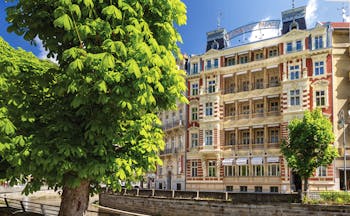
Karlovy Vary — Carlsbad in German — is one of the great spa towns of nineteenth-century Europe, set in a wooded valley in western Bohemia about two and a half hours from Prague by train. In its heyday it attracted Goethe, Beethoven, Chopin, Karl Marx and a succession of European royalty; the colonnaded promenades, the grand hotels, the thermal springs still flowing from the hillsides and the mineral-rich waters dispensed from porcelain cups are all still there, and the town has a faded grandeur that is quite unlike anywhere else in the Czech Republic. It is not a place for a city-break in the conventional sense — there is no great museum collection or historic castle — but as a place to decompress after Prague, to walk, to take the waters and to stay in one of the old spa hotels, it offers a distinctive and unhurried experience. Our seven-night Czech Republic discovery itinerary combines three nights in Prague with two in Karlovy Vary, travelling between the two by train. For clients who have already seen Prague and want something quieter and more unusual on a return visit to the country, it works very well as a standalone stay.
Our bespoke, luxury hotel holidays can be
● Single centre or multi-centre● Long or short stays
● Combine a number of different hotels in different regions
● Utilise a variety of transport arrangements to the Czech Republic and within the Czech Republic, combining flights, hire-car, rail and private transfers
Our special interest holidays to the Czech Republi
● Cultural tours for individuals● Visits to local music festivals
● Private guided sightseeing
● City breaks
● Spa breaks
● Family holidays
Included in all our holidays
● Concierge service● Handcrafted helpful hints and local information provided with all our holidays
● Personal service by your sales consultant who looks after all aspects of your holiday
Call us on 01392 441245
Highlights of the Czech Republic
Just under 20 miles out of the centre of Prague is the 14th century Castle Karlstejn. This Gothic fortress was once home to the Holy Roman Emperor Charles IV. Moulding to the shape of the hillside, it is split across three terraces, each relating to a different level of importance; at the bottom is the Imperial Palace, then the Marian Town, and finally the Big Tower at the top. The Big Tower was left vacant for God, with just a chapel inside, while the Empress lived in the Marian Tower, and the Emperor and Knights lived in the Imperial Palace. For an authentic taste of traditional Bohemia, head to Cesky Krumlov, situated further along the Vltava River. The town itself has been brilliantly preserved since the 18th century, with terracotta roofs, cobblestone streets, brightly coloured walls, and a stunning Bohemian Castle. The main pleasure of this town comes from simply wandering along its picturesque streets, stopping in local restaurants and cafes for some of the local food. To the east of Prague, is Kutna Hora, a town that began as a Bohemian monastery in the 12th century. The surrounding mountains were rich with silver, which lead the town to flourish. Today, Gothic buildings from a time of German rule are set beside a five-naved cathedral, the Italian Court Royal Residence, the Stone Haus, and the St Barbaras Church, all of which add a further dimension to a trip to the Czech Republic. Built around a hot spring reputed to have healing properties in western Czechia is Karlovy Vary. The colour and quaintness of this town is almost unparalleled across the country. The ice cream colours of each of the houses are brought to life by the dense forested areas all around. The highlights of this town, however, are its opulent spas, first commissioned by Charles IV. Many of these buildings were in part destroyed in the 18th and 19th centuries, but one prominent spa remains, dating back over six centuries. In the south-east of the country, your cultural and geographical exploration will continue, be it in the stunning underground caves and gorges of the Moravian Karst or in the waterside Renaissance palace at Telc.
Cultural highlights of the Czech Republic
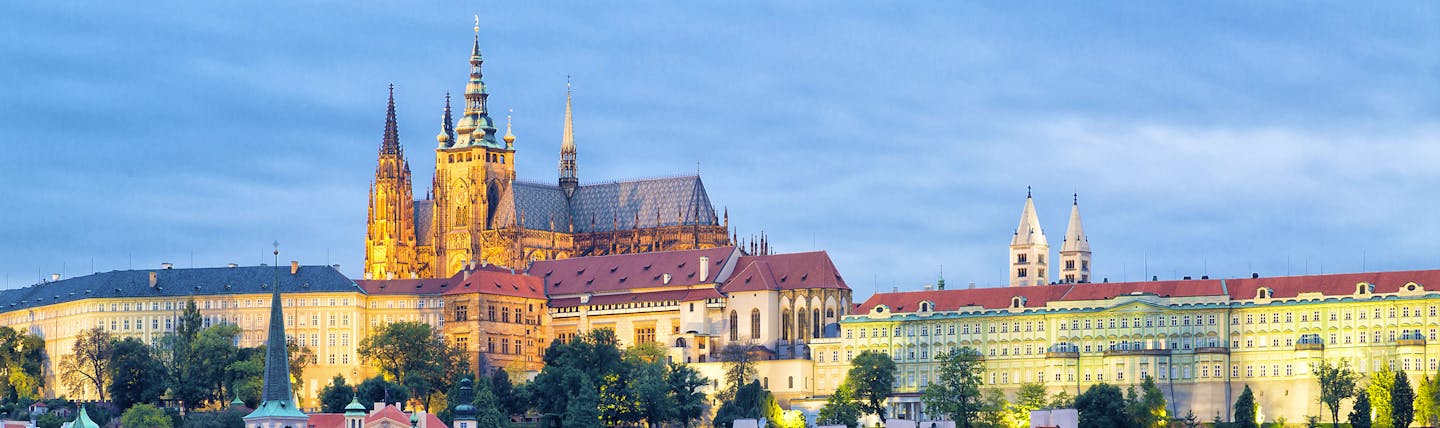
One of Europe's most popular cities, Prague is the Czech Republic's capital city. Clustered around the banks of the Vltava River, Prague is also the capital of the historic and charming region of Bohemia, and was once the seat of the Roman Empire. Its streets are rich in both Gothic and Renaissance architecture, the balance of which gives it its unique, enchanting atmosphere. The Charles Bridge is one of its most popular attractions and has crossed from Old Town into Lesser Town for over 600 years. As well as bustling with pedestrians, the Charles Bridge is the workplace of many musicians, artists, and vendors. Prague is a city of many squares, but none are more impressive than the Old Town Square, lined with magnificent townhouses that demonstrate everything from Rococo to Romanesque architecture. From here, you can appreciate the Tyn Cathedral, the St Nicholas Church, as well as the Old Town Hall. On the horizon is Prague Castle, which sprawls out across the city's highest point. Once a wooden fortress, it now encompasses the St Vitus Cathedral, a basilica, a monastery, beautiful gardens, and royal stables. For those looking for something slightly off the beaten path, it is worth seeking out the house in which Kafka lived, as well as the peaceful cemetery in which he was buried.
Czech Republic travel information
The Czech Republic is reached very easily from the UK by air and rail. We can arrange for you to travel by train with overnight stops.Our bespoke, luxury hotel holidays can be
● Single centre or multi-centre● Long or short stays
● Combine a number of different hotels in different regions
● Utilise a variety of transport arrangements to the Czech Republic and within the Czech Republic, combining flights, hire-car, rail and private transfers
Our special interest holidays to the Czech Republi
● Cultural tours for individuals● Visits to local music festivals
● Private guided sightseeing
● City breaks
● Spa breaks
● Family holidays
Included in all our holidays
● Concierge service● Handcrafted helpful hints and local information provided with all our holidays
● Personal service by your sales consultant who looks after all aspects of your holiday
Call us on 01392 441245
Our bespoke, luxury hotel holidays can be
● Single centre or multi-centre● Long or short stays
● Combine a number of different hotels in different regions
● Utilise a variety of transport arrangements to the Czech Republic and within the Czech Republic, combining flights, hire-car, rail and private transfers
Our special interest holidays to the Czech Republi
● Cultural tours for individuals● Visits to local music festivals
● Private guided sightseeing
● City breaks
● Spa breaks
● Family holidays
Included in all our holidays
● Concierge service● Handcrafted helpful hints and local information provided with all our holidays
● Personal service by your sales consultant who looks after all aspects of your holiday