Luxury holidays to Sri Lanka: luxury hotel holidays, touring holidays and special interest holidays
Our Sri Lanka offers you luxury, tailor-made holidays and tours for individuals, staying at a personally-selected range of Sri Lankan hotels in a wide number of regions throughout the country. Our holidays throughout Sri Lanka are for single-centre beach or country stays, multi-centre stays and touring holidays. We offer a range of accommodation options from eco-lodges to luxury resorts, but often we choose boutique hotels of character that reflect the region. All our holidays and tours (with chauffeur-guide) are for individuals (not groups) travelling as singles, couples and families or a combination. Sri Lanka is a perfect destination for a varied holiday with the island not only offering natural beaches, but also an immense range of scenery, wildlife and culture. Enjoy an authentic and cultural adventure in this fascinating country, with experiences from spa treatments to walking, from bird-watching to staying in luxury safari tented camps, from visiting temples to tea plantations. With Expressions Holidays you benefit from over thirty years’ experience in constructing luxury, tailor-made holidays.
SRI LANKA - FREQUENTLY ASKED QUESTIONS
Sri Lanka feels like somewhere we should have been already. What makes it worth prioritising now?
Because it is genuinely one of the most rewarding destinations available to the well-travelled, and one where the quality of the experience has risen sharply in the last decade. Sri Lanka is roughly half the size of England, yet contains five UNESCO World Heritage Sites within a single compact region, a hill country of extraordinary beauty carpeted in tea estates, a south coast with some of the most architecturally distinctive boutique hotels in Asia, a colonial capital in Galle that repays days of unhurried exploration, and a north and north-east that is only recently open to tourism and remains almost entirely unvisited. The country is warm, genuinely hospitable, culturally rich and logistically uncomplicated for the independent traveller. Distances are manageable. The food — which has evolved far beyond the tourist hotel version of Sri Lankan cuisine — is a revelation. And the quality of accommodation, from converted tea-planter's bungalows in the hill country to architect-designed boutique hotels on the south coast, would hold its own against comparable properties anywhere in the world. If you have been putting it off, this is the moment.
How does the driver-guide model work, and why is it the right way to see the country?
The driver-guide is central to how we organise touring holidays in Sri Lanka, and for very good reason. Your English-speaking driver-guide meets you on arrival at Colombo airport and remains with you throughout the touring portion of your holiday — not as a lecturer, but as a knowledgeable companion who can navigate the roads, explain what you're seeing at your own pace, make spontaneous stops where they add most, and open doors — quite literally, in some cases — that a hire car and a map would not. Sri Lanka rewards curiosity and the ability to divert, and a good driver-guide makes that possible without logistical anxiety. The roads vary from excellent to testing, and knowing which routes to take and at what time of day is a practical skill that comes with experience. We also use the driver-guide to connect what might otherwise feel like a sequence of separate visits into a coherent, unfolding understanding of the country — its history, its Buddhist and Hindu traditions, its colonial layers, its food culture. It is a mode of travel that suits our clients extremely well precisely because it combines the freedom of private travel with local knowledge that no guidebook can replicate.
We've heard about the boutique hotels in Sri Lanka — but how good are they really, and what should we expect?
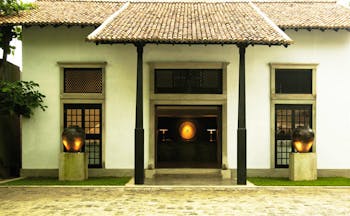
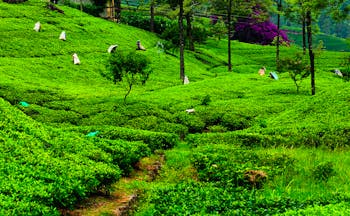
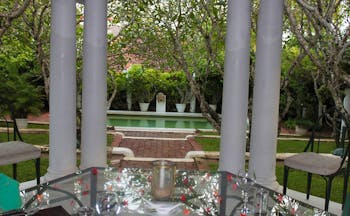
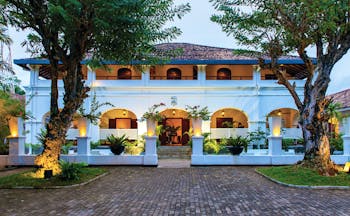
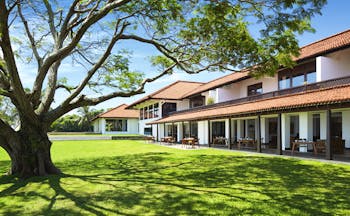
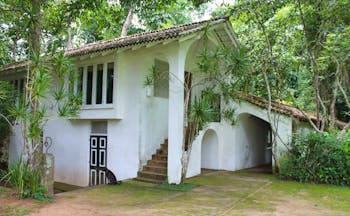
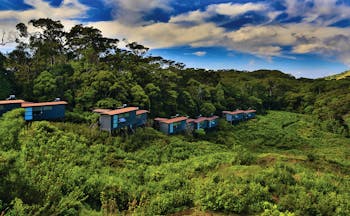
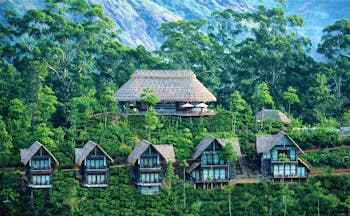
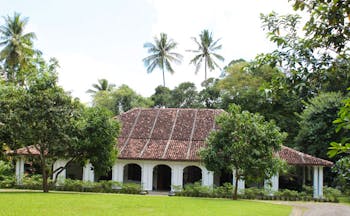
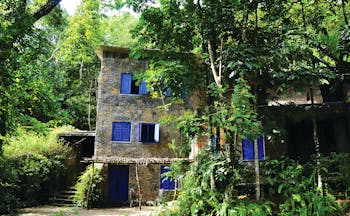
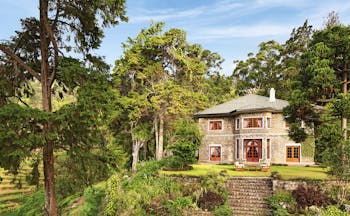
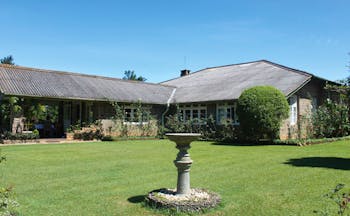
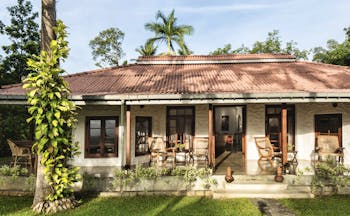
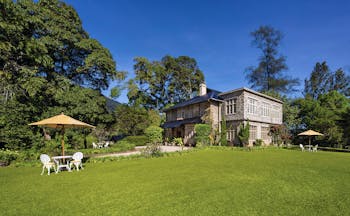
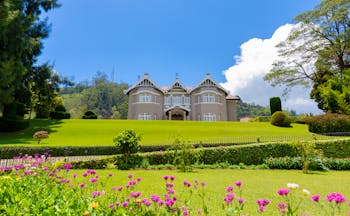
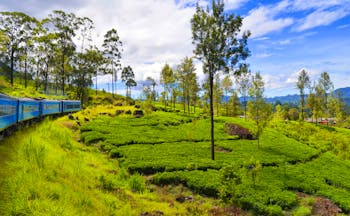
Genuinely exceptional, in many cases, and often in categories that don't exist in the same form elsewhere. In the hill country, converted tea-planter's bungalows — properties like Ceylon Tea Trails, Goatfell or Nine Skies — offer something entirely unique: small, beautifully maintained colonial houses set within working estates, with views across thousands of acres of tea terraces, attentive staff and food that reflects the estate's own produce. On the south coast and around Galle, the influence of Geoffrey Bawa — Sri Lanka's greatest architect, who effectively invented a school of tropical modernism — runs through many of the most interesting properties, from the legendary Lunuganga (Bawa's own country house, now a hotel) to the Amangalla inside Galle Fort. In the Cultural Triangle, several of the lodges are set within their own private natural landscapes and offer a degree of seclusion and design quality that genuinely surprises first-time visitors. The common thread is authenticity — these are not international chain hotels transplanted to a tropical setting but properties that feel entirely of their place. We know the differences between them — from first-hand visits, from our ground handler's direct experience of newer properties, and from the feedback of clients who have stayed — and we're frank about those differences: the right hotel is a significant part of what makes the holiday work.
We're familiar with safari in Africa. Is wildlife a reason to go to Sri Lanka, or is it a different proposition entirely?
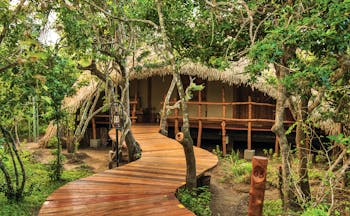
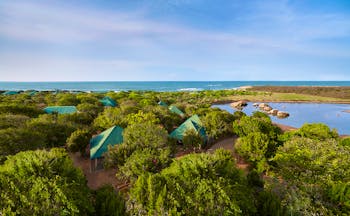
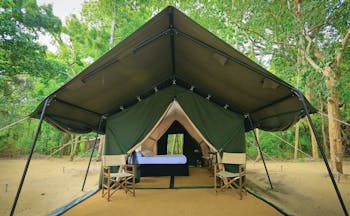
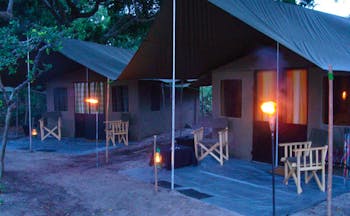
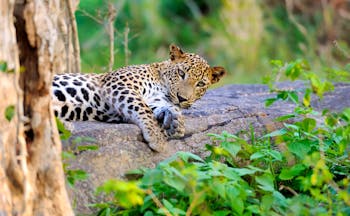
It's a different proposition, and worth being clear about that. Many of our clients who have done East or Southern Africa extensively choose to visit Sri Lanka for its culture, its hill country, its coast and its food — and find that the wildlife is an unexpected pleasure rather than the centrepiece. The elephant herds at Minneriya, where hundreds gather at the tank in the dry season, are genuinely spectacular on their own terms. Whale watching off Mirissa — blue whales and sperm whales in season — is world-class and quite unlike anything in Africa. Sri Lanka also has one of the highest densities of leopard of any country in the world, concentrated particularly in Yala. But we never position the wildlife as the primary reason to go, and we would say so plainly to any client who asked. If you are an Africa veteran for whom leopard in Yala would feel like a minor footnote, that is entirely understandable — and Sri Lanka still has more than enough to fill a fortnight of exceptional travelling. For those who do want to include a wildlife element, we can incorporate a night or two at one of the luxury tented camps in Yala — properties like Leopard Trails or Wild Coast Tented Lodge — which sit very comfortably within a broader touring itinerary without making wildlife the whole story.
How do you typically structure a fortnight in Sri Lanka, and what does a well-rounded itinerary actually include?
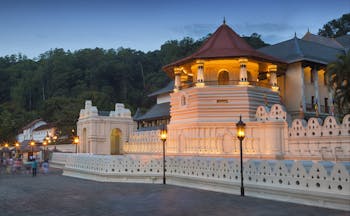
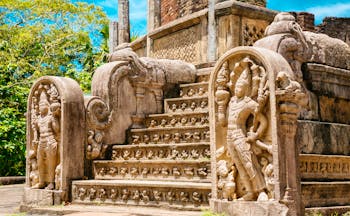
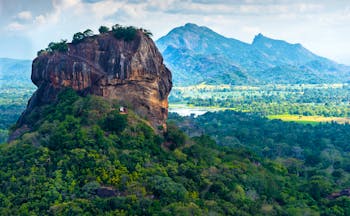
A fortnight is close to ideal, and the broad shape of most of our touring holidays follows a logic dictated by the country's geography and rhythm. The most satisfying itineraries tend to move through several distinct landscapes — beginning perhaps in Colombo, which deserves more than a transit stop and rewards a night or two of exploration in its own right, before heading into the Cultural Triangle, where Sigiriya Rock Fortress, the cave temples at Dambulla and the ancient capitals of Polonnaruwa and Anuradhapura are within easy reach of each other. From there, the natural progression is south into the hill country — Kandy, with its Temple of the Tooth and surrounding forests, and then the tea estates of Nuwara Eliya or the dramatic scenery around Ella — before descending to the coast. The south coast around Galle and the beaches of the south-west are where most clients choose to decompress at the end of a tour, and the quality of accommodation in that region means it is a very good place to do so. The northern regions — Jaffna, Trincomalee, Passikudah — are increasingly part of our programme and appeal particularly to those who want to go beyond the established circuit. We can incorporate any of these elements in any combination, with the driver-guide handling all the connections, and the pacing set entirely by you.
Our bespoke, luxury hotel holidays can be
● Single centre or multi-centre● Long or short stays
● Combine a variety of different hotels in different regions
● Utilise a variety of transport arrangements including scheduled flights, local flights, transfers or chauffeur-guides
Included in all our holidays
● Concierge service● Handcrafted helpful hints and local information provided with all our holidays
● Personal service by your sales consultant who looks after all aspects of your holiday
● Full financial protection with our ATOL (3076) for all holidays including a flight and our ABTOT for all non-air holidays
Call us on 01392 441245
Luxury holidays to Sri Lanka: luxury hotel holidays, touring holidays and special interest holidays
Places to stay
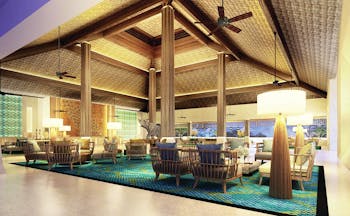
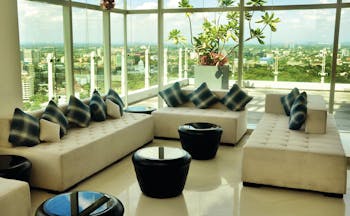
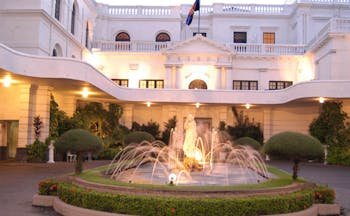
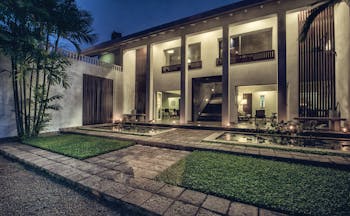
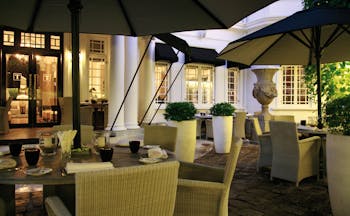
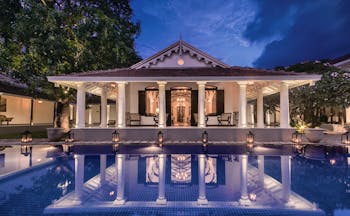
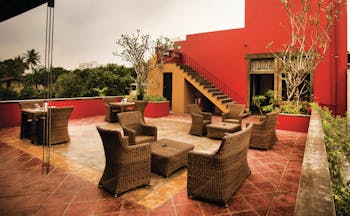
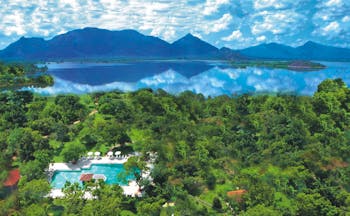
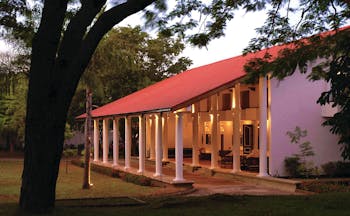
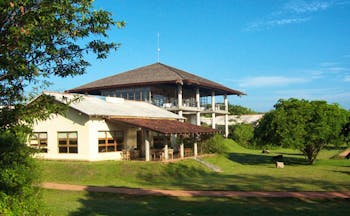
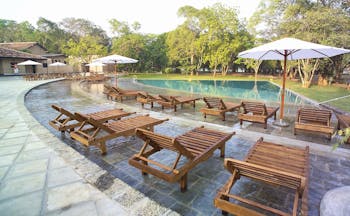
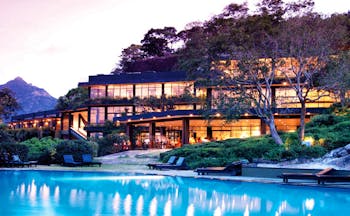
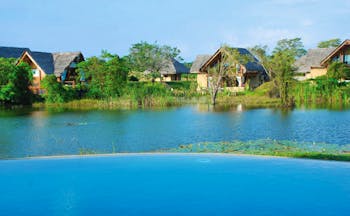
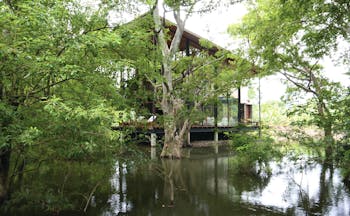
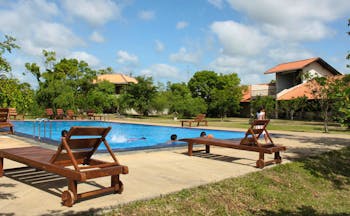
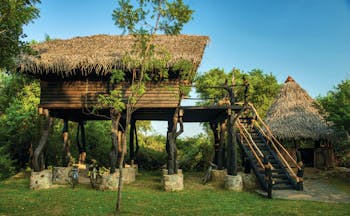
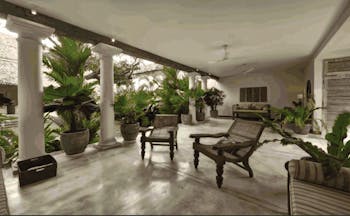
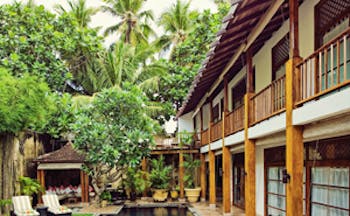
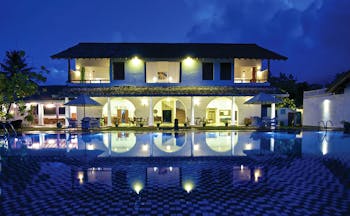
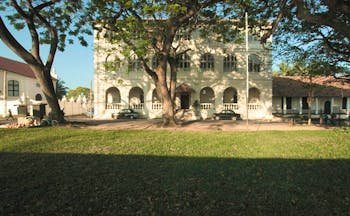
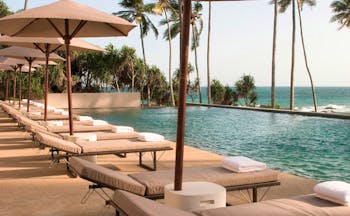
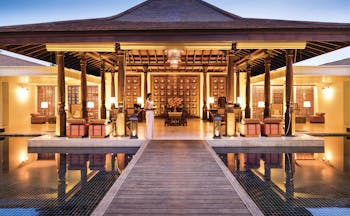
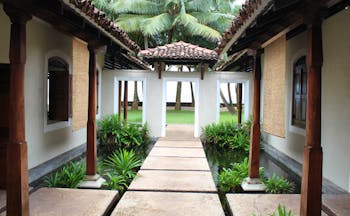
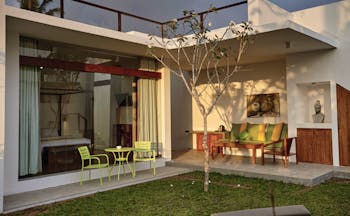
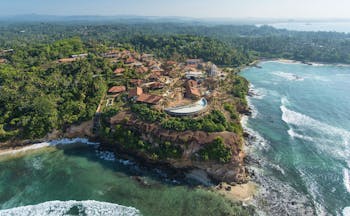
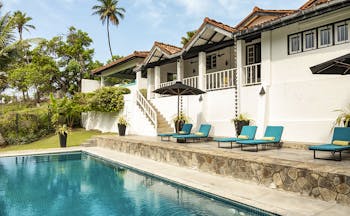
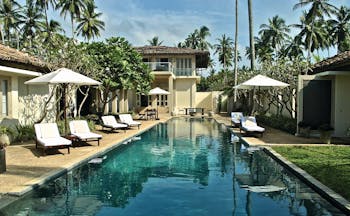
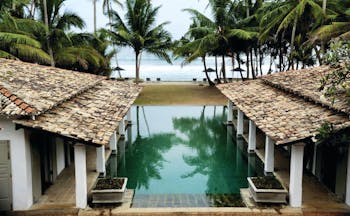
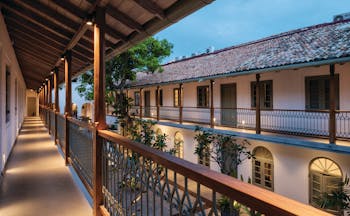
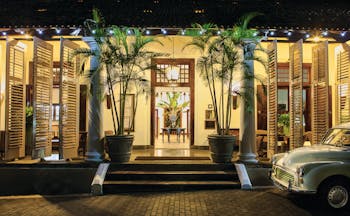
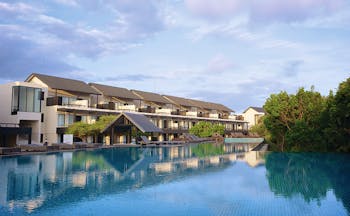
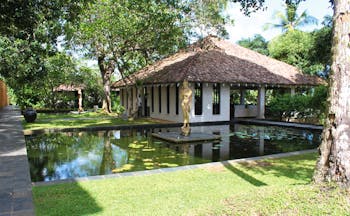
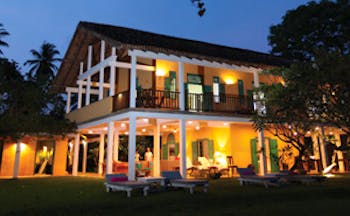
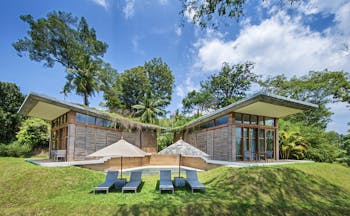
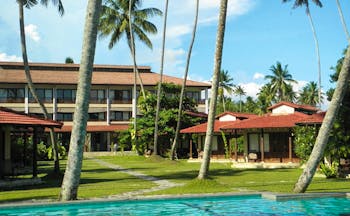
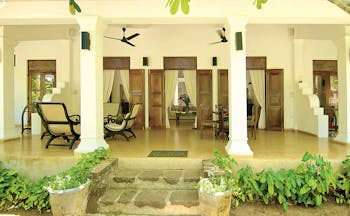
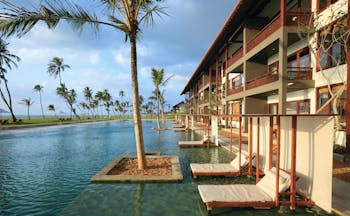
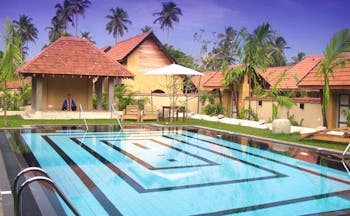
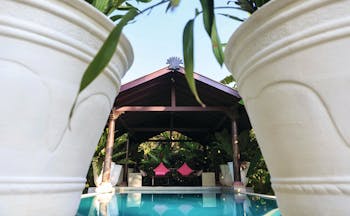
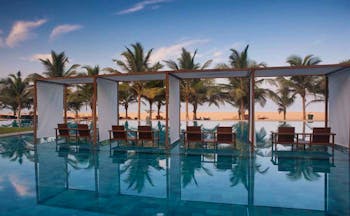
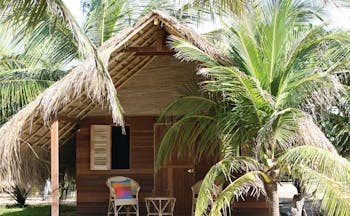
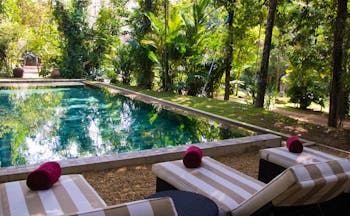
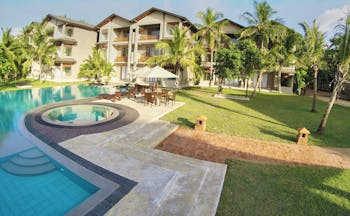
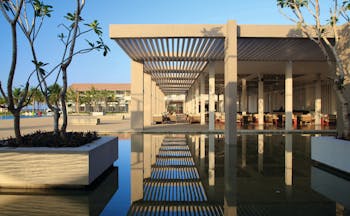
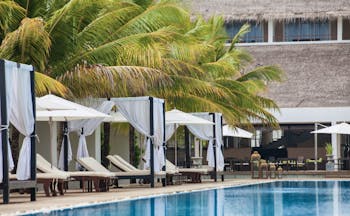
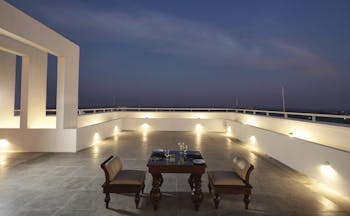
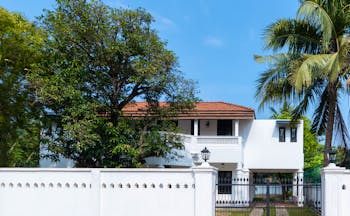
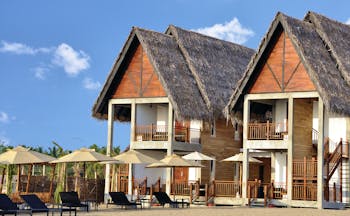
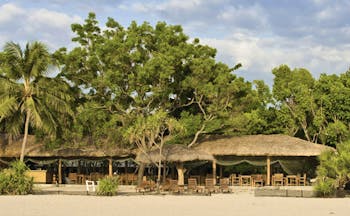
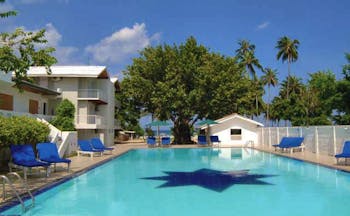
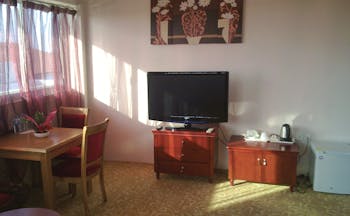
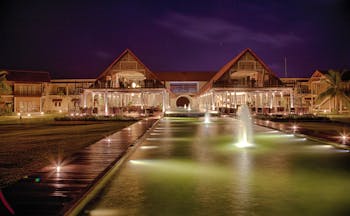
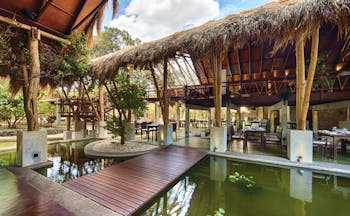
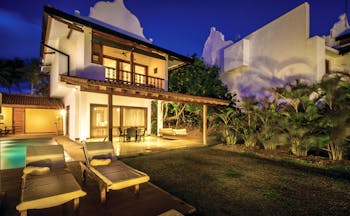
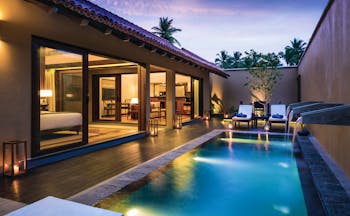
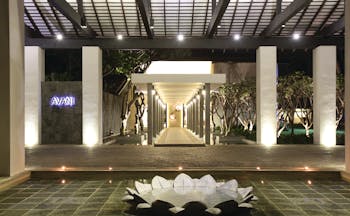
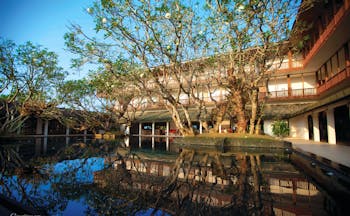
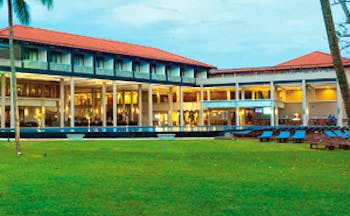
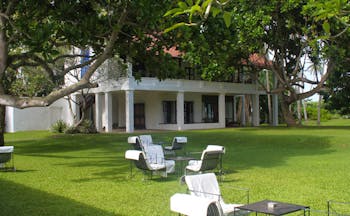
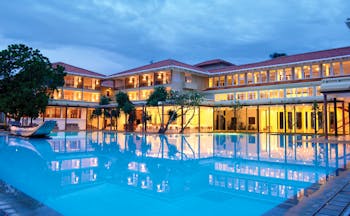
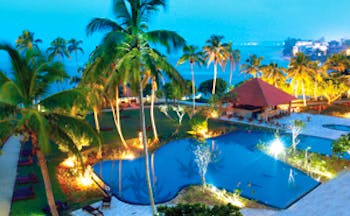
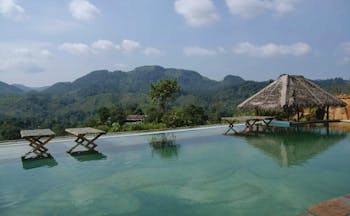
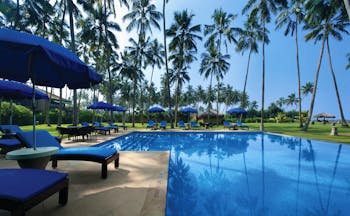
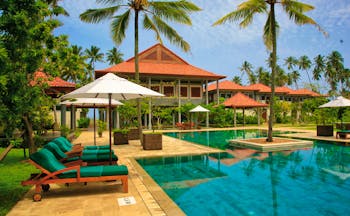
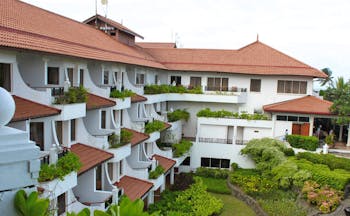
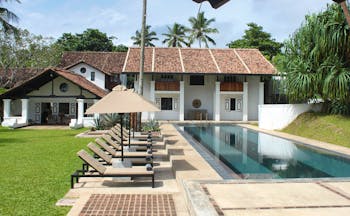
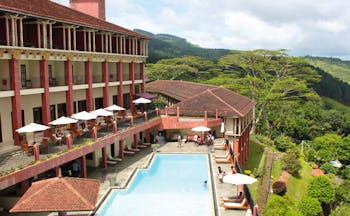
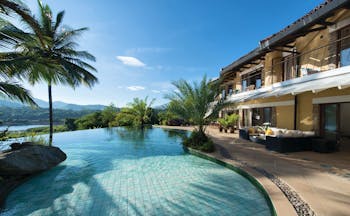
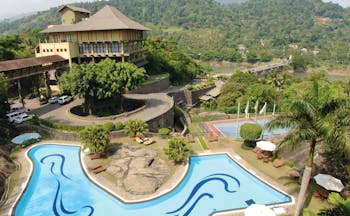
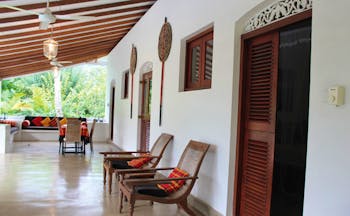
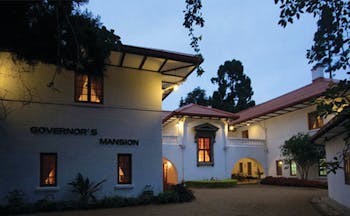
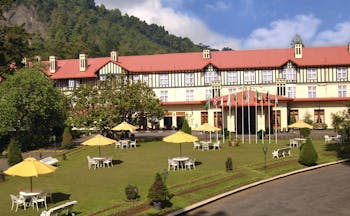
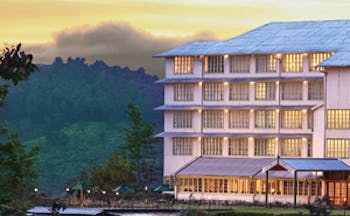
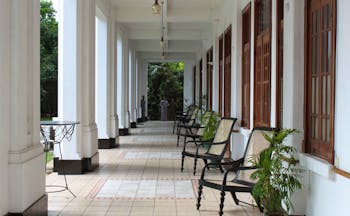
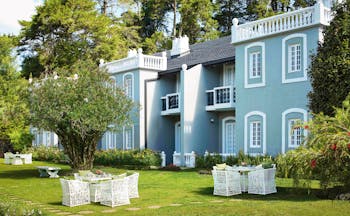
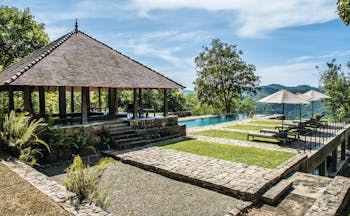
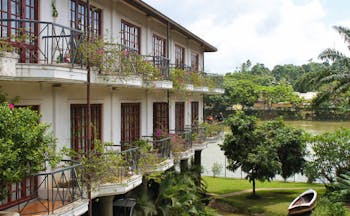
Our Sri Lankan selection of places to stay offers an exciting range of boutique hotels, tea-planters’ bungalows, grand hotels, eco-lodges, safari lodges and luxury resorts. Many are rich with Sri Lankan cultural heritage and many others are renowned architectural masterpieces, often designed by Geoffrey Bawa. Almost all hotels offer a choice of room types, including luxurious suites and perhaps inter-connecting rooms for families.
Single centre holidays
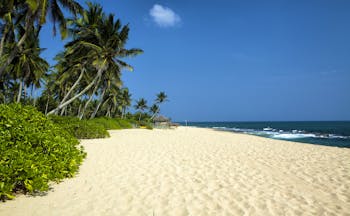
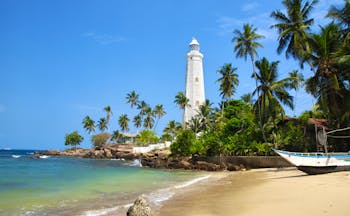
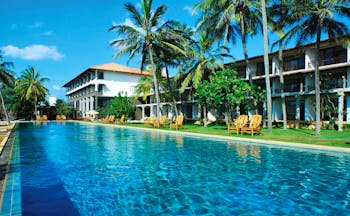
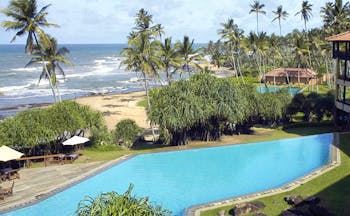
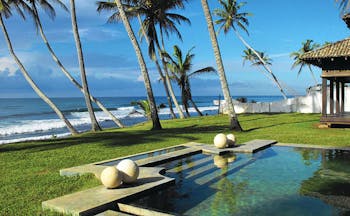
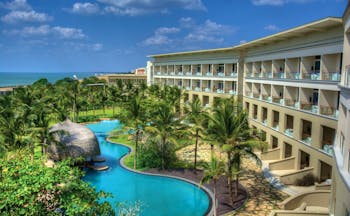
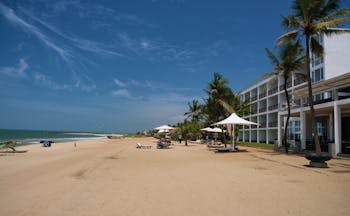
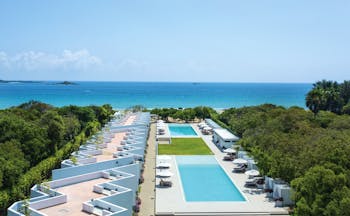
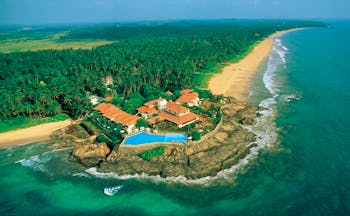
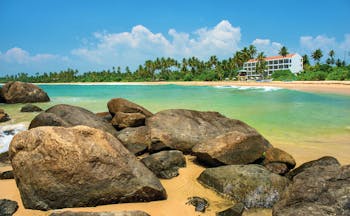
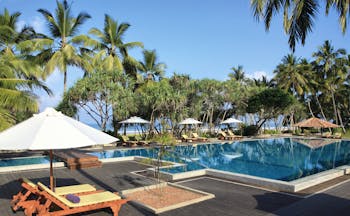
Sri Lanka is the perfect place to relax and enjoy a luxurious holiday with tropical sun, sea and sand, spending your days walking along long stretches of sandy beach and perhaps making the odd excursion to explore further afield. Our range of hotels along the coast would be wonderful for a relaxing week or two by the beach. Hotels in Negombo, Bentota and Galle offer the better options for shopping and dining out nearby. For those who love to stay in one place and explore cultural sites and wildlife at a leisurely pace, you could easily stay for a week or more in the Cultural Triangle, Kandy, Nuwara Eliya or Galle. The Cultural Triangle promises an abundance of history and archaeology; Kandy allows you to fully appreciate the nature and culture of this amazing country and discover cultural sites around Sri Lanka’s ancient royal capital; Nuwara Eliya gives you the opportunity to explore tea plantations and enjoy leisurely pursuits; while Galle offers an historic town and lovely coastline.
Two-centre holidays
The obvious combination in Sri Lanka is for a stay in the country and a stay on the coast. That way, depending on the areas you choose, you will experience a wide range of what Sri Lanka has to offer but without the constant travelling of a touring holiday. Almost any two centres would work together. The combination you choose will give you some subtle differences though in terms of scenery and cultural experiences. Or you can make the focus of one stay much more rural or wildlife associated.
Touring holidays
A touring holiday of Sri Lanka is at the heart of what many of our clients want to experience from this fascinating country and it is where we excel at using our personal knowledge and experience to tailor a holiday that is a perfect match for you. Stay in several different locations around Sri Lanka, allowing time to explore and relax in each. Combine a few nights on the beach with stays in the Kandy Hills, in the Cultural Triangle, on a high tea estate or in a national wildlife park, in Galle, Negombo or Colombo. It makes sense to factor in a night or two in Colombo, Negombo, Wadduwa or at the Wallawwa near the airport, at the beginning and/or end of your holiday to coincide with flight times.
Travel
The most popular and most efficient way to travel to Sri Lanka is from Heathrow to Colombo with Sri Lankan Airways. The flight time is about 11 hours and the timings are very convenient with the flight from London to Colombo leaving at about 21.00 hrs and arriving about 12.00 hrs the next day and on the return the flight leaves at about 13.00 hrs and arrives in London at about 20.00 hrs the same day. Sri Lankan offer economy and business class. If you want to travel from a UK regional airport, then Emirates offers a choice of flights, but we may have to amend the itinerary on the first and last days to accommodate the arrival and departure times.
Travel within Sri Lanka
We include private transfers with all our holidays to Sri Lanka, and a personal driver-guide with all our touring holidays. Your English-speaking driver-guide will meet you on arrival at Colombo airport, then accompany you on your touring holiday around the island, although the driver-guide is not automatically included when you are at beach stay for several nights. All our holidays are for individuals, so you travel as your own party and do not join a group. It is also possible to hire a car in Sri Lanka and can be arranged locally or in advance. A more popular option is to hire a car with driver for day trips or excursions, which again can be arranged by us in advance or by the hotel locally.
Our bespoke, luxury hotel holidays can be
● Single centre or multi-centre● Long or short stays
● Combine a variety of different hotels in different regions
● Utilise a variety of transport arrangements including scheduled flights, local flights, transfers or chauffeur-guides
Included in all our holidays
● Concierge service● Handcrafted helpful hints and local information provided with all our holidays
● Personal service by your sales consultant who looks after all aspects of your holiday
● Full financial protection with our ATOL (3076) for all holidays including a flight and our ABTOT for all non-air holidays
Call us on 01392 441245
Luxury holidays to Sri Lanka: luxury hotel holidays, touring holidays and special interest holidays
Regions of Sri Lanka
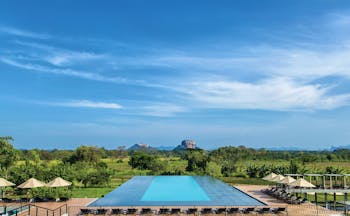
Roughly only half the size of England yet packed with a whole continent’s worth of temples and ruins, wildlife reserves and luxury beach resorts, Sri Lanka is a beautiful, bite-sized slice of paradise offering a whole world of diverse escapes. Littered with elegant colonial hotels and enchanting boutique lodges, Sri Lanka also offers luxury at a relative snip. Young or old, family or couple, beach-bound or culture-vulture – a visit to Sri Lanka satisfies everyone. Formerly an Arab trading port, the commercial capital Colombo is a bustling, colourful town, with a fabulous bazaar, colonial churches and craft markets. To the north of Colombo lies Negombo and the beaches of the west coast, whilst to the south Wadduwa is the start of a string of fabulous beaches running all the way down and around Sri Lanka’s southwest coast, with a collection of intimate, exquisite beach resorts. Further southward lies historic Galle, a reminder of the Dutch presence on the island. Inviting as Sri Lanka’s coastline is, however, the island’s interior is worth the airfare alone, with forest parks sheltering leopards and wild Asian elephants, a verdant hill country carpeted in tea plantations with lovely boutique planter’s house hotels, and what no visitor to Sri Lanka should be allowed to miss, the Cultural Triangle, a small area boasting five UNESCO World Heritage Sites in an area no bigger than Kent. New to tourism is the north and north east of Sri Lanka, strewn with Hindu temples, colonial gems and long white beaches offering spectacular snorkelling.
Capital
Colombo
Airports
Colombo Sri Jayawardenapura-Kotte
Currency
Sri Lankan Rupee
Size
430 km north to south, 225 km east to west
Population
21 million
Average temperature
The climate is tropical and with an average temperature of about 27C but with regional variations in terms of temperature and rainfall. The south-west has its monsoon season from May to July with intermittent rain and the north-east has its monsoon season from December to March. Seas are rougher in the area with the monsoon. In Tea Country, it is cooler but each valley can have a micro-climate
Unmissable holiday experiences in Sri Lanka
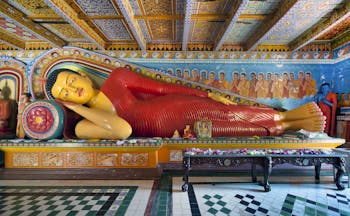
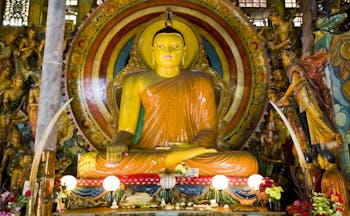
Cricket is a national sport, played on every dusty maidan and patch of grass from Jaffna to Galle; a real highlight of any trip to the south is Galle Fort, where you can wander round the ancient ramparts at sunset, watching cricket games below, or stroll the narrow streets in search of antiques in tiny, friendly shops; local festivals such as Vesak full moon in May and Poson full moon in July, as well as the famous Esala Festival in Kandy in July and August, when Buddha’s tooth is taken out from the temple and paraded through the streets; visiting national parks, sheltering an abundance of wildlife including leopards, elephants, bears and hundreds of species of birds; buying tea, gems, jewellery, spices; fantastic spicy local cuisine, specialising in fish dishes, and delicious ‘egg hoppers’; tea-tasting in the hill country; Sigirya Rock Fortress; the Cave temples of Dambulla; the medieval capital and ruins of Polonnaruwa; the sacred city of Anuradhapura; the west coast beaches flanked by palm trees, including Negombo, Beruwela, Bentota and Galle; the elephant orphanage at Pinnawela; the tea plantations near Nuwara Eliya, a region known locally as Little England; Ayurvedic massage; a warm welcome wherever you go.