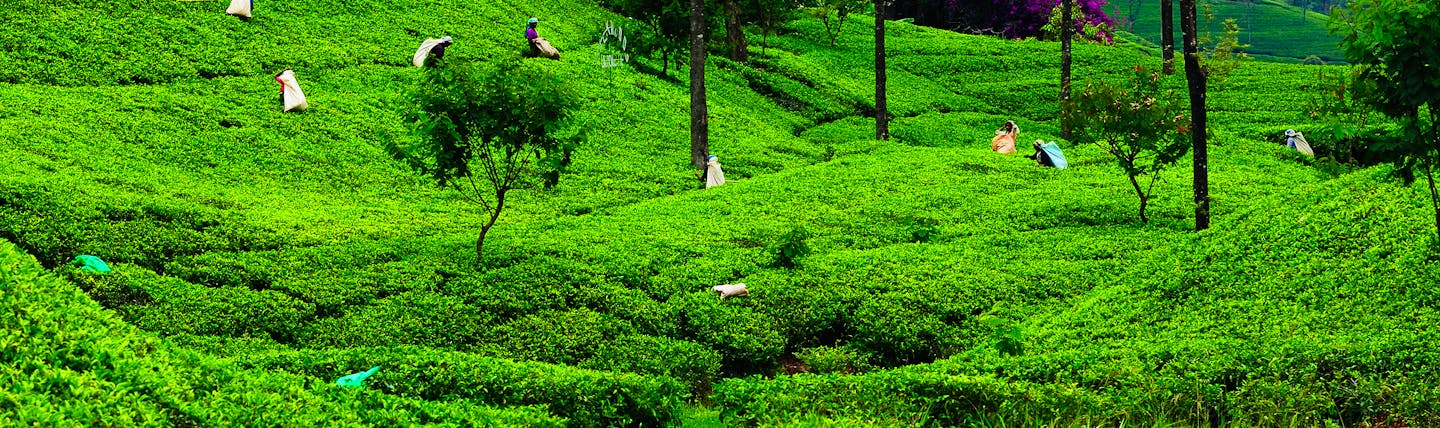
The Tea Experience
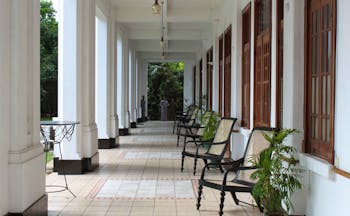
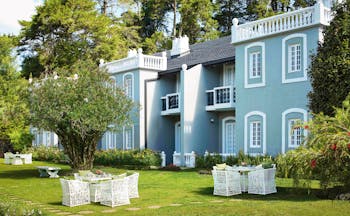
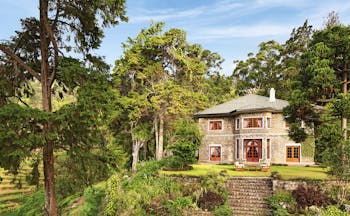
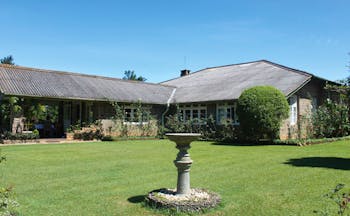
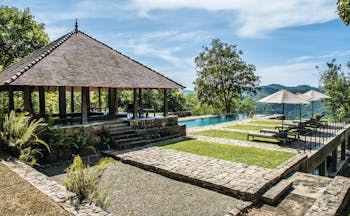
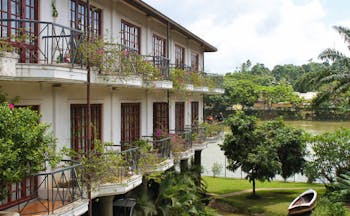
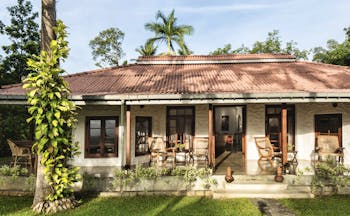
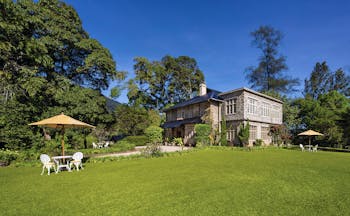
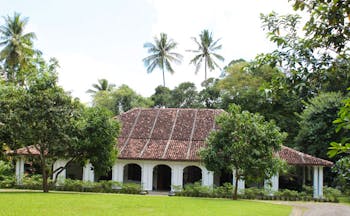
A visit to a tea factory involves explanation of the tea production process whilst you watch the tea-pluckers work their way along the tea bushes, deftly plucking the tips. There are estates literally everywhere in this area and many open their doors to visitors, giving tours and a chance to sample and purchase the various teas. The road from Kandy to Nuwara Eliya is lined with picturesque tea-clad hills and is a key link to numerous tea factories and estates. Where to stay: Any hotels in Tea Country (Hill Club, Jetwing St Andrews, Jetwing Warwick Gardens, Ceylon Tea Trails, Bandarawela Hotel or Kirchhayn Bungalow).
The Bogawantalawa Valley
In the 1870s, Scottish planters discovered the hidden Boganantalawa Valley and proceeded to clear around 4,000 hectares of forest to make way for tea bushes. The Boganantalawa Planters Club in Dickoya, Maskeliya Cricket Club, the Aldie Arms pub and the tea estate bungalows are legacies of this period of Sri Lanka's heritage. A tale or two can also be revealed at the picturesque Warleigh Church, perched over a fan of tea bushes overlooking Castlereagh Reservoir. 80% of the tea in Boganantalawa is of Chinese origin (from an area called Tientsin), the rest is Indian. In the Norwood area, they produce Udawatta tea, and Ranwatta, a golden pick-me-up tea that can be drunk at any time of day.
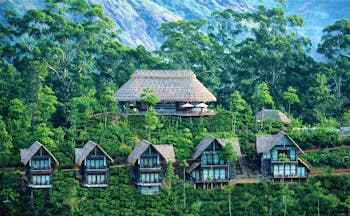
Where to stay: Ceylon Tea Trails, a collection of bungalows offering luxurious living in High Tea Country.
Sri Pada (Adam's Peak)
At 2,243 metres above sea level, this rugged summit is claimed to be the imprint of the Buddha's footprint. Pilgrims of all four Sri Lankan faiths make the ascent on foot to the peak for different reasons, though it has been an essentially Buddhist place of worship for over a thousand years. The peak is clouded over for most of the year, though clear weather is more likely between December and March, in the early morning. This is a strenuous 3-hour (plus) climb on a well-marked path, mostly steps. We would recommend that you start walking in the middle of the night to arrive at the summit for sunrise.
Where to stay: Ceylon Tea Trails, a collection of colonial bungalows located 1 hour's drive from the start of the walk.
Nuwara Eliya
The ‘Little England' of Sri Lanka is set against beautiful backdrops of mountains, valleys, waterfalls and tea plantations. It is one of the coolest places in the island with high rainfall, and really feels just like an English spring day (16-20C), although the temperature does drop at night (can be around 10C). Nuwara Eliya is full of British influences with houses like country cottages or Queen Ann style mansions. Things to do in Nuwara Eliya include playing golf at the scenic 18-hole golf course complete with quaint Clubhouse; dining at The Hill Club which is like stepping back in time to British colonial days; and strolling and birdwatching in Victoria Park in the middle of town. Nuwara Eliya is famous for its trotting horse races which take place throughout the year of year with the main event being held is in April. Whilst seasons are absent elsewhere in Sri Lanka, in Nuwara Eliya flowers bloom in springtime (March to May) and autumn (August and September), which is when low-country folk flock here to escape the sea level heat and humidity. To the north of the Nuwara Eliya town rises Pidurutalagala, the highest mountain in Sri Lanka, its peak at 2,524m above sea level.
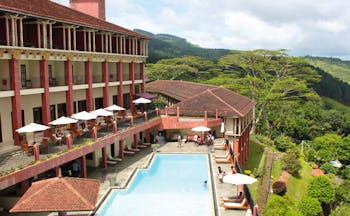
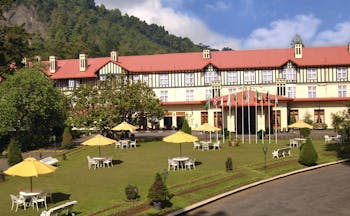
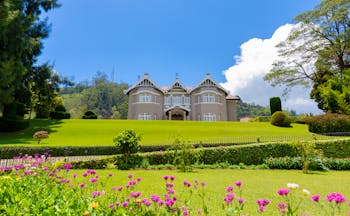
Where to stay: Jetwing St Andrews, a comfortable hotel full of colonial charm; or The Hill Club, a nostalgic step back in time in a mock-tudor mansion.
Around Ambewela
Heading south from Nuwara Eliya you come to Hakgala Botanical Gardens and a minor road climbing to Ambewela. The scenery is one of market gardens, tiny roadside villages, waterfalls, majestic mountains and, of course, tea plantations. Ambewela district is also known as the ‘milk country.' There is a dairy where you can sample cheeses and the area is littered with back-garden cattle sheds and dairy farms. Hakgala Botanical Gardens was founded in 1860 by the British botanist Dr Thwaites, the superintendent of the Botanical Gardens at Peradeniya. Hakgala was initially used to experiment with cinchona, whose bark yielded quinine, esteemed as a tonic and a remedy for malaria. The cool, temperate climate was conducive to the introduction of temperate zone plants so cedars, cypresses and pines, English oak and a Rose garden can still be seen in the park today. Special attractions here are the mountain orchids, many of them endemic to Sri Lanka, and the Fernery. The nearby Sita Eliya Temple is believed to mark the spot where Sita, the heroine from the Indian epic Ramayana, was held captive by her abductor, King Ravana.
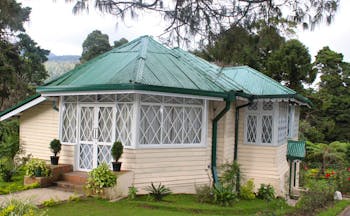
Where to stay: Jetwing Warwick Gardens, a tea estate bungalow set amidst stunning majestic mountains.
Our bespoke, luxury hotel holidays can be
● Single centre or multi-centre● Long or short stays
● Combine a number of different hotels in different regions
● Utilise a variety of transport arrangements to Sri Lanka and within Sri Lanka, combining flights, rail, and private transfers
Our special interest holidays to Tea Country
● Cultural tours for individuals● Cookery
● Visits to local festivals
● Private guided sightseeing
● Safari and wildlife experiences
● Scenic train travel
● Family holidays
● Eco experiences
● Ayurveda and other spa holidays
● Walking and cycling
● Bird-watching
● Garden visits
Included in all our holidays
● Concierge service● Handcrafted helpful hints and local information provided with all our holidays
● Personal service by your sales consultant who looks after all aspects of your holiday
Call us on 01392 441245
Highlights of Tea Country
Kandy market; Kandy area – handicrafts villages and workshops – brass, musical instruments, basket weaving, batik, painting; Kandy evening cultural show; Pinnewala Elephant Orphanage; Peradeniya Botanical Gardens; Mahaweli River and Victoria Dam; Tea estates; Drive to Nuwara Eliya and around the tea plantations, visiting a tea factory; Hantana mountain and Hantana tea plantations - walks and museum; Buddhist sites near Kandy – Gadaladeniya, Hindagala Vihara, Embekke Divale, Lankatilake; Mahiyangana – Rajamaha dagoba; Aluvihara Buddhist temple; Aluvihara Heritage Centre (Ena de Silva batik art and workshop and Sri Lankan rice & curry lunch); Knuckles Mountain Range - scenic drives and walking; Rubber plantations; Spice farms; Rail journey to Tea Country; Relaxing in the lush tropical hills; Treat your body, mind and soul to a programme of Ayurvedic massage and herbal treatments; Golf at the Victoria Golf course; Riding at Victoria Saddle Club; Walking and trekking; Cycling; White water rafting at Kitulgala.
Cultural highlights of Tea Country
Places of interest in Kandy include the Temple of the Tooth, the sacred Buddhist site which holds the tooth of Lord Buddha which is said to have been brought from India in the third century. The Temple lies within the Royal Palace complex along with the National Museum, the Audience Hall and a museum dedicated to the famous elephant, Raja. British legacies remain in central Kandy, in the form of grand old buildings and hotels, St Paul’s Church and Royal Palace Park. It is possible to walk most of the way around the lake besides which Kandy is built, where you can see the Royal Bathing Pavilion and the royal summerhouse which is on an island in the centre of the lake.). There is a lively market and a plethora of shops, gem showrooms and arts & crafts workshops. There are also several nightly cultural shows that showcase traditional Kandyan drumming, music and dance and the city boasts a fine international cricket stadium. Other highlights of the region include Pinnawela elephant orphanage where abandoned or injured elephants are cared for; Nuwara Eliya, a hill town with many British influences; the mountainous scenery and tea plantations around Ambewela and Bandarawela; the Highland Railway between Kandy and Badulla; and Tea Experience and Tea museums, an essential part of any visit to this part of Sri Lanka.
Festivals in Tea Country
Kandy - Esala Perahera Festival - July or August (depending on the date of the Esala full moon). This spectacular cultural pageant is held over 10 days with the processions and celebrations getting more elaborate and longer each day. Although in ancient times this was a procession to honour Hindu gods, during the reign of King Rajasinghe it was decreed that the procession should be in honour the sacred tooth relic of Lord Buddha. Each night, dancers, drummers, flute players, whip-crackers and elephants form a procession around the streets and Kandy lake. The ornately decorated elephants increase daily in number to 100 on the last night, the finest of them being the Maligawa Tusker which carries the Sacred Tooth Relic, led by the Chiefs of the Temple in traditional silver and gold ceremonial dress.
The Nuwara Eliya season runs from April to June. Horse racing in High Tea Country (trotting) in January, February, April, August and December. Bandarawela Perahera on full moon day in June.
Climate in Tea Country
Climate in Kandy: The daytime temperatures in Kandy and the surrounding hills range from around 22° C to 31° C, with cooler evenings averaging 17° C. It is fairly humid and misty in the evenings with short outbursts of rain. Heavier rainfalls occur during the south-west monsoon from May to August.
Climate in the High Tea Country: At an elevation of above 4,000 feet the climate is cooler and less humid with cool mornings, warm days and cool evenings. Daytime temperatures are in the low to mid 20s Celsius and at nights can drop to around 10° C. The driest part of the year is between December and April, and September is normally quite dry. The rainy season is May, June and July, and October and November due to the north-east, south-west and intermediate monsoons, and July is generally the coldest month. February and March are usually dry and around 20° C. Micro-climates exist from valley to valley. The weather at Warwick Gardens, for example, is around 16° C at night and can reach 26° C during the day, whilst the temperature at Bandarawela goes from 12° C to 20° C.
Tea Country travel information
Sri Lankan Airways operates daily flights to Colombo from London Heathrow. Most flights leave London in the afternoon or evening. Flight time is about 11 hours. From Colombo you can also take the Sri Lankan air taxi to regional centres throughout the country.Travel around the region
We include private transfers with all our holidays to Sri Lanka, and a personal chauffer with all our touring holidays. Driving Distances: Colombo International Airport (100 kms) or Colombo (115 kms) to Kandy – 3.5 to 4 hours, Kandy to Nuwara Eliya – 2.5 hours (77 kms), Kandy to Sigiriya – 3 hours (90 kms), Kandy to Galle – 6 hours (230 kms), Kandy to Wadduwa – 4 hours (150 kms), Colombo International Airport to Nuwara Eliya – 5 hours (170 kms), Colombo International Airport to Dickoya – 4.5 hours (160 kms), Kandy to Nuwara Eliya – 2.5 hours (77 kms), Nuwara Eliya to Tangalle – 6 hours (210 kms), Nuwara Eliya to Galle – 8 hours (290 kms), Nuwara Eliya to Bentota – 7 hours (240 kms), Nuwara Eliya to Bandarawela - 1.5 to 2 hours, 47 kms, Nuwara Eliya to Colombo – 5 to 6 hours (180 kms).Our bespoke, luxury hotel holidays can be
● Single centre or multi-centre● Long or short stays
● Combine a number of different hotels in different regions
● Utilise a variety of transport arrangements to Sri Lanka and within Sri Lanka, combining flights, rail, and private transfers
Our special interest holidays to Tea Country
● Cultural tours for individuals● Cookery
● Visits to local festivals
● Private guided sightseeing
● Safari and wildlife experiences
● Scenic train travel
● Family holidays
● Eco experiences
● Ayurveda and other spa holidays
● Walking and cycling
● Bird-watching
● Garden visits
Included in all our holidays
● Concierge service● Handcrafted helpful hints and local information provided with all our holidays
● Personal service by your sales consultant who looks after all aspects of your holiday
Call us on 01392 441245
Our bespoke, luxury hotel holidays can be
● Single centre or multi-centre● Long or short stays
● Combine a number of different hotels in different regions
● Utilise a variety of transport arrangements to Sri Lanka and within Sri Lanka, combining flights, rail, and private transfers
Our special interest holidays to Tea Country
● Cultural tours for individuals● Cookery
● Visits to local festivals
● Private guided sightseeing
● Safari and wildlife experiences
● Scenic train travel
● Family holidays
● Eco experiences
● Ayurveda and other spa holidays
● Walking and cycling
● Bird-watching
● Garden visits
Included in all our holidays
● Concierge service● Handcrafted helpful hints and local information provided with all our holidays
● Personal service by your sales consultant who looks after all aspects of your holiday