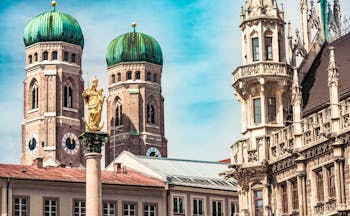
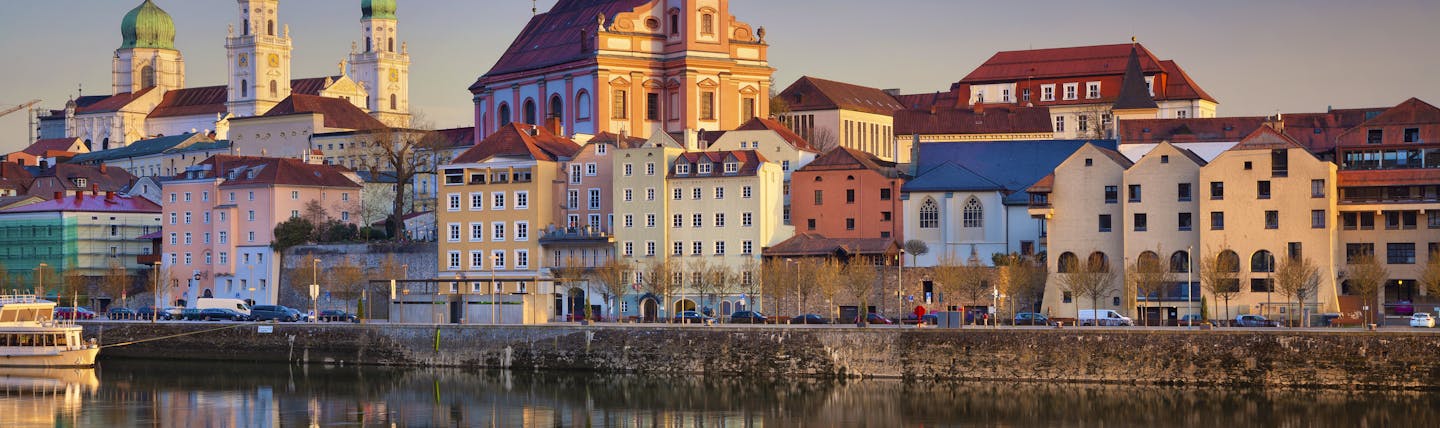
An Expressions tailor-made holiday to Germany enables travellers to experience a fascinating and richly varied country. Germany is replete with regional quirks and personalities - a strong feature of German life and a hangover from the days, not too long ago, when the country was once a patchwork of independent states. Today, to travel from the ancient ports of the north, across the open fields of the German plain, and down through the Ruhr and onto the forests, mountains and cosmopolitan cities of Germany’s Bavarian south, you’ll experience an intriguing variety as great – and appealing – as you’d find anywhere else in Europe. Several of Germany’s cities have the air of national capitals. Cologne, though enmeshed in one of Europe’s most intensively industrialised regions, is rich in monuments. Bavaria’s capital, Munich, is another star attraction, with great museums and galleries. Berlin, the nucleus of the turmoil of reunification, is now one of the most sophisticated, artistic and exciting cities on the planet, while Nuremberg is thrillingly ancient, with the most charming of winter markets in the 11th century square, and summer festivals when the cobbled streets come alive with street artists and musicians. Scattered between these city big-hitters, quieter, utterly charming cities and large towns abound, with medieval old towns straight out of fairy-tale picture books. Heidelberg, the oldest university town in Germany, is an absolute gem, nestling between wooded hills on the banks of the Neckar river, a setting that has seduced visitors ever since the days of the Grand Tour. But from Trier to Bamberg, Marburg to Meissen, Regensburg to Rothenburg, enchanting old towns abound. Beyond Germany’s beautiful cities and towns, the Bavarian Alps, right on Munich’s doorstep, are a spectacular playground for hikers and bikers, horse-riders and skiers. The Rhine and Mosel are both littered with castles and vineyards, offering an enchanting backdrop for the cruise boats that drift serenely along their waters. And stretching more than 100 miles north to south, and 45 miles from east to west, the Black Forest is awash with pretty spa towns and exquisite health resorts, crisscrossed with walking trails. The Black Forest also boasts some of the most spectacular rail journals on the planet. A beautiful, intriguing country vastly at odds with its stiff stereotype, Germany is a wonderful holiday destination for active outdoorsy types and city-breakers alike.
Germany - Frequently Asked Questions
Germany is a vast and varied country. How do you approach it as a holiday destination, and what does your programme focus on?
Germany rewards the traveller who accepts from the outset that it cannot be done in one trip — or even several. It is a country of remarkable regional diversity, where Bavaria and the north coast, the Rhine valley and Berlin, the Black Forest and the former East are as culturally distinct from each other as different countries might be. Our programme focuses on what Germany does exceptionally well and what its rail network makes possible: city-based touring holidays that move between destinations of real depth and character, connected by fast and comfortable trains. Berlin is the natural starting point for most itineraries — one of the great cities of Europe for museums, architecture, twentieth-century history and contemporary culture. Dresden and the Saxon cities of the former East add a different and equally compelling layer. Munich and the Bavarian Alps sit at the southern end of the country. The Black Forest and the Harz Mountains offer a more landscape-centred experience. Germany also sits at the centre of the European rail map, which makes it an ideal midpoint or starting point for tours that continue into Austria, the Czech Republic, Poland or Switzerland. We offer Germany both as a standalone destination and as part of wider central European rail itineraries.
Berlin keeps coming up as the centrepiece of a Germany holiday. What makes it worth spending several nights there?
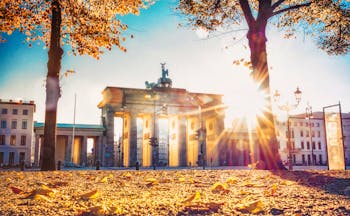
Berlin is one of those cities that takes a day or two to begin to understand, and then reveals itself as one of the most layered and absorbing places in Europe. Its twentieth-century history — two world wars, division, the Wall, reunification — is written into the fabric of the city in a way that no other European capital quite matches, and the concentration of significant sites and museums addressing that history is extraordinary: the Reichstag, the Brandenburg Gate, the Holocaust Memorial, Checkpoint Charlie, the Berlin Wall Memorial on Bernauer Strasse, the Topography of Terror. But Berlin is also a city of world-class art — the Museuminsel (Museum Island) contains five major institutions including the Pergamon and the Neues Museum, together constituting one of the finest museum complexes in the world. Beyond the institutions, Berlin is simply a fascinating city to be in: the Prenzlauer Berg and Mitte neighbourhoods, the food scene, the markets, the architecture of the Gründerzeit interrupted and resumed at strange angles by post-war rebuilding. We recommend a minimum of three nights and consider it honest to say that four or five begins to feel like the right amount. Berlin is also the natural starting point for train journeys south to Dresden and Munich, or east to Prague and beyond.
Dresden and the former GDR cities appear prominently in your programme. What is the particular appeal of that itinerary?
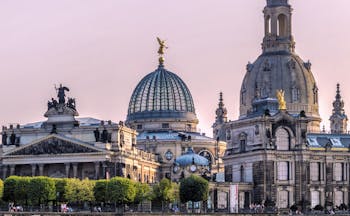
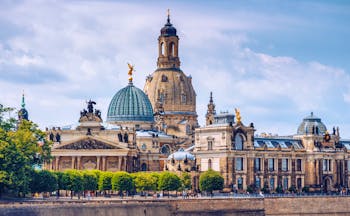
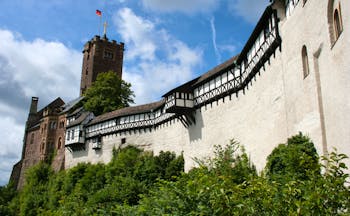
The former cities of the German Democratic Republic offer something that is genuinely different from the more familiar Germany of Munich and the Rhine — a combination of extraordinary cultural heritage, a distinctive and still-visible recent history, and a quieter, less-visited quality that makes them rewarding to explore. Dresden is the centrepiece: the reconstructed Baroque old town on the Elbe, the Zwinger palace and its museums, the Semperoper, the Frauenkirche rebuilt after its wartime destruction — a city of serious cultural depth that was, before the war, one of the most beautiful in Europe and that has recovered much of that quality. Leipzig, an hour to the west of Dresden, has a preserved GDR-era city centre alongside its older merchant quarter, and a musical heritage — Bach was Thomaskantor here — of great distinction. Weimar, with its associations with Goethe, Schiller and the Bauhaus, is compact and walkable and rewards a night or two. Erfurt, with the many spires of its churches and cathedral, is one of the best-preserved medieval cities in Germany. Our eleven-night former GDR itinerary covers Berlin, Dresden, Leipzig, Weimar and Erfurt by train, travelling out and back from London entirely by rail. It appeals particularly to clients with an interest in twentieth-century history, in art and music, and in a Germany that feels less well-trodden.
You offer a Black Forest holiday and a Harz Mountains holiday. How do these differ from your city-based itineraries, and who do they suit?
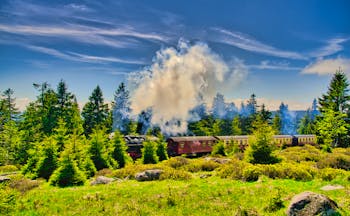
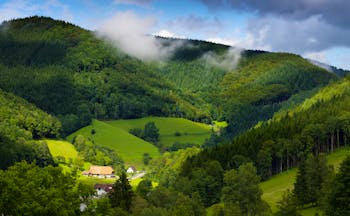
Both offer a more landscape-centred experience of Germany than the city tours, and both use the train not just as a means of getting there but as part of the experience itself. The Black Forest in southwest Germany is one of the most scenic rail destinations in Europe: the lines that thread through the valleys and climb to the plateau offer views of forested hillsides, traditional farmhouses and small spa towns that are quite unlike anywhere else in the country. Our nine-night Black Forest itinerary is based in Freiburg, Titisee, Triberg and Baden-Baden — a progression through different characters of the region, from the elegant university city of Freiburg to the lakeside calm of Titisee to the grand 19th-century spa town of Baden-Baden. The Harz Mountains in central Germany are less visited and have a different, more fairy-tale quality — the medieval mining towns of Goslar and Quedlinburg, both UNESCO World Heritage Sites, the narrow-gauge steam railways that still run through the forested hills, the folklore and mythology of the Brocken. Our seven-night Harz itinerary is a good choice for clients who have already seen Berlin and Dresden and want to discover a less obvious Germany, or for those who simply prefer landscape and historic towns to major city museums. Both itineraries travel entirely by train from London.
Germany works well as part of a wider rail tour. Which combinations do you find most rewarding?
Germany is at the centre of the European rail network in a way that makes it a natural component of almost any central European tour, and the country's main cities sit conveniently on routes that connect naturally to neighbouring destinations. Berlin to Prague by train is under five hours, and adding Prague to a Berlin and Dresden itinerary is a very logical extension — our thirteen-night Germany, Czech Republic and Poland tour follows this logic through to Kraków and Warsaw. The Cologne to Frankfurt to Munich corridor connects Germany's western cities to the Alpine south, and Munich sits naturally alongside Innsbruck and Salzburg for a tour of the Bavarian and Austrian Alps. For those travelling from London through Belgium and into Germany, Cologne is always a worthwhile overnight stop in its own right — the cathedral, the Rhine embankment, the old town. The Eurostar journey from London to Brussels, and then the fast train east through Aachen and Cologne, is in itself one of the most effortless cross-channel journeys available, and Germany's ICE network picks up seamlessly from there. We construct itineraries that treat Germany either as the primary destination or as one element of a longer tour, depending on what the client wants from the trip.
Our bespoke, luxury hotel holidays can be
● Single centre or multi-centre● Long or short stays
● Combine a number of different hotels in different regions
● Utilise a variety of transport arrangements to Germany and within Germany, combining flights, hire-car, rail and private transfers
Our special interest holidays to Germany
● Wine-tasting for individuals● Cultural tours for individuals
● Visits to local music festivals
● Private guided sightseeing
● Walking holidays
● City breaks
● Spa breaks
● Family holidays
Included in all our holidays
● Concierge service● Handcrafted helpful hints and local information provided with all our holidays
● Personal service by your sales consultant who looks after all aspects of your holiday
Call us on 01392 441245
Highlights of Germany
Berlin’s world-class museums, bustling bars, galleries and monuments; Rugen Island, with its rugged chalk cliffs, windswept beaches, Romantic-era spa architecture and tree-lined country roads; Dresden, with its baroque beauty on the banks of the majestic Elbe; Cologne’s magnificent cathedral; the UNESCO World Heritage city of Bamberg; the sandy dunes of Sylt, a North Sea island with fabulous beaches and surf; the beer halls of Munich, ideally in September during the Oktoberfest; Lubeck, a Hanseatic gem; Muritz National Park, where you can go paddling and camping in a paradise teeming with birds; Bremen, a metropolis in miniature, with lovely red-brick and Art Nouveau architecture; the Alpine resorts of Bavaria, including Berchtesgaden, with dramatic peaks, dreamy lakes and superb walking trails; drive or cruise along the Rhine or Mosel, visiting castles, medieval villages and superb vineyards along the way; the walled medieval towns of Rothenburg and Trier, both with wonderful Christmas markets; the Christmas market at Nuremberg, oldest – and still most picturesque – in the world.
Germany travel information
Germany is reached very easily from the UK by air and rail. We can arrange for you to travel by train with overnight stops depending on your destination. Cologne is a very convenient first night stop if travelling by train from London via Brussels in one day. Some clients choose to take their own car all the way.By air
British Airways flies to Berlin, Hamburg, Stuttgart, Dusseldorf, Hanover, Frankfurt and Munich. Flying time is about 2 hours.Car hire
Hiring a car is probably the best way to explore the country, which has as good a network of roads as you’ll find anywhere in the world. Driving the Rhine and Mosel valleys is particularly rewarding, littered as they are in medieval castles and villages, as well as world-class wineries.By train
The rail network in Germany is extensive and efficient. There are high-speed inter-city and international trains, sleeper trains and many regional trains, including steam trains and scenic trains on local routes.Our bespoke, luxury hotel holidays can be
● Single centre or multi-centre● Long or short stays
● Combine a number of different hotels in different regions
● Utilise a variety of transport arrangements to Germany and within Germany, combining flights, hire-car, rail and private transfers
Our special interest holidays to Germany
● Wine-tasting for individuals● Cultural tours for individuals
● Visits to local music festivals
● Private guided sightseeing
● Walking holidays
● City breaks
● Spa breaks
● Family holidays
Included in all our holidays
● Concierge service● Handcrafted helpful hints and local information provided with all our holidays
● Personal service by your sales consultant who looks after all aspects of your holiday
Call us on 01392 441245
Our bespoke, luxury hotel holidays can be
● Single centre or multi-centre● Long or short stays
● Combine a number of different hotels in different regions
● Utilise a variety of transport arrangements to Germany and within Germany, combining flights, hire-car, rail and private transfers
Our special interest holidays to Germany
● Wine-tasting for individuals● Cultural tours for individuals
● Visits to local music festivals
● Private guided sightseeing
● Walking holidays
● City breaks
● Spa breaks
● Family holidays
Included in all our holidays
● Concierge service● Handcrafted helpful hints and local information provided with all our holidays
● Personal service by your sales consultant who looks after all aspects of your holiday